














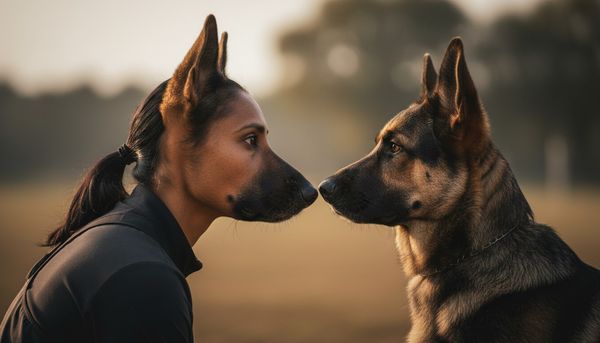
When we bring a new puppy or rescue dog into our South African homes, our first instinct is often to start chatting. We tell them to 'sit', 'stay', or 'get off the couch' as if they have an inherent grasp of English or Afrikaans. However, the true bridge between species lies in cue selection and discrimination. This is the linguistic architecture of animal training—a system where we choose specific, distinct signals that a pet can easily tell apart from the background noise of daily life. By understanding the science of how animals process information, you can stop your pet from simply guessing and start building a reliable vocabulary that works everywhere, from a quiet lounge in Sandton to a busy weekend market in Hout Bay.
The Hierarchy of Signals: Why Visuals Lead the Way
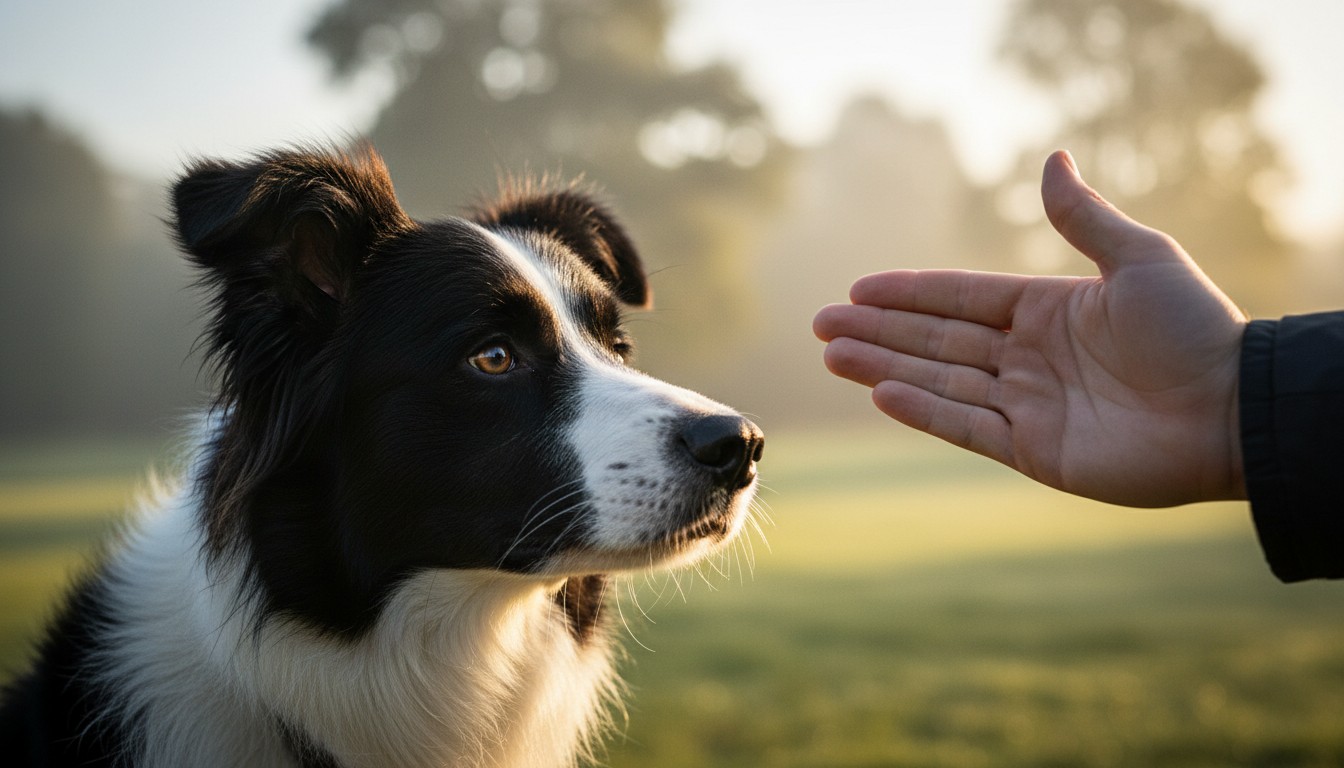
In the world of animal cognition, not all signals are created equal. Research consistently shows that dogs are primarily visual processors. When you simultaneously give a hand signal and a verbal command, the dog is significantly more likely to attend to the movement of your hand than the sound of your voice. This phenomenon is known as 'overshadowing.' If your verbal 'Sit' is always accompanied by a hand gesture, the dog may never actually learn the word because the visual cue is so much more salient.
To build a robust linguistic architecture, you must understand this hierarchy. In South African training circles, we often see owners frustrated that their dog 'only listens when they have a treat or are looking at them.' This is usually a failure of discrimination. To fix this, you should introduce cues in isolation. If you want a reliable verbal response, you must eventually 'fade' the physical gesture. Start by using the hand signal, then transition to saying the word a split second before the gesture. This allows the dog's brain to predict the visual signal based on the auditory one, eventually making the movement unnecessary.
Phonetic Distinction: Choosing Your Verbal Lexicon
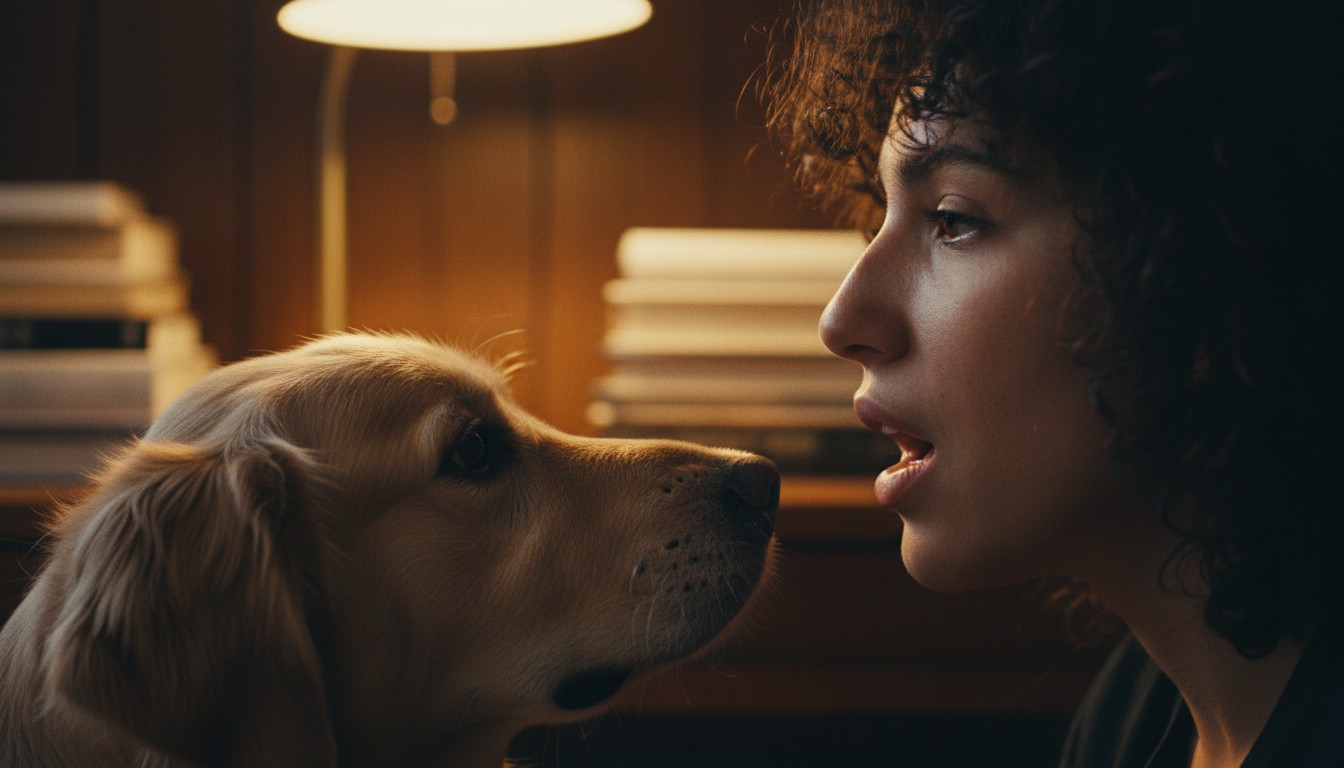
When selecting verbal cues, we often choose words that make sense to humans but sound nearly identical to a dog. For instance, 'Sit' and 'Stay' both start with a sharp 'S' sound and end with a hard consonant. For a distracted pet at a noisy braai, these can easily be confused. Better cue selection involves choosing words with distinct vowel sounds and syllable counts. For example, using 'Sit' (short i) and 'Wait' (long a) provides much clearer phonetic contrast than 'Sit' and 'Stay'.
Consider the linguistic environment of your home. If you frequently use the word 'Okay' in conversation with family members, using it as a release cue for your dog is a recipe for confusion. The dog will hear the word throughout the day and eventually learn to ignore it—a process called 'latent inhibition.' Instead, choose a unique word like 'Break' or even a word from another language, such as the Xhosa 'Hamba' or the Afrikaans 'Vry', which won't appear in your casual English chatter. This ensures that when you speak, the word carries a specific, high-value meaning that the dog can instantly discriminate from background noise.
The Science of Discrimination Training
Discrimination is the ability of a pet to tell the difference between two or more cues and provide the correct corresponding behaviour. This is the 'clean up' phase of training. Many owners find their dogs offer a 'sit-down-paw' combo when a treat is presented, essentially throwing every trick at the wall to see what sticks. This is not a dog that understands cues; it is a dog that is guessing based on context. To move beyond this, you need to implement formal discrimination drills.
Start by asking for two well-known behaviours in random order. If you ask for 'Down' and the dog sits, do not reward. Simply reset, wait three seconds, and ask again. When the dog finally offers the correct behaviour, provide a high-value reward, such as a piece of biltong or a premium treat from a local pet shop like Absolute Pets. This 'contrast' helps the dog realise that only the specific sound or gesture earns the prize. You are teaching them to listen to the architecture of the command rather than just reacting to your presence or the sight of a snack.

Environmental Context and 'Muddy' Cues
A common pitfall in cue selection and discrimination is failing to account for environmental 'poisoning' of cues. If you repeatedly call your dog with 'Come' only to clip on a lead and leave the park, or worse, to give them a bath they dislike, the cue 'Come' becomes associated with a negative outcome. In the pet's mind, the cue is now 'muddy'—it no longer signals a reward, but a loss of freedom. This is why many trainers suggest using a completely different word, like 'Here' or a whistle, to restart a failed recall.
In South Africa, our outdoor lifestyle means our pets are often exposed to high-distraction environments like beaches or hiking trails. Discrimination training must be proofed in these areas. A cue that works in your kitchen might fail at the Sea Point Promenade because the dog hasn't learned to discriminate your voice against the sound of waves and other dogs. Gradually increase the 'difficulty' of the environment, ensuring your cues remain crisp and your rewards remain significant (R10 worth of high-quality treats is a small price for a dog that comes when called).

Troubleshooting: When the Language Breaks Down
If your pet suddenly stops responding to a once-reliable cue, it is rarely 'disobedience.' Usually, it is a breakdown in discrimination. Check if you have inadvertently changed your body language. Are you leaning forward more than usual? Are you wearing a hat or sunglasses that obscure your face? To an animal, these small changes can make a known cue look like an entirely new, unrecognised signal. If the behaviour is failing, go back to basics: remove the distractions and re-establish the connection between the signal and the reward.
Another common issue is 'cue bundling,' where an owner says 'Rover, Sit, Sit... Sit!' By the time the dog sits, they have learned that the cue isn't 'Sit,' but 'Sit, Sit, Sit, Sit.' This dilutes the linguistic architecture. Always give a cue once. If the dog doesn't respond, they have likely either not discriminated the sound from the environment or aren't motivated enough. Instead of repeating yourself, move to a quieter area or use a more enticing reward to rebuild the value of that single, specific word.
FAQ
Can I change a command word once my dog has already learned it?
Yes, you can 're-cue' a behaviour by introducing the new word immediately before giving the old, established cue. After several repetitions, the dog will associate the new word with the action, allowing you to eventually phase out the old word entirely.
Why does my dog only listen when I have treats in my hand?
This is a common discrimination error where the sight of the treat has become part of the cue itself. To fix this, keep your treats in a pouch or on a nearby table, and only reach for them after the dog has completed the desired behaviour.
Should I use hand signals or verbal cues for better results?
Ideally, you should use both, but keep them distinct. Hand signals are generally easier for dogs to learn initially, while verbal cues are essential for situations where your dog isn't looking directly at you, such as off-lead walks in open spaces.
What should I do if my dog ignores a cue I know they understand?
Do not repeat the cue. Instead, wait a few seconds and try to gain their attention with a neutral sound (like a whistle or a clap), then move to a less distracting environment and ask again. This prevents the 'dilution' of your command.
Conclusion
Building a clear linguistic architecture through thoughtful cue selection and discrimination is the hallmark of an expert handler. By choosing distinct sounds, respecting the power of visual signals, and proofing your training in the diverse environments South Africa has to offer, you transform 'tricks' into a genuine language. This clarity reduces frustration for both you and your pet, fostering a relationship built on mutual understanding rather than guesswork. Always remember that training is a lifelong journey. If you find yourself struggling with complex discrimination issues or if your pet shows signs of distress, do not hesitate to contact a professional animal behaviourist registered with the South African Board for Companion Animal Professionals (SABCAP).
References & Sources
This article was researched using the following sources:


