














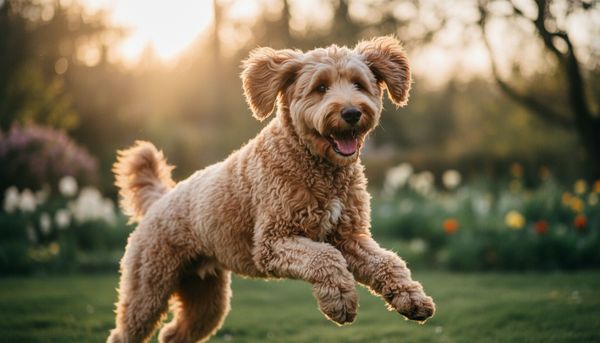
You brush your dog every single day, yet your professional groomer still tells you they have to 'shave them down' due to matting. This is a common and heartbreaking frustration for many South African pet owners. The reason usually isn't a lack of effort, but a lack of technique. Most owners perform 'surface brushing,' which only smooths the top layer of fur while leaving the undercoat to tangle and knot. To truly maintain a long-haired breed, you must master line brushing. Line brushing is the gold-standard professional method of systematically parting the hair to the skin to ensure every single strand is tangle-free from the root up. By adopting this technique, you can prevent the painful 'pelting' that often leads to drastic haircuts and skin irritation.
The Science of Mats: Why Surface Brushing Fails
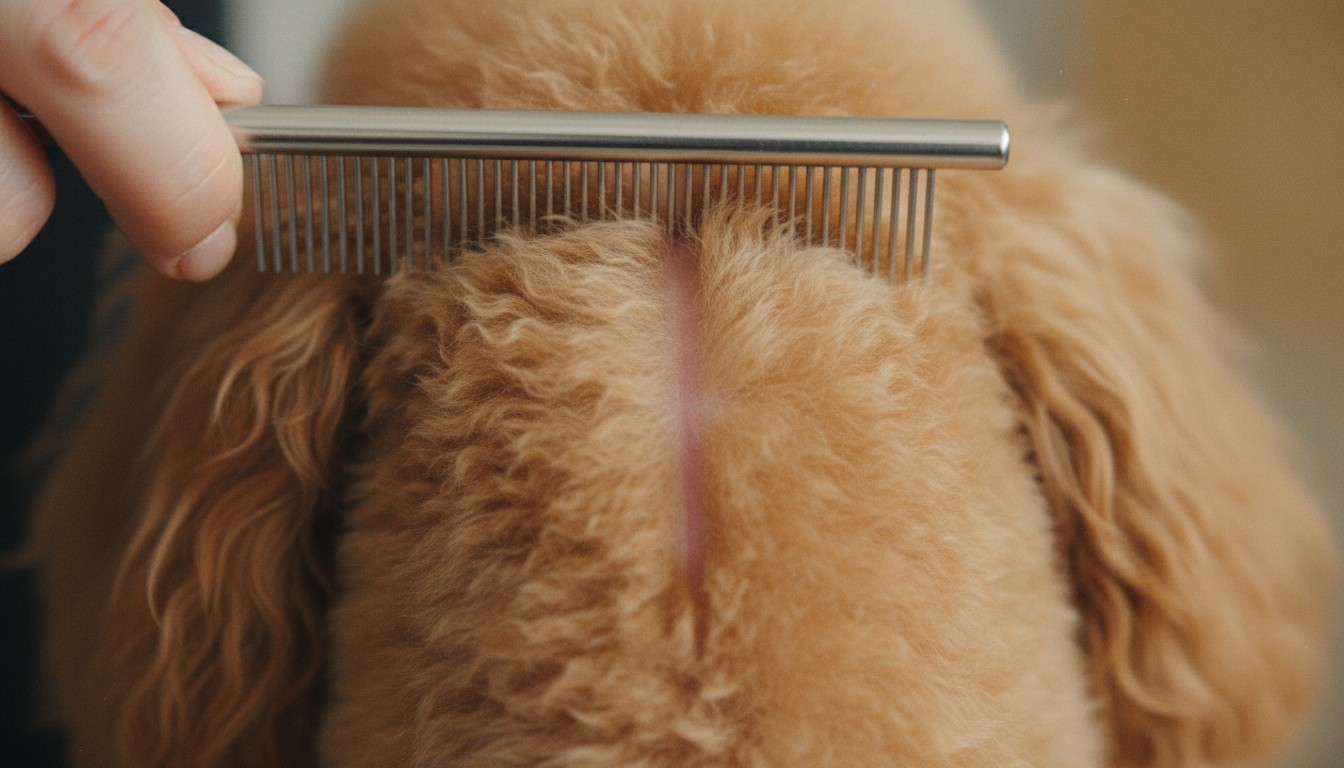
To understand why line brushing is essential, we must first look at the anatomy of a mat. Mats aren't just tangles; they are a dense web of shed hair, dirt, and live fur that weave together close to the skin. In South Africa's varied climate—from the humid coast of KwaZulu-Natal to the dusty Highveld—environmental factors can accelerate this process. When you only brush the surface, you are essentially 'polishing' the top of the mat. This actually pushes the loose undercoat further down, compacting it against the skin.
Over time, these individual mats join together to form a 'pelt.' A pelt acts like a tight woollen sweater that never comes off; it restricts movement, traps moisture, and can lead to severe fungal or bacterial skin infections. Because the pelt is so close to the skin, it is often impossible to remove with a brush without causing the dog immense pain. This is why groomers are often forced to use clippers to safely remove the hair. Line brushing prevents this by ensuring that the brush or comb reaches the skin every time, catching the undercoat before it has a chance to weave into a solid mass.
Building Your Professional Grooming Kit in South Africa
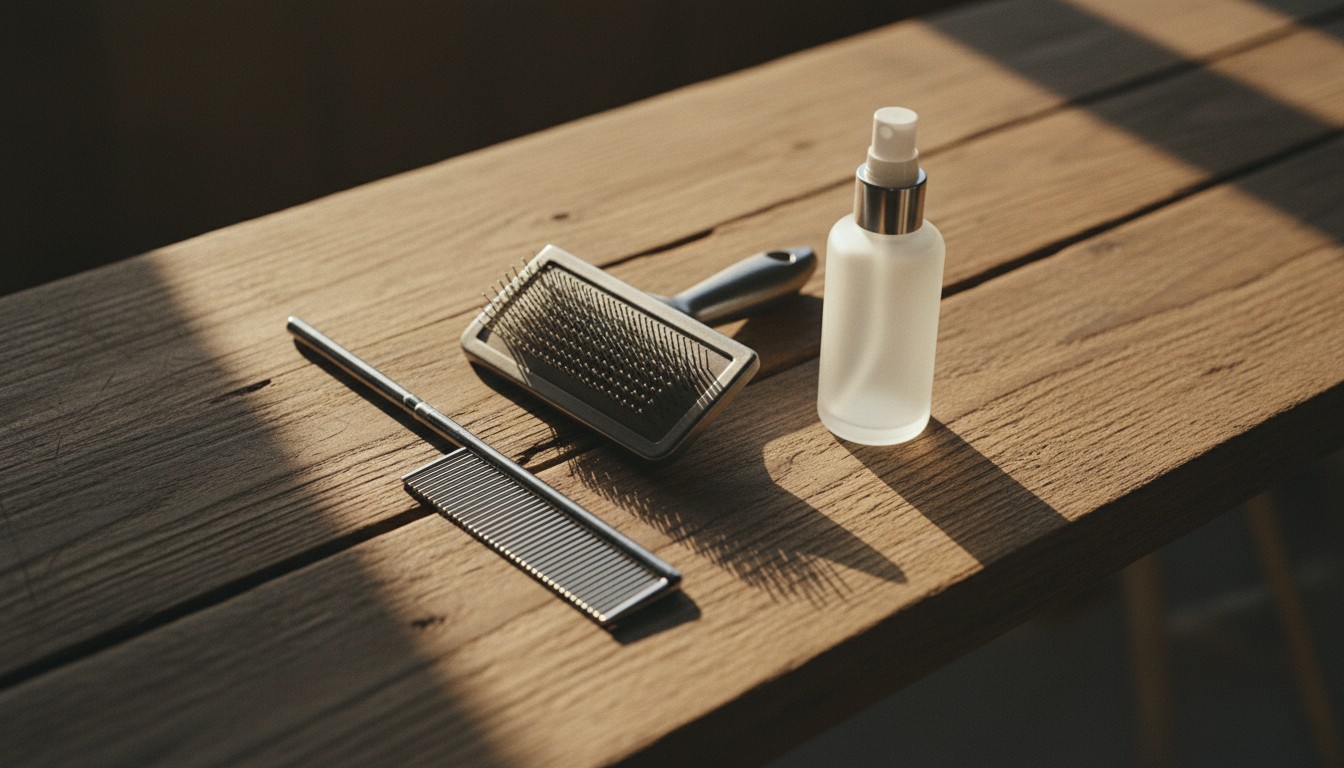
You cannot achieve professional results without the right tools. For effective line brushing, you need a specific kit that goes beyond the standard 'supermarket' brush. The first essential is a high-quality slicker brush. Look for one with long, flexible pins that can reach through thick coats. Brands like Chris Christensen are the gold standard, but you can find excellent alternatives at local retailers like Absolute Pets or Petworld.
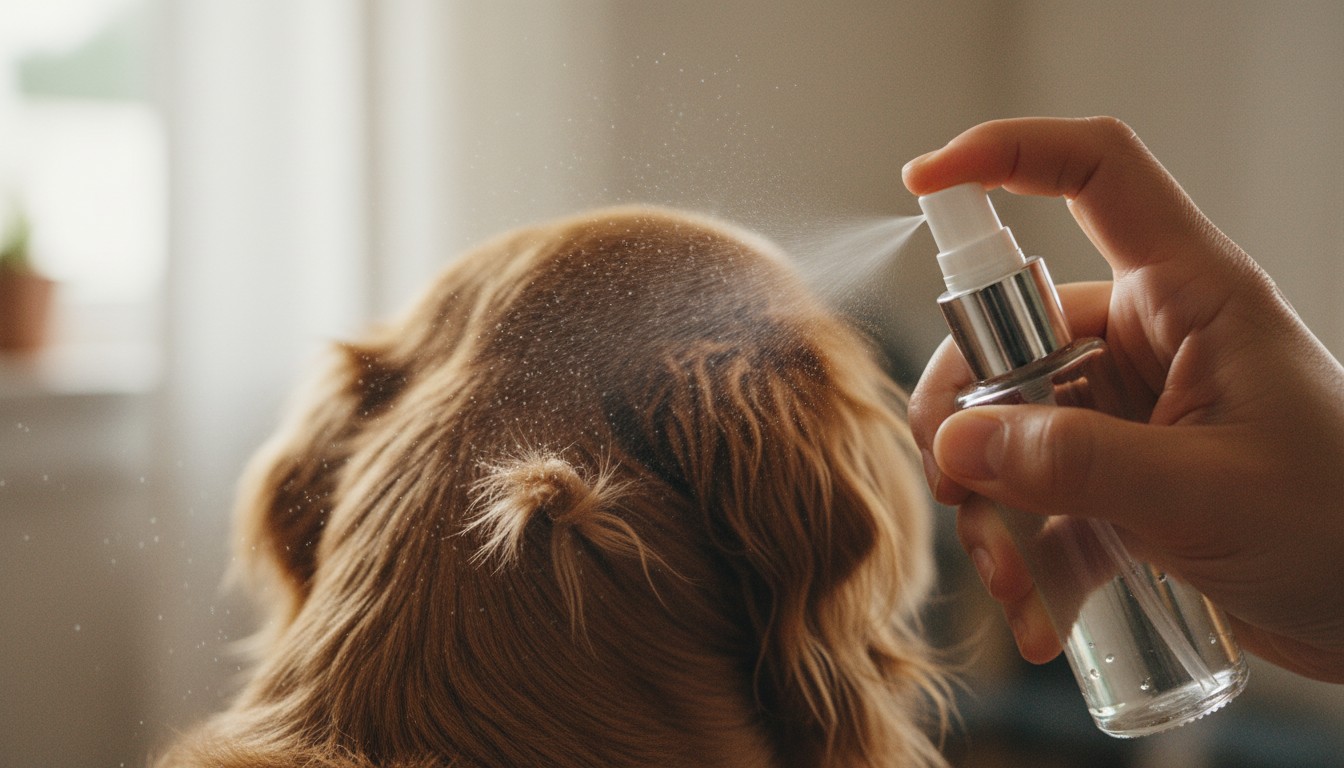
Next, you require a 'Greyhound' metal comb. This is a dual-spaced comb used to check your work. If the comb cannot pass smoothly from the skin to the tips, a mat is still present. Additionally, a detangling spray is vital to reduce friction and prevent hair breakage. In South Africa, look for products containing hydrating ingredients like aloe vera or marula oil, which help combat the drying effects of our harsh sun. Finally, having a grooming table or a non-slip mat on a counter will save your back and keep your dog secure during the process. Investing R500 to R1000 in quality tools now will save you thousands in professional 'de-matting' fees later.
Step-by-Step: The Line Brushing Technique
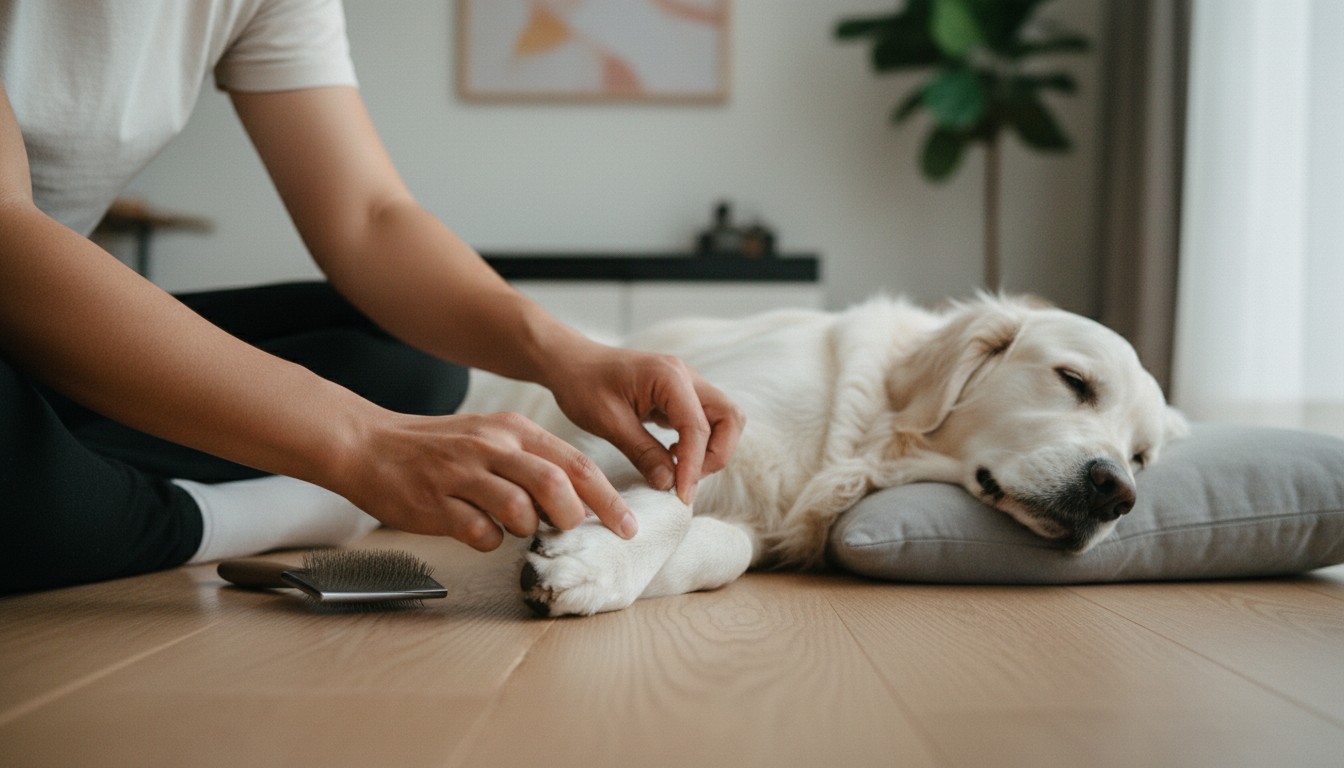
Line brushing is a systematic process. Start at the bottom of the dog—usually a back leg—and work your way up. Use your non-dominant hand to push the hair upward, exposing a straight 'line' of skin. With your other hand, use the slicker brush to pull a small amount of hair down from the section you are holding. Brush this small 'line' from the skin outward until it is perfectly smooth.
Once that section is clear, move your hand up about 2 centimetres and repeat the process. You are essentially creating horizontal layers or 'lines' as you move up the body. Once you finish an area with the slicker brush, always follow up with your metal comb. The comb should glide through the hair from the skin to the ends without catching. If it snaggs, go back with the slicker brush. Pay extra attention to 'high-friction' areas like the armpits, behind the ears, and the base of the tail, as these are the first places mats form. This method ensures that no part of the coat is missed and that you are working in small, manageable sections that don't overwhelm the dog.
Troubleshooting: Handling Existing Mats Safely
If you encounter a mat while line brushing, do not pull. Pulling causes pain and will make your dog fear grooming. Instead, apply a liberal amount of detangling spray directly to the knot and work it in with your fingers. Use the edge of your slicker brush to gently 'pick' at the edges of the mat rather than trying to brush through the centre. If the mat is too tight, you may need to use a de-matting tool or thinning shears to carefully break the knot apart, but never use kitchen scissors, as dog skin is incredibly thin and easy to cut.
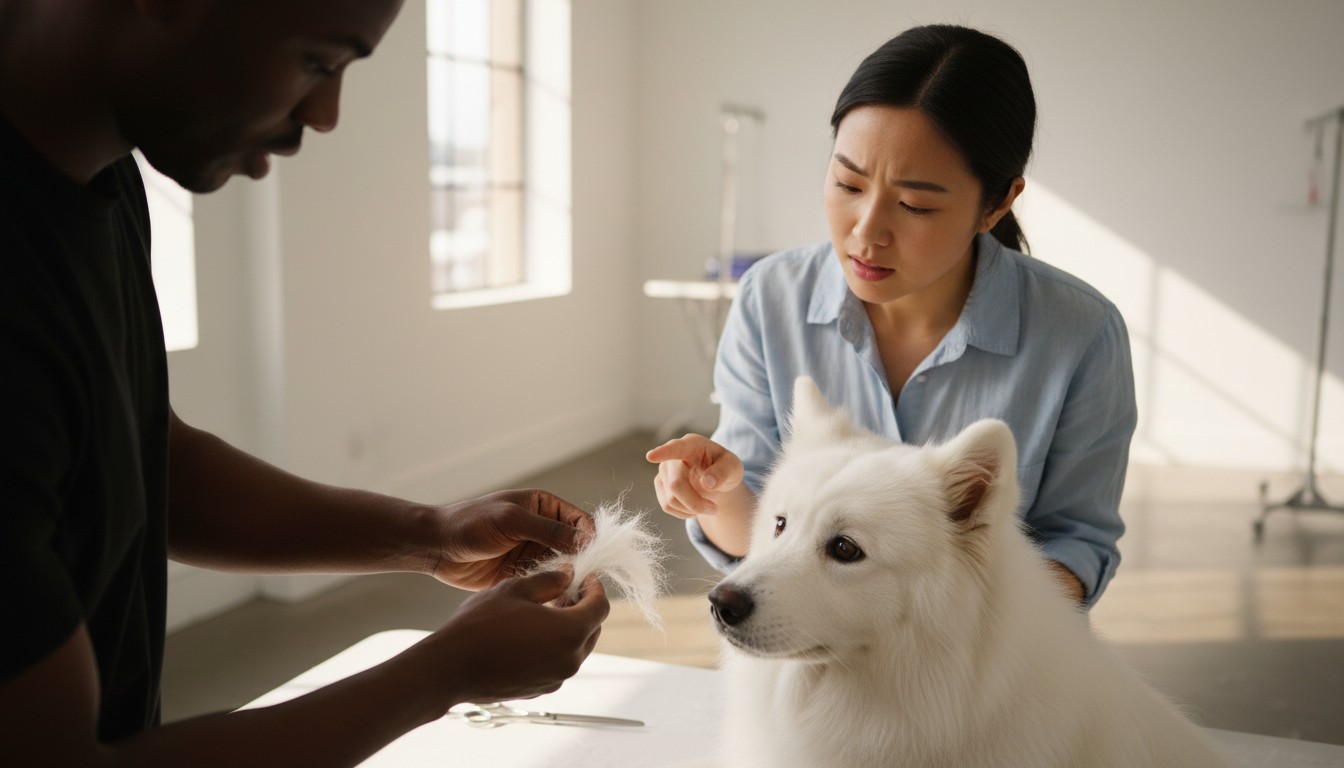
Signs that you should stop and see a professional include skin that is red, hot to the touch, or emitting an odour, which indicates the matting has already caused an infection. If the mat is larger than a 2-rand coin and feels hard like felt, it is likely too late to brush out safely. In these cases, the most humane option is a professional 'clip-off.' It is better to start fresh with short hair than to put your dog through the trauma of painful de-matting. Remember, hair grows back, but a dog’s trust is harder to rebuild.
FAQ
How often should I line brush my dog?
For long-haired or 'doodle' breeds, line brushing should be done at least 2-3 times a week. However, high-friction areas like the ears and collar line benefit from daily attention.
Can I line brush a wet dog?
No. Never brush a matted dog before a bath. Water acts like a glue for mats, causing the hair fibres to swell and tighten further. Always ensure the coat is fully brushed and 'comb-through' ready before getting it wet.
Is line brushing painful for the dog?
When done correctly, line brushing is not painful; it feels like a deep massage. Because you are working in small sections and not pulling on tangles, it is much more comfortable for the dog than traditional 'rip-through' brushing.
What if my dog won't sit still for line brushing?
Start with very short sessions (2-5 minutes) and use high-value treats like biltong bits or peanut butter on a lick-mat. Gradually increase the time as your dog becomes accustomed to the sensation.
Conclusion
Mastering the line brushing technique is the single most important skill for any owner of a long-haired dog in South Africa. It is the difference between a coat that is a constant source of stress and one that is a beautiful, healthy asset. By committing to this systematic approach, you ensure your dog remains comfortable, healthy, and free from the painful complications of matting. Remember to use the right tools, work in patient sections, and always check your work with a metal comb. If you find yourself overwhelmed or the matting has become severe, do not hesitate to contact a professional groomer. Your dog's comfort should always be the priority. With practice, line brushing will become a rewarding bonding activity for both you and your pet.
References & Sources
This article was researched using the following sources:


