














Most pet parents are familiar with the standard advice: switch your dog's food over seven days using the 25/50/75 percent mixing rule. However, for many dogs, biology doesn't follow a calendar. Stalled food transitions occur when a pet experiences persistent digestive upset—usually loose stools or gas—that doesn't resolve as you increase the new food ratio. This often happens right at the 50% mark, leaving owners frustrated and unsure whether to push through or abandon the new diet entirely. Understanding why food transitions fail is the first step toward stabilizing your dog's gut health and successfully introducing a more nutritious diet without the mess. In this guide, we will explore the 'Reset Protocol' and how to differentiate between a simple adjustment period and a genuine ingredient incompatibility.
The 50% Wall: Why Transitions Stall Mid-Way
The most common point for a transition to fail is the 50/50 mix. At this stage, the canine microbiome is caught between two different nutrient profiles and fiber sources. If the new food has a significantly higher protein content or a different fat source than the old brand, the digestive enzymes required for breakdown change drastically. When the gut cannot produce these enzymes fast enough, the partially digested food moves too quickly through the colon, resulting in the dreaded 'transition diarrhea.'
In the United States, many owners switch from high-carb grocery store brands like those found at Walmart or Target to high-protein, 'ancestral' diets found at specialty boutiques or Amazon. This jump is often too steep for a seven-day window. Instead of a linear progression, think of the transition as a biological negotiation. Your dog’s internal flora needs time to colonize around the new ingredients. If you see soft stools at the 50% mark, your dog's gut is telling you it has reached its current processing limit.
The Reset Protocol: Reclaiming Digestive Stability
When a transition stalls, the instinct is often to go back to 100% of the old food or to push forward hoping the body adapts. Both can be mistakes. Instead, we recommend the 'Reset Protocol.' If your dog has loose stools for more than 48 hours at a specific ratio, drop back to the last successful ratio where their stool was firm. For most, this means moving from 50% back down to 25% new food.
Stay at this 'safe' ratio for a full five to seven days—not just 24 hours. This allows the inflammation in the intestinal lining to subside. During this period, keep activity levels moderate, as high-stress exercise can further stimulate an irritable bowel. Once the stool is consistently firm for several days, try increasing the new food by only 10% increments rather than the standard 25% jumps. This 'micro-transition' strategy is particularly effective for dogs with 'sensitive stomach' designations or older dogs whose enzyme production is less flexible.
Adjustment vs. Incompatibility: Spotting the Red Flags
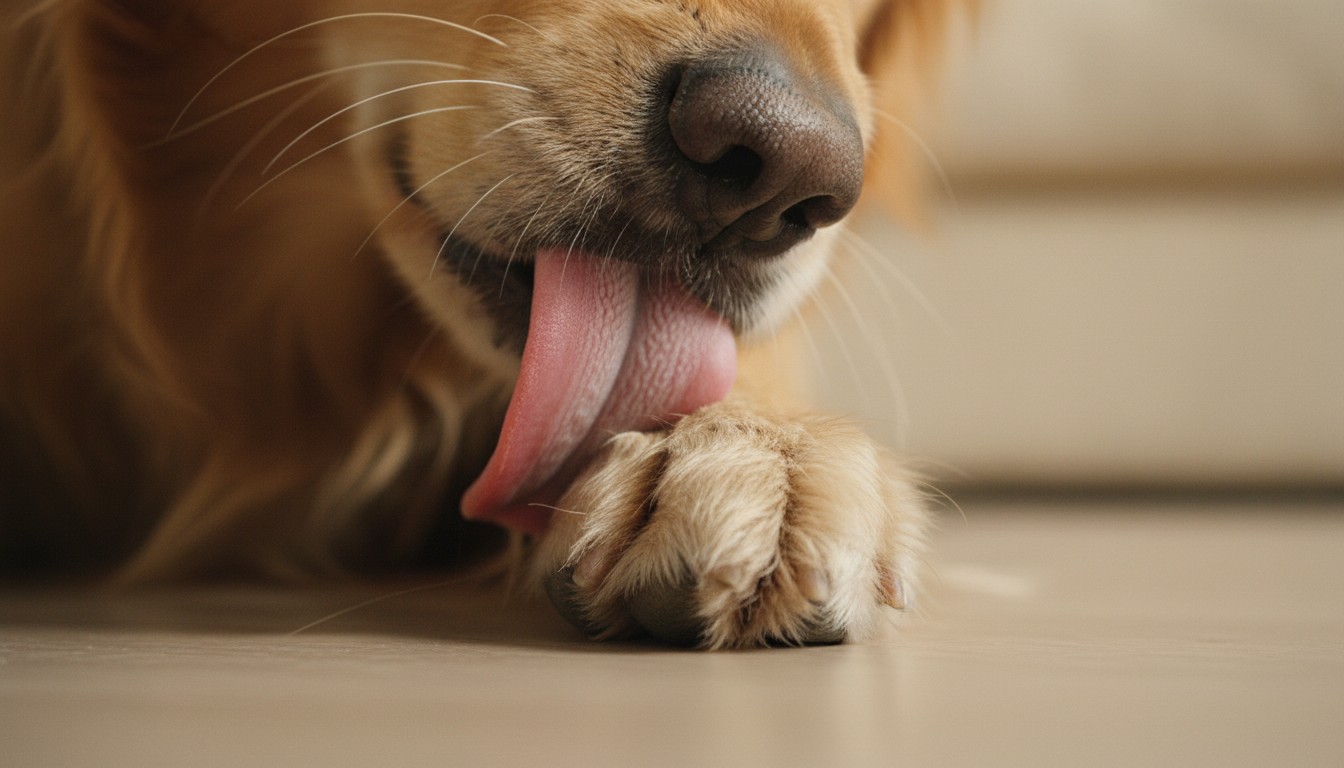
It is crucial to distinguish between a gut that is 'slow to learn' and a gut that is 'rejecting' the food. An adjustment issue is characterized by soft (but not liquid) stools that improve when you slow down the transition. Ingredient incompatibility, however, looks different. If your dog experiences projectile vomiting, blood in the stool, or intense itching and paw-licking, these are signs of a genuine intolerance or allergy to a specific ingredient in the new bag.
Common culprits in US dog foods include specific protein sources like chicken or beef, or fillers like corn and soy. If you reach the 14-day mark and even at a 10% mix your dog is still struggling, the issue is likely the ingredient list, not the transition speed. In these cases, 'pushing through' can lead to chronic enteritis. Check the label for 'hidden' ingredients; for instance, a 'Lamb and Rice' formula may still contain chicken fat or fish meal which could be the true trigger for the upset.
Strategic Additives to Support the Switch
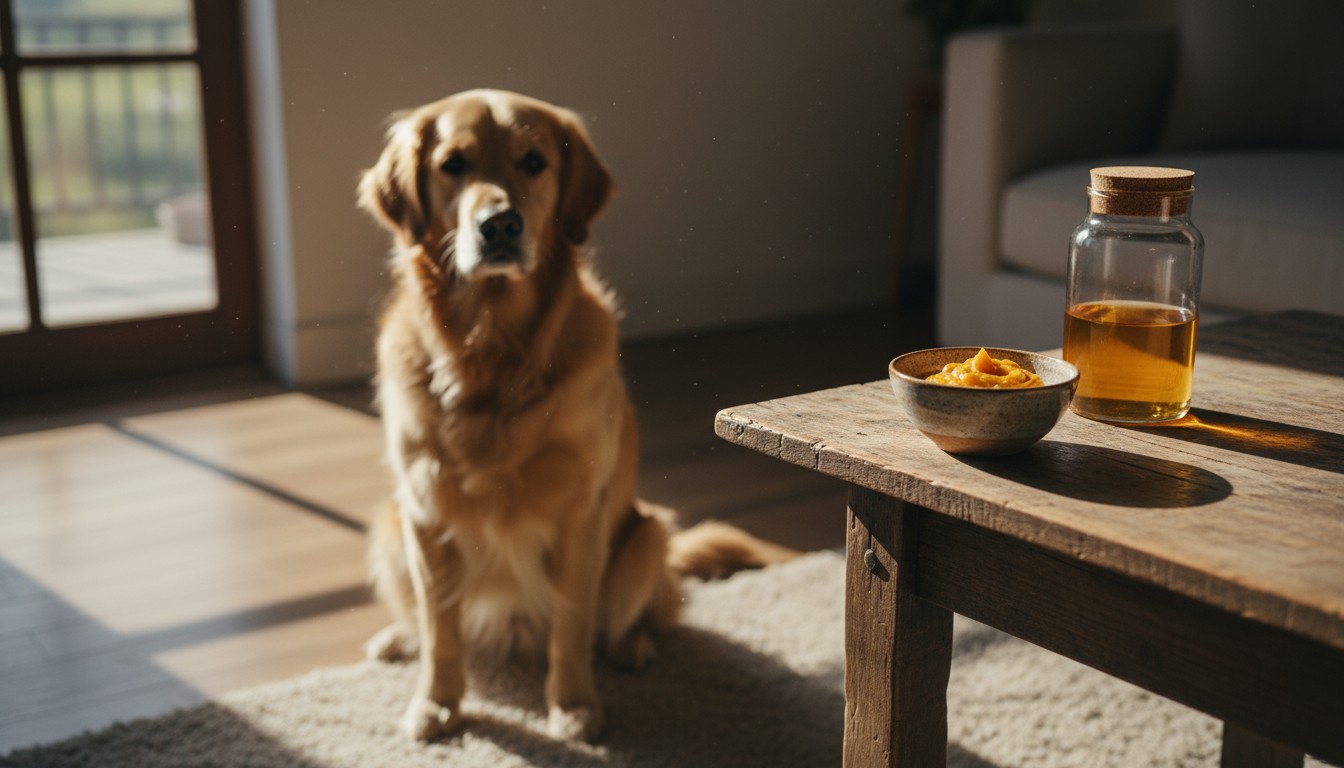
Sometimes the gut just needs a little assistance to cross the finish line. In the United States, plain canned pumpkin (not the spiced Thanksgiving pie filling) is a staple for troubleshooting transitions. Pumpkin is rich in soluble fiber, which absorbs excess water in the colon and firms up the stool. A tablespoon for small dogs or 1/4 cup for large dogs can work wonders.
Additionally, high-quality probiotics such as Purina Pro Plan FortiFlora or Advita provide a concentrated dose of beneficial bacteria to help the microbiome adjust. Digestive enzymes can also be added to the bowl to help break down the new proteins and fats while the pancreas catches up. If you choose to use these supports, introduce them at the start of the 'Reset Protocol' to give the gut the best chance of success. These tools act as a safety net, allowing the transition to continue without the discomfort of chronic GI upset.
FAQ
How long can a food transition actually take for a sensitive dog?
While the standard is 7 days, sensitive dogs may require 3 to 4 weeks. In extreme cases, a 'micro-transition' of 10% increases every 3 days is necessary to allow the gut microbiome to adapt without triggering inflammation.
Should I fast my dog if they get diarrhea during a food switch?
A short fast of 12-24 hours can help the gut 'rest' if the diarrhea is severe. However, always consult your vet first, and ensure the dog remains hydrated with water or unflavored Pedialyte during the fast.
Can I switch back to the old food immediately if the new one fails?
Yes, if the new food is causing acute distress (vomiting or liquid diarrhea), it is safest to return to 100% of the old, tolerated food. Once the dog's system is stable for a week, you can attempt a different brand with a different protein source.
Conclusion
Mastering the art of the food transition requires patience and an observant eye. The 7-day rule is a helpful suggestion, but it is not a biological law. If you encounter a stall, remember the Reset Protocol: slow down, scale back, and support the gut with fiber and probiotics. Most 'failed' transitions are simply 'rushed' transitions. However, always prioritize your pet's safety. If you see signs of dehydration, lethargy, or if the diarrhea persists despite your troubleshooting efforts, it is time to consult your veterinarian. They can rule out underlying parasites or infections that might have been coincidental to the food change. With a methodical approach and the right tools, you can successfully navigate even the most stubborn feeding issues.
References & Sources
This article was researched using the following sources:


