















It happens in an instant: your normally docile Golden Retriever snaps at a neighbor, or your chill tabby cat hisses at the sound of a closing door. Owners often describe these moments as unprovoked, but from a biological standpoint, they are the result of trigger stacking. Trigger stacking is the physiological accumulation of stressors that occur over hours or even days, pushing an animal past its emotional threshold. When a pet 'snaps,' it is rarely about the final minor event; it is about the heavy chemical load their body was already carrying before that event even occurred. Understanding this cumulative process is the key to preventing redirected aggression and keeping your household safe.
The Invisible Bucket: Understanding the Cumulative Nature of Stress
To understand trigger stacking, behaviorists often use the 'Stress Bucket' analogy. Every dog or cat has a bucket of a certain size representing their emotional capacity. Throughout the day, stressors act like water pouring into that bucket. A loud Amazon delivery truck in the morning adds a cup; a missed walk due to a rainstorm adds another; a quick vet visit for a flea check adds a whole gallon. If these events happen in isolation with plenty of recovery time, the bucket drains. However, when multiple stressors occur in rapid succession, the water overflows.
That overflow is the 'snap'—the bite, the growl, or the frantic bolting. For United States pet owners living in busy suburban or urban environments, these stressors are constant. Unlike humans, who can rationalize that the mail carrier is just doing their job, pets perceive these events as potential threats. When the bucket is already 95% full, even a tiny addition like a child dropping a toy can cause a total system failure. The animal isn't 'mean'; they are simply physiologically incapable of processing one more piece of data.

The Physiology of Cortisol: Why Stress Lingers for Days
The reason trigger stacking is so deceptive is rooted in endocrinology. When a pet encounters a stressor, their body releases a cocktail of hormones, primarily adrenaline and cortisol. While adrenaline provides the immediate 'fight or flight' burst and dissipates relatively quickly, cortisol—the primary stress hormone—is much more persistent. Research indicates that in canines, it can take 48 to 72 hours for cortisol levels to return to baseline after a significant stressful event.
This creates what experts call 'stress residue.' If your dog had a stressful encounter with a neighbor's dog on Saturday, their cortisol levels remain elevated through Monday. If a FedEx driver rings the doorbell on Sunday, that new stressor is added to a system that hasn't finished processing the first one. This explains why a pet might seem 'fine' after a scare but then react aggressively to something trivial two days later. The physiological state of the animal is still primed for defense, even if the external environment looks calm to the human eye.
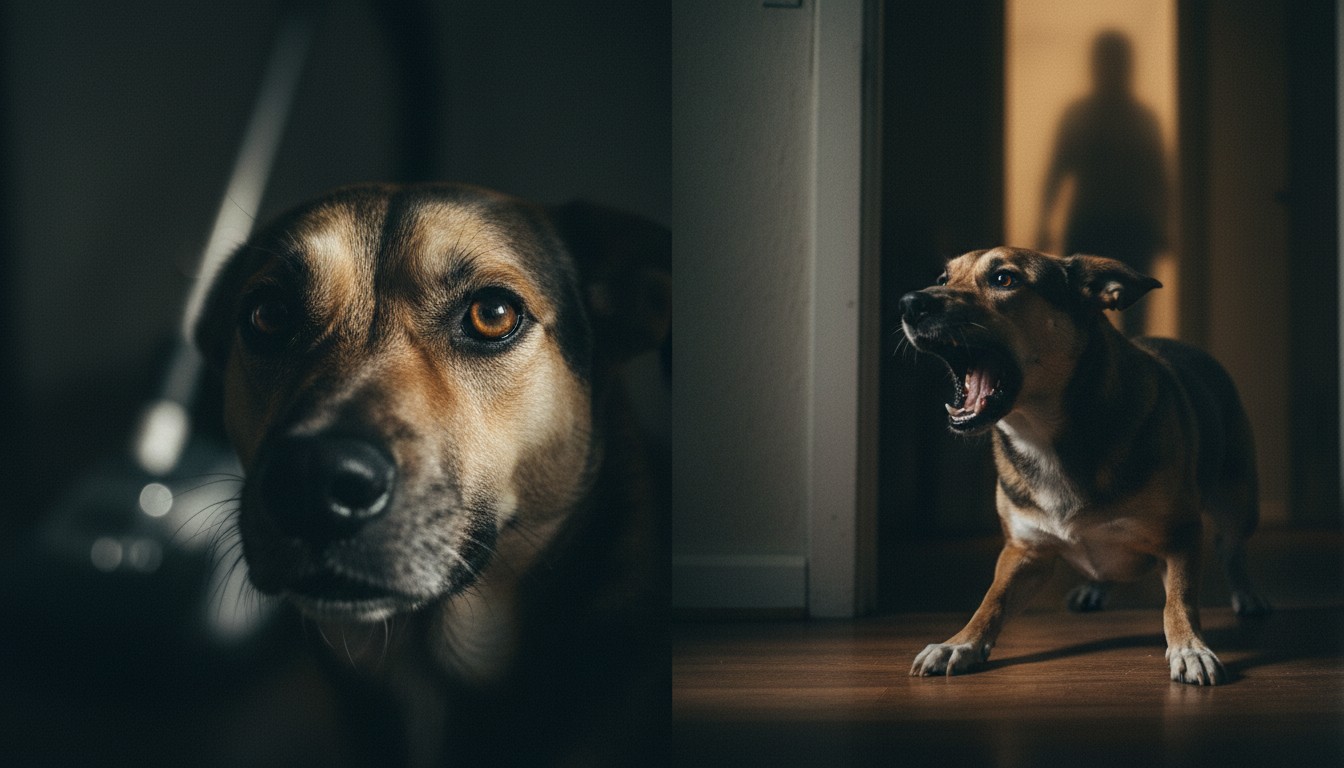
Identifying High-Arousal Triggers in the American Household
In the United States, our pets face a unique set of modern triggers that contribute to stacking. Environmental stressors like the high-pitched hum of a central air conditioning unit, the rumble of a heavy-duty trash truck, or the presence of multiple delivery services (Amazon, UPS, DoorDash) create a baseline of high arousal. Social stressors also play a role; for example, a Fourth of July celebration with fireworks followed by a busy family Thanksgiving can leave a pet in a state of chronic hyper-vigilance.
It is important to recognize that not all triggers are 'bad' things. Excitement is also a form of arousal. A high-energy game of fetch in the backyard or a chaotic visit to a local dog park fills the bucket just as much as a scary thunderclap. For many American families, the 'stack' is a mix of fear and over-excitement. By the time evening rolls around and the family is relaxing, the pet may be at 90% capacity, making them more likely to react poorly to a toddler crawling nearby or a hand reaching out to pet them while they sleep.

Recognizing Stress Residue: The Subtle Warning Signs
Most owners miss the early signs of trigger stacking because they are looking for growling or baring teeth. However, the body speaks long before the mouth opens. Before a snap occurs, a pet will display 'stress residue' through subtle displacement behaviors. These include sudden lip licking when no food is present, 'shaking off' as if wet despite being dry, or excessive yawning. You might notice 'whale eye,' where the white part of the eye is visible as the pet tracks a movement without turning their head.
In American households, we often misinterpret these as the pet being 'tired' or 'silly.' However, these are clear indicators that the cortisol bucket is filling up. Another major sign is the inability to disengage. If your dog hears a noise outside and cannot settle back down for 20 minutes, their arousal level is critically high. Paying attention to these 'micro-signals' allows you to intervene before the stack reaches its peak. If you see your dog pacing or scanning the room after a few minor events, it is a clear sign that they need an immediate reduction in environmental stimulation.

The Cortisol Vacation: Implementing a 72-Hour Reset
When you realize your pet is trigger-stacked, the most effective tool is the 'Cortisol Vacation.' This is a deliberate 48-to-72-hour period designed to let their internal chemistry reset. During this time, the goal is zero arousal. This means no dog parks, no visitors to the home, and no high-intensity training sessions. Instead of a long walk on a busy suburban street where they might see other dogs or delivery trucks, opt for a quiet 'sniffari' in a secluded area or simple potty breaks in the backyard.
Inside the house, focus on low-arousal enrichment. Use food puzzles like a Kong or West Paw Toppl stuffed with frozen yogurt or peanut butter; licking and chewing are naturally soothing behaviors that help lower heart rates. Dim the lights, play soft classical music or 'Through a Dog’s Ear' (a popular sound therapy), and ensure the pet has a 'safe zone' like a crate or a back bedroom where they won't be disturbed. By proactively lowering the input, you allow the physiological bucket to drain, significantly reducing the risk of a sudden outburst.

Troubleshooting and Professional Guidance for Reactive Pets
Sometimes, despite our best efforts, a pet remains in a state of chronic stress. If your dog or cat seems to live at their threshold—reacting to everything regardless of how many 'vacations' you provide—it is time to seek professional help. Troubleshooting this behavior yourself can be dangerous, especially if there is a risk of a bite. Signs that you need professional intervention include a pet that cannot sleep through the night, a sudden change in personality, or aggression directed at family members.
Start by consulting a veterinarian to rule out underlying pain; many 'behavioral' issues are actually reactions to undiagnosed arthritis or dental pain. If the pet is healthy, look for a Certified Professional Dog Trainer (CPDT-KA) or a Veterinary Behaviorist. They can help you implement a desensitization and counter-conditioning plan. In some cases, short-term or long-term behavioral medication may be necessary to lower the pet's baseline arousal so that learning can actually take place. Safety should always be your priority; use tools like basket muzzles or baby gates if you are managing a stacked pet in a multi-person household.
FAQ
Why did my dog bite out of nowhere?
Bites rarely happen 'out of nowhere.' It is usually the result of trigger stacking, where the dog has endured a series of stressors throughout the day or week, and a final minor event pushed them over their bite threshold.
How can I tell if my dog's bucket is full?
Look for subtle signs of high arousal like dilated pupils, panting when it's not hot, inability to focus on you, or repetitive displacement behaviors like lip licking and yawning.
Does exercise help a trigger-stacked dog?
Not necessarily. While walking is good, high-intensity exercise like fetching a ball or wrestling can actually increase adrenaline and keep the pet in a high-arousal state. Calm, sniffing-based activities are better for lowering stress.
How long does it take for a dog to calm down after a scare?
While they may look calm within minutes, it takes 48 to 72 hours for the cortisol released during a scare to fully leave their system, during which time they are more likely to react to other triggers.
Conclusion
Trigger stacking is a biological reality that every pet owner should understand. By recognizing that stress is cumulative and that the body needs time to process cortisol, we can move away from the myth of 'unprovoked' aggression. Your pet's behavior is a reflection of their internal state, and often, the best thing you can do for a 'grumpy' pet is to provide a quiet environment and a break from the world. If you find yourself constantly managing a pet on the edge, don't hesitate to contact a professional. Prioritizing safety and emotional health ensures a happier, more predictable relationship with your animal companions.
References & Sources
This article was researched using the following sources:

