














Every New Zealand dog owner has heard the golden rule: to ensure a successful dog food transition, simply mix the old and new food over seven days using the 25/50/75 ratio. It sounds foolproof in a textbook, but real-world biology is rarely so linear. Many owners find themselves hitting a 'wall'—often at the 50% mark—where their pup develops persistent loose stools or refuse to eat entirely. When this happens, pushing forward can lead to chronic GI upset, while quitting immediately leaves you back at square one with a bag of expensive biscuits your dog can't eat. Understanding how to troubleshoot these stalls is the difference between a healthy gut and a long-term digestive sensitivity. In this guide, we will explore the advanced 'Reset Protocol' and how to navigate transitions that require weeks rather than days.
The 7-Day Myth: Why Some Guts Need More Time
The standard week-long transition period is a helpful guideline for the 'average' dog, but many New Zealand breeds—from sensitive Huntaways to smaller toy breeds—don't fit the average. The dog food transition process isn't just about taste; it is about the gut microbiome. Your dog's digestive tract contains trillions of bacteria specifically tuned to break down their current diet. When you introduce a new protein source or a different level of fibre, these bacteria need time to adapt.
If the transition is too fast, the microbiome essentially undergoes a 'shock,' leading to fermentation in the large intestine and osmotic diarrhea. This is particularly common when moving from a standard supermarket kibble to a high-protein, nutrient-dense NZ brand like Ziwi Peak or K9 Natural. These premium foods often have much lower filler content, meaning the gut has to work harder to process the rich ingredients. If your dog has a history of a 'sensitive stomach,' you should automatically plan for a 14-day to 21-day transition rather than the standard seven. Rushing the process rarely saves time in the long run if it results in a veterinary visit for dehydration.
Decoding the 50% Stall: Why Progress Stops
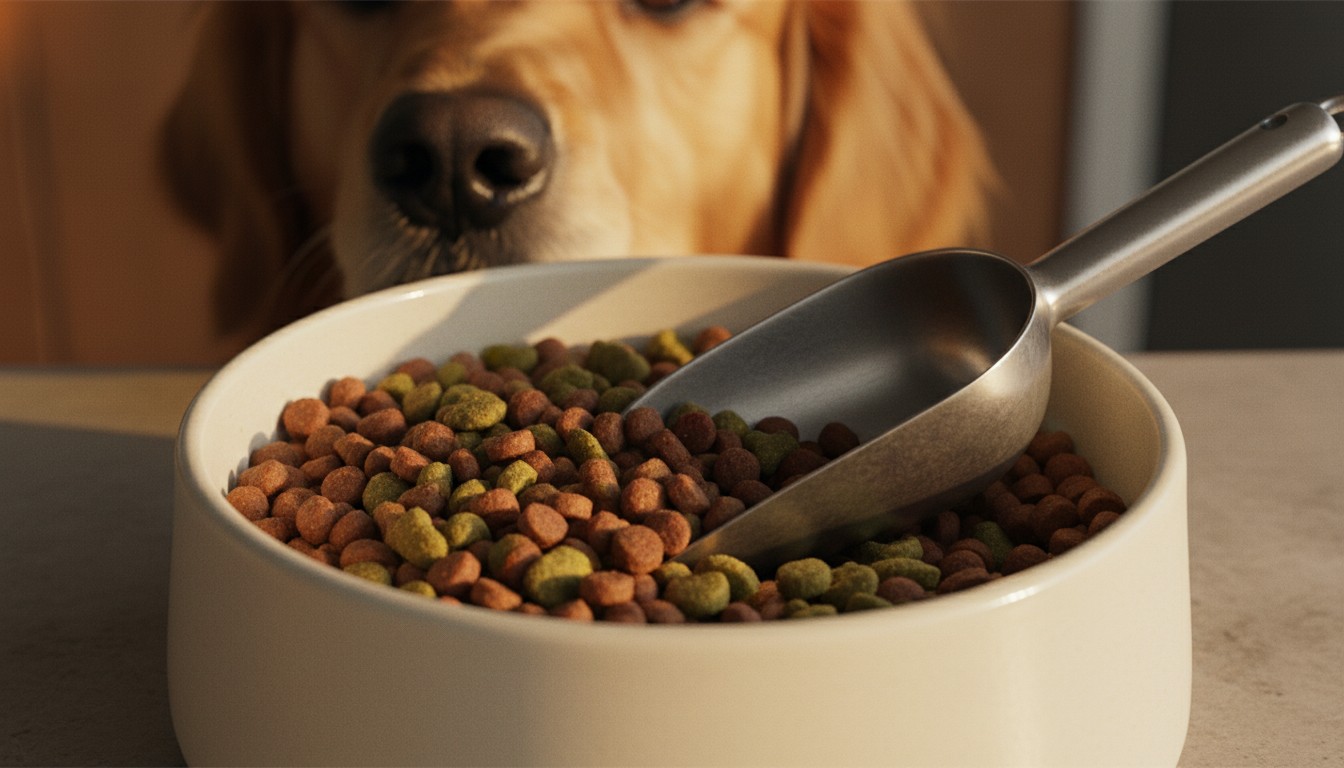
The most common point of failure for a dog food transition is the 50/50 mix. At this stage, the concentration of new ingredients reaches a critical mass. If your dog's stools were firm at the 25% mark but become soft or 'pudding-like' at 50%, it indicates that the digestive enzymes haven't scaled up sufficiently to meet the new dietary demands. This is the 'stall.'
It is vital to distinguish between an adjustment period and a true intolerance. An adjustment period usually involves soft stools but the dog remains energetic and hungry. A true intolerance or allergy often presents with more severe signs: vomiting, extreme flatulence, or intense itching. If you see 'borborygmi' (loud stomach gurgling) and the dog seems lethargic, you aren't just looking at a slow transition; the food itself may be incompatible. However, if it's just a matter of soft stools, the solution isn't to stop, but to pause. This is where most owners make the mistake of either 'powering through' and causing more inflammation or giving up entirely and confusing the dog's system even further.

The Reset Protocol: How to Back Up Safely
When a transition stalls, we recommend the 'Reset Protocol.' Instead of stopping the new food, back the ratio up to the last successful stage. If the 50/50 mix caused issues, return to a 75% old and 25% new mix for at least three to five days until the stools are consistently firm again. This 'holding pattern' allows the gut flora to stabilise without the stress of a total diet change.
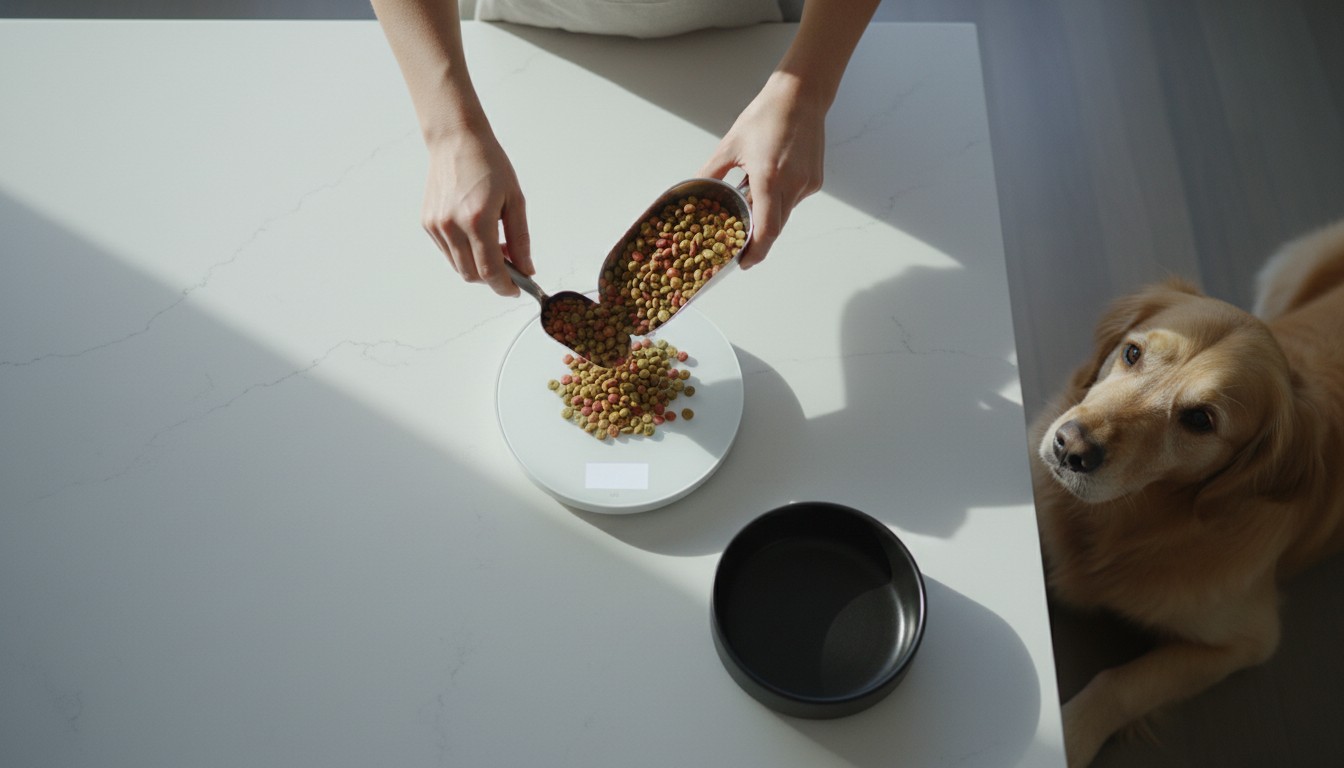
Once stability is reached, move forward by much smaller increments—think 10% increases every three days rather than 25%. In New Zealand, many owners find success using a kitchen scale to measure these precise amounts in grams. For dogs that are particularly sensitive, adding a plain, cooked pumpkin puree (not the spiced pie filling) can help. The soluble fibre in pumpkin absorbs excess water in the colon, providing immediate mechanical help to the digestive tract while the bacteria catch up. If you are using local NZ brands like Sunday Pets, ensure you aren't overfeeding; because these foods are often more calorie-dense, a 'stall' is sometimes just a symptom of overfeeding rather than the ingredients themselves.
Supporting the Switch with Local NZ Resources
Sometimes the gut needs a literal helping hand in the form of probiotics. High-quality probiotics like Purina Pro Plan FortiFlora (available at most NZ vet clinics and retailers like Animates) provide a concentrated dose of beneficial bacteria that can jump-start the colon's ability to handle new ingredients. These are especially useful when transitioning from a grain-inclusive diet to a grain-free one, as the carbohydrate processing pathways change significantly.
Additionally, consider the water source. If you have recently moved house within New Zealand—perhaps from a chlorinated city supply in Auckland to a tank-water system in rural Canterbury—the change in water mineralisation can compound food transition issues. Always ensure your dog has access to filtered water during a switch to eliminate this variable. If the transition remains stalled for more than two weeks despite using the Reset Protocol, it is time to consult your local veterinarian. They may suggest a prescription 'transition' diet or a course of B12 injections to support the gut lining, especially for older dogs or those with known GI challenges.

FAQ
How long should a dog have soft stools during a transition?
Minor softening is normal for 2-3 days at each new stage. However, if the stools are liquid or persist for more than 4 days without improvement, you should back up the ratio to the previous successful stage.
Can I use boiled chicken and rice to fix a stalled transition?
While a bland diet helps settle the stomach, it can complicate a transition by adding even more new variables. It is usually better to back up to the previous 'safe' ratio of old food rather than introducing chicken and rice.
When is a food transition considered a total failure?
If your dog continues to have GI upset after 3 weeks of a very slow 'Reset Protocol,' or if they develop skin rashes, persistent vomiting, or refuse to eat for more than 24 hours, the food is likely incompatible with their system.

Conclusion
Mastering the dog food transition is an exercise in patience and observation. While the 7-day rule works for many, the 'Reset Protocol' is your best tool for those more difficult cases. By understanding the biological needs of the gut microbiome and being willing to slow down to a 10% incremental increase, you can successfully move your pet to a higher-quality diet without the stress of chronic illness. Remember to monitor stool consistency as your primary metric of success and don't hesitate to use local New Zealand resources like probiotics from Animates or advice from your local vet if things don't improve. If you notice blood in the stool, extreme lethargy, or repeated vomiting, seek professional veterinary help immediately, as these are signs of medical distress rather than a simple dietary stall.

References & Sources
This article was researched using the following sources:


