















For years, New Zealand pet owners have been told that the golden rule of pet nutrition is to ensure meat is the first item on the ingredient list. It sounds logical: if chicken or lamb is at the top, the bag must be primarily made of high-quality protein. However, savvy shoppers are often falling victim to a clever marketing tactic known as ingredient splitting. This practice allows manufacturers to manipulate the order of ingredients, artificially bumping meat to the number one spot while the bulk of the food actually consists of cheaper fillers. Understanding how to decode these labels is essential for anyone shopping at local retailers like Animates or New World, ensuring your cat or dog receives the nutrients they truly need rather than a bowl full of disguised carbohydrates.
The Mechanics of Ingredient Splitting Explained
Ingredient splitting is a common industry technique where a single, low-cost ingredient is broken down into several smaller sub-categories. On a pet food label, ingredients must be listed in descending order by weight. By taking a bulky filler like corn and listing it as 'corn meal,' 'corn gluten,' and 'ground corn,' a manufacturer can ensure that each individual portion weighs less than the primary meat source. This pushes the meat to the top of the list, even though the combined weight of the corn products might be double or triple the amount of meat present.
In New Zealand, where premium pet food prices can be significant, this transparency is vital. Many owners believe they are paying for a meat-rich diet when they are actually buying a grain-based biscuit with a 'meat first' label. This tactic isn't limited to grains; it is increasingly seen with grain-free alternatives like peas. You might see 'whole peas,' 'pea protein,' and 'pea fibre' all appearing on the same bag. If you were to add those three items back together, the 'pea' category would often dwarf the meat content significantly. Being aware of this allows you to look past the first ingredient and see the product for what it truly is: a clever arrangement of components designed to meet consumer expectations rather than nutritional ideals.
The Water Weight Trap: Fresh Meat vs. Meal
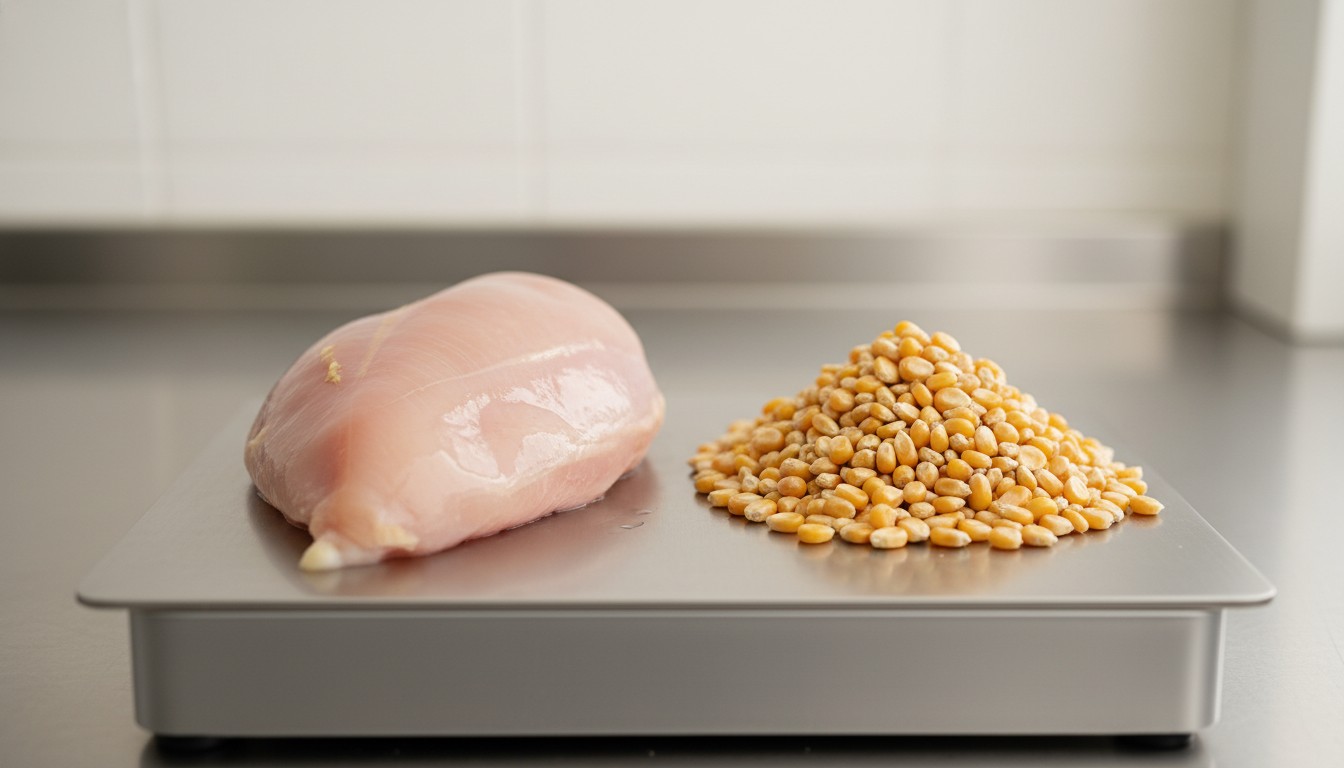
Another layer to the 'meat first' myth involves the difference between fresh meat and meat meal. Under New Zealand and international labelling standards, ingredients are weighed before they are processed. Fresh chicken, for example, is approximately 70% water. When that chicken is cooked and extruded into dry kibble, the moisture is removed, leaving behind only a fraction of the original weight. Conversely, grain fillers or 'meals' are already dry and do not lose significant weight during the cooking process.
This means that if a bag lists 'Fresh Chicken' first and 'Corn Meal' second, the reality after cooking is likely the opposite. Once the water is removed from the chicken, it may drop to the fourth or fifth position in the actual nutritional profile of the finished biscuit. To get a truer sense of the protein content, look for 'meat meals' (like lamb meal or chicken meal) near the top of the list. These have already had the moisture removed before weighing, providing a more accurate representation of the protein density. When you combine this 'water weight' factor with ingredient splitting, it becomes clear why relying solely on the first ingredient is a flawed strategy for evaluating the quality of your pet's diet.
Common 'Splitters' to Watch for in New Zealand Shops
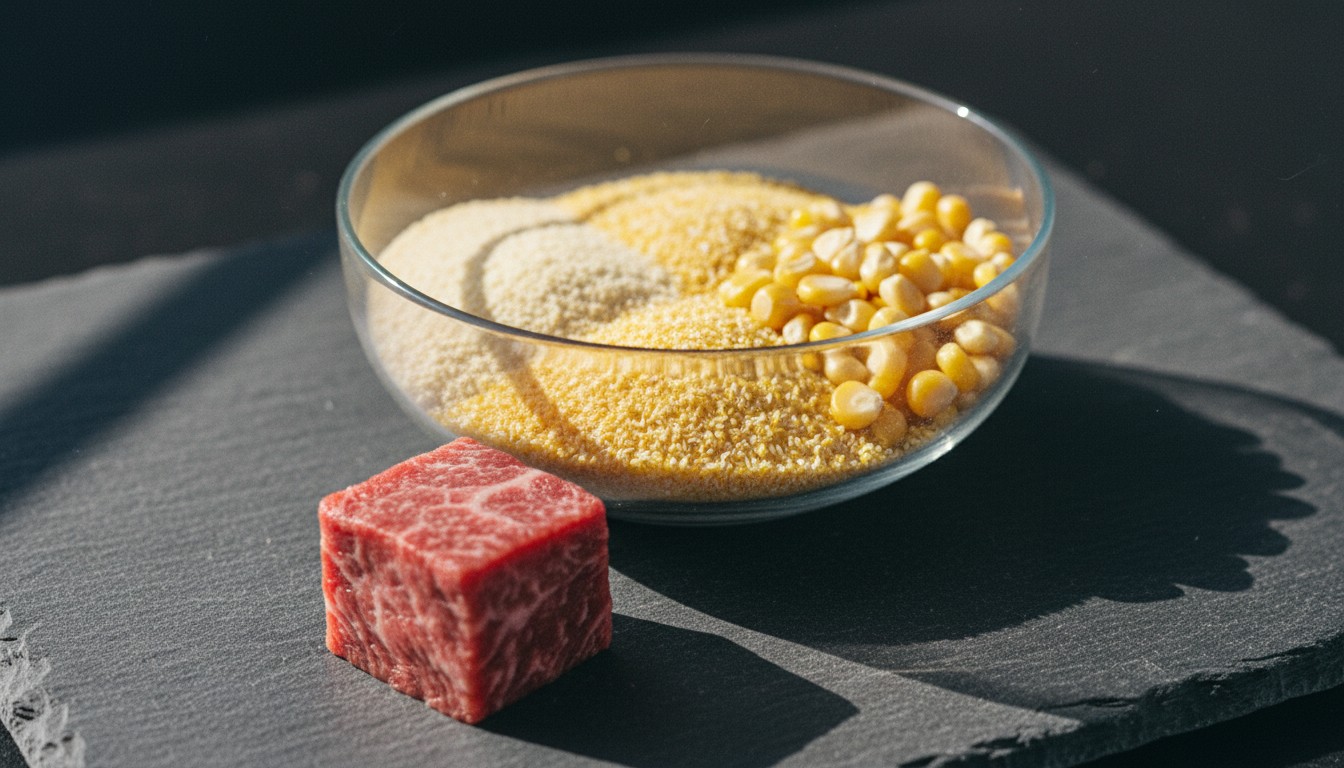
When you are browsing the aisles of a New Zealand supermarket or pet specialty store, there are specific 'red flag' ingredients that are frequently split. In traditional grain-inclusive foods, corn, wheat, and rice are the primary culprits. You might see 'brewers rice,' 'rice bran,' and 'rice flour' listed consecutively. Individually, they may sit at positions four, five, and six, but together they constitute the lion's share of the recipe. This is a strategic way to keep 'Chicken' at position one while maintaining a low-cost, high-carbohydrate formula.
In the 'grain-free' market, which has gained massive popularity across NZ, the splitting of legumes is the new trend. Peas and lentils are the most common substitutes for grains, and they are split just as frequently. Look for pea flour, pea protein, pea starch, and pea fibre. If you see three or more variations of the same plant source in the first seven ingredients, you are almost certainly looking at a product where that plant is the true base of the food. Identifying these patterns is the first step in becoming a more conscious consumer. Instead of just looking for the word 'meat,' scan the first ten ingredients for repeating plant types. If you see a variety of 'peas' or 'corn' products, you should mentally group them together to determine the food's true primary ingredient.

How to Mentally Recombine Ingredients
To accurately assess a pet food, you must learn to 'recombine' the split ingredients. This is a simple mental exercise you can perform while standing in the shop. Take the top seven ingredients and group them by source. For example, if a label reads: 'Beef, Ground Wheat, Wheat Flour, Chicken Fat, Wheat Gluten, Dried Beet Pulp, Wheat Bran,' you should group all the wheat components together. In this instance, wheat appears four times. It is highly probable that if those wheat components were weighed as one, 'Wheat' would be the first ingredient by a wide margin, and 'Beef' would be secondary.
This method also helps you identify the actual diversity of the diet. A high-quality food should ideally have a variety of protein sources or a very clear, heavy emphasis on a single animal protein without excessive plant-based fillers. If your mental recombination reveals that 50% of the top ingredients are just different versions of a single carbohydrate, the food is likely designed for profit margins rather than peak canine or feline health. This is particularly important for pets with sensitivities; if a dog is reactive to corn, a food that splits corn into four names might seem safe at first glance but could actually be loaded with the very allergen you are trying to avoid. Always look at the 'big picture' of the ingredient panel rather than getting tunnel vision on the very first word.

Troubleshooting: When the Label Doesn't Add Up
Sometimes, even with your new knowledge of ingredient splitting, a label can still be confusing. You might find a food where the ingredients look perfect, but your pet isn't thriving—perhaps their coat is dull, or their energy levels are low. In these cases, look at the 'Guaranteed Analysis' section, which lists the minimum percentages of crude protein and fat. If the protein percentage is low (e.g., below 22% for a dry dog food) despite 'Meat' being the first ingredient, it is a strong sign that ingredient splitting or water-weight manipulation has occurred.
If you find yourself overwhelmed by complex labels, consider simplifying your search by looking for New Zealand-made brands that prioritise whole-food ingredients. Local brands like Ziwi Peak or K9 Natural often use 90% or more meat, organs, and bone, leaving very little room for ingredient splitting to occur. While these premium options are more expensive, you often feed smaller portions because the nutrient density is so much higher. If you are on a budget, don't despair; simply look for the 'best in class' at your price point by avoiding bags with the most egregious splitting (more than three versions of the same grain). If your pet shows signs of significant digestive upset, chronic itching, or lethargy despite a seemingly 'good' food, it is time to consult your local veterinarian. They can help rule out underlying health issues and provide a professional recommendation tailored to your pet's specific life stage and breed.
Beyond the Marketing: The Role of Ethics and Quality
While ingredient splitting is legal, it raises questions about the transparency of the pet food industry. As a pet owner in New Zealand, you have the power to influence these practices through your purchasing decisions. By choosing brands that avoid deceptive labelling, you send a clear message to manufacturers that you value honesty and quality. It is also worth noting that 'meat' itself is a broad term. In lower-quality foods, 'meat' might refer to 'animal derivatives' or 'meat by-products,' which are less nutritionally consistent than specific named sources like 'deboned lamb' or 'salmon meal.'
Always remember that the most expensive food isn't always the best, and the cleverest marketing isn't always the truth. The goal is to find a balance between what you can afford and the highest biological value for your pet. Acknowledge that labels are a starting point, but the proof is in your pet's health. Watch for clear eyes, a shiny coat, and consistent stools. These physical markers, combined with your ability to spot ingredient splitting, will make you a much more effective advocate for your pet's well-being. If you are ever unsure, reaching out to a pet nutritionist or a vet who specialises in diet can provide clarity that no marketing department can offer. Safety and long-term health should always be the priority when navigating the complex world of pet nutrition.
FAQ
Is ingredient splitting illegal in New Zealand?
No, it is not illegal. Manufacturers are required to list ingredients by weight, and as long as each split component (like corn meal vs. corn gluten) is technically a different ingredient, they can be listed separately. It is a legal loophole rather than a regulatory violation.
Does grain-free food avoid ingredient splitting?
Not necessarily. In fact, grain-free foods are some of the biggest users of this tactic, often splitting peas into pea protein, pea flour, and pea fibre to keep meat at the top of the list while maintaining a high plant-based content.
How can I tell if the meat content is actually high?
Check the Guaranteed Analysis for the protein percentage and compare it to the ingredient list. If the protein is above 30% and the first three ingredients are named meat meals (e.g., Lamb Meal), the food likely has a high animal protein content.
Should I avoid any food that uses ingredient splitting?
Not necessarily. Many mid-range foods use it to stay affordable. The key is to be aware of it so you aren't overpaying for a food that you think is 'mostly meat' when it is actually balanced with significant fillers.
Are New Zealand brands better at avoiding this than imported ones?
New Zealand has many high-end 'whole food' brands that avoid this practice, but local supermarket brands often use the same tactics as international ones. Always check the individual label regardless of the country of origin.
Conclusion
Navigating the pet food aisle requires more than just a quick glance at the front of the bag. The 'meat first' myth is a powerful marketing tool, but once you understand the reality of ingredient splitting and water weight, you can see through the smoke and mirrors. By mentally recombining ingredients and looking for transparency in labelling, you can ensure your New Zealand pets are getting a diet that supports their longevity and vitality. Always keep an eye on your pet's physical condition and consult a veterinarian if you notice any changes in their health or behaviour. Armed with these expert tips, you can shop with confidence, knowing exactly what is going into your pet's bowl every day.
References & Sources
This article was researched using the following sources:


