














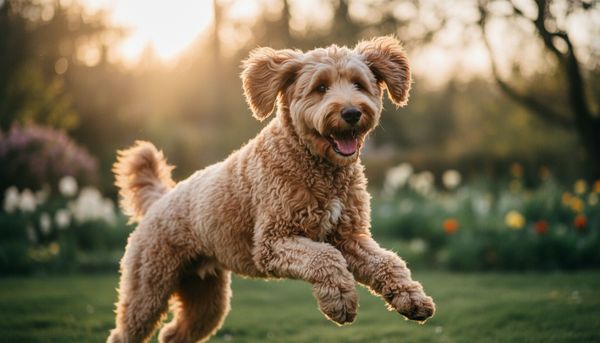
For many New Zealand dog owners, the struggle with coat matting is a frustrating cycle. You might be brushing your Labradoodle or Spaniel every day, yet your groomer still finds 'pelting' close to the skin. This common issue occurs because traditional surface brushing only addresses the top layer of fur. To truly maintain a long-haired or double-coated breed, you must master the professional technique known as line brushing. Line brushing involves systematically sectioning the hair to ensure you are reaching right down to the skin, removing the dead undercoat before it can weave into painful tangles. By adopting this methodical approach, you can maintain a beautiful, fluffy coat and prevent the discomfort of severe matting for your beloved companion.
Why Surface Brushing Fails and Line Brushing Succeeds
Many owners in New Zealand fall into the trap of 'surface brushing.' This is where you run a brush over the top of the coat, making the dog look fluffy and well-kept. However, beneath that soft exterior, the undercoat may be forming a solid sheet of felted hair, often called pelting. This is particularly common in high-humidity areas like Auckland or after a wet winter walk in the Waitakere Ranges. Because the brush doesn't reach the skin, the friction of the dog moving causes the dense undercoat to knot together tight against the body.
Line brushing solves this by ensuring every single strand of hair is separated from the base to the tip. By parting the hair in 'lines,' you expose the skin and work through the coat layer by layer. This not only prevents mats but also improves air circulation to the skin, which is vital for preventing hotspots and fungal infections in our damp climate. Understanding that grooming is a three-dimensional task—focusing on depth as much as surface area—is the 'aha' moment that transforms your home grooming routine.
The Essential Toolkit for the Kiwi Home Groomer
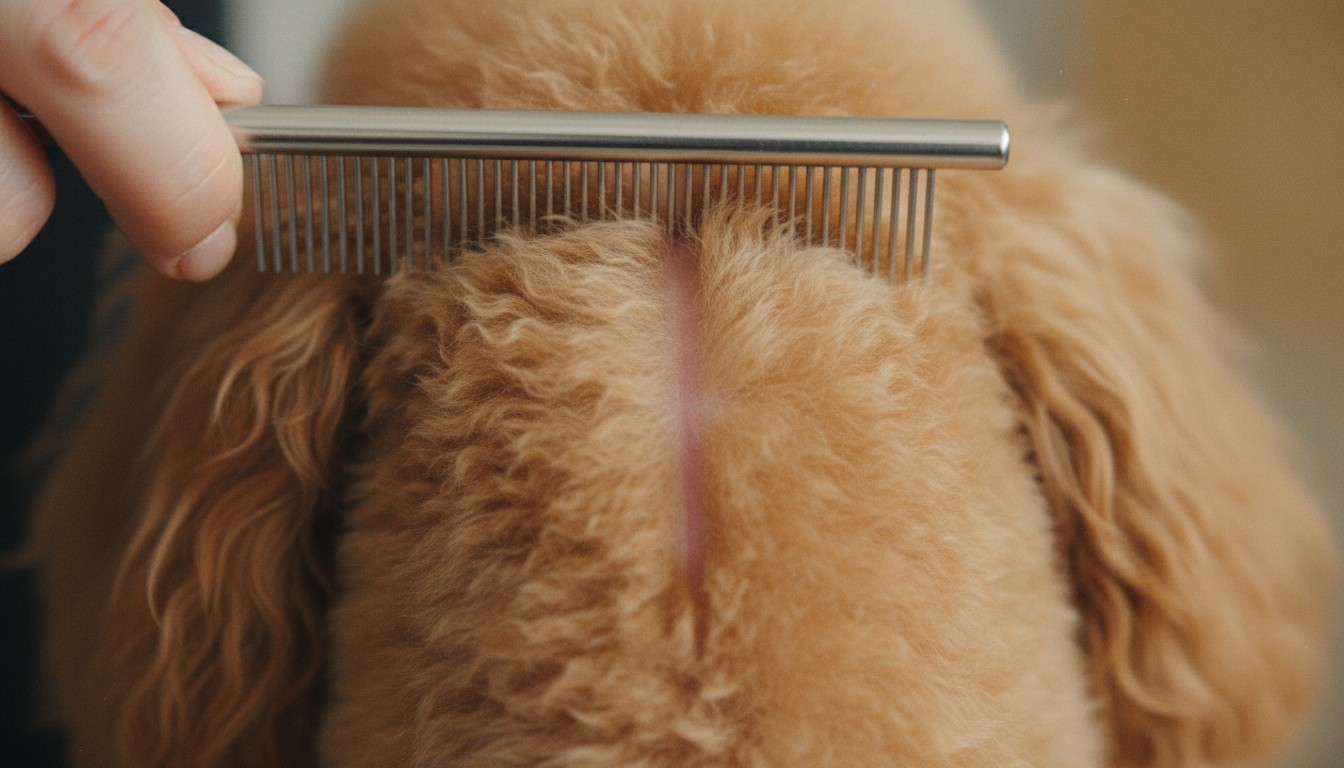
To perform line brushing effectively, you need the right tools. A standard supermarket brush simply won't suffice for dense-coated breeds like Cockapoos or Border Collies. Your primary tool should be a high-quality slicker brush with long, flexible pins that can penetrate deep into the coat without scratching the skin. Brands available at local retailers like Animates or Petstock often provide varying pin lengths; choose one suited to your dog's specific coat depth.
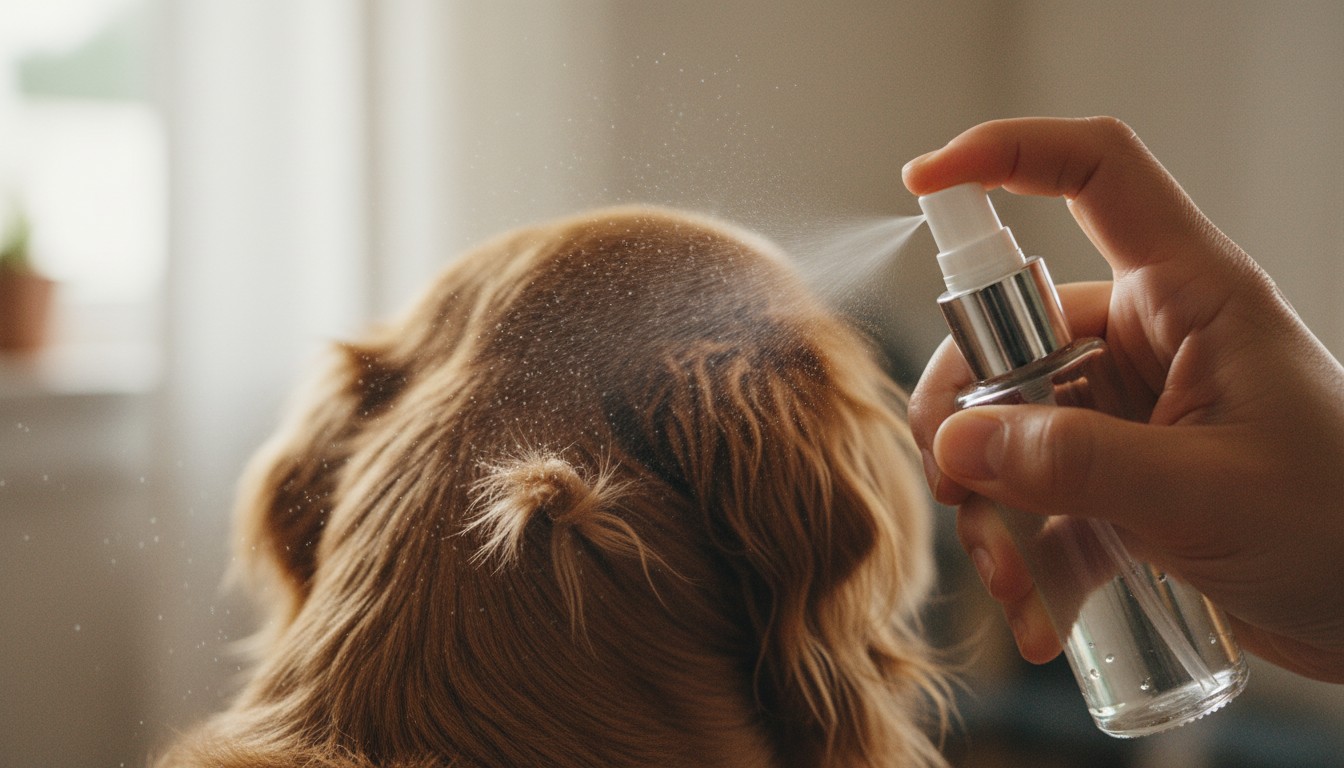
In addition to a slicker brush, a stainless steel 'Greyhound' comb is non-negotiable. This tool acts as your quality control. After you have brushed a section, the comb should glide through from the skin outward without hitting any snags. For particularly stubborn coats, a New Zealand-made detangling spray, such as those from Smith & Burton, can provide the necessary 'slip' to ease out minor tangles without breaking the hair shaft. Investing in professional-grade tools might cost a bit more upfront (typically between $40 to $120 NZD), but they save you money in the long run by reducing the need for expensive 'shave-downs' at the groomer.
Step-by-Step: Mastering the Line Brushing Technique
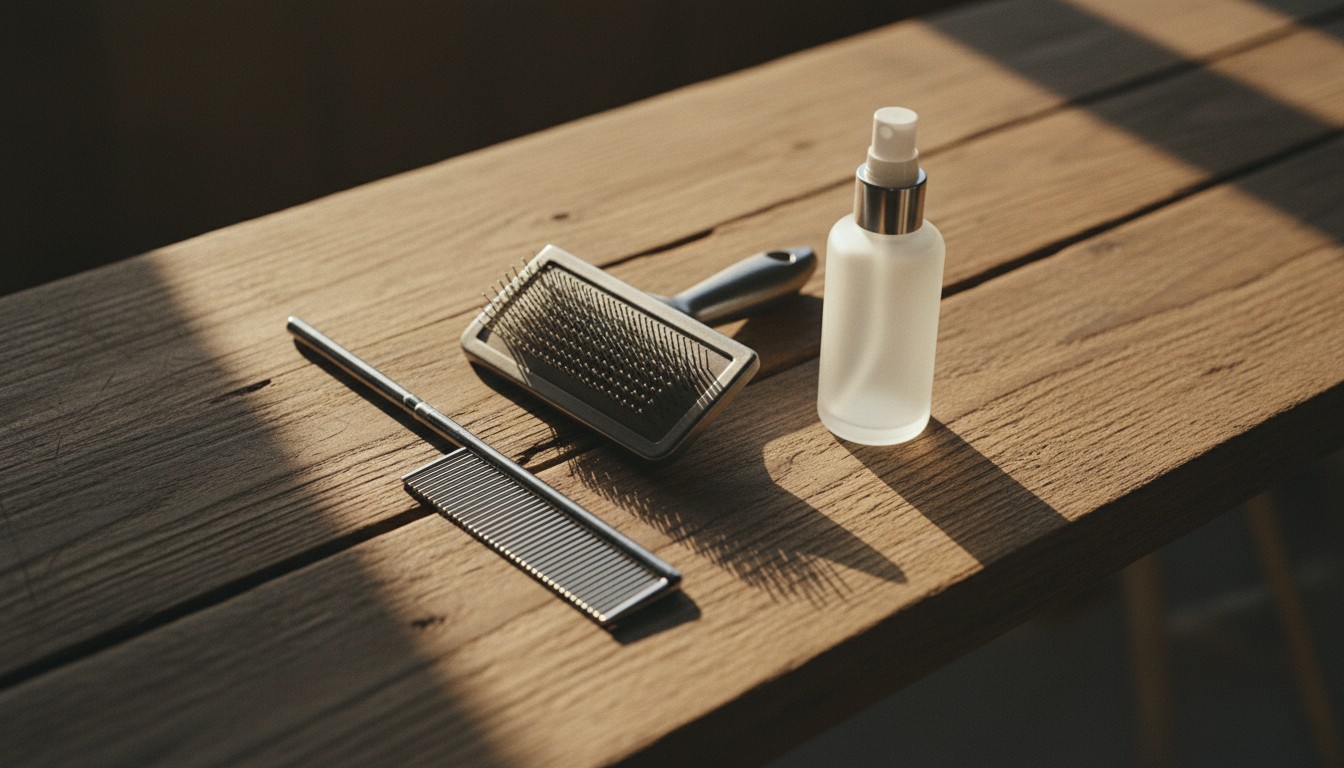
Start at the lowest point of your dog, usually the hock of a back leg or the base of the tail. Using your non-dominant hand, push the hair upward and hold it out of the way to create a horizontal part that reveals the skin. This is your 'line.' With your dominant hand, take your slicker brush and gently brush the hair downward, away from the hand holding the rest of the coat. Use short, controlled strokes, ensuring the pins reach the skin but do not scrape it harshly.
Once that small horizontal section is completely smooth and you can see the skin clearly across the line, release a small amount of hair from your non-dominant hand (about one centimetre) and repeat the process. Work your way up the body in rows. It is a slow, methodical process that requires patience. If you encounter a small knot, do not pull. Instead, use the corner of the slicker brush to 'tap' and 'pick' at the knot until it separates. This technique prevents the 'brush burn' that occurs when owners try to force a brush through a large section of hair at once.
Troubleshooting: Handling Mats and Sensitive Areas
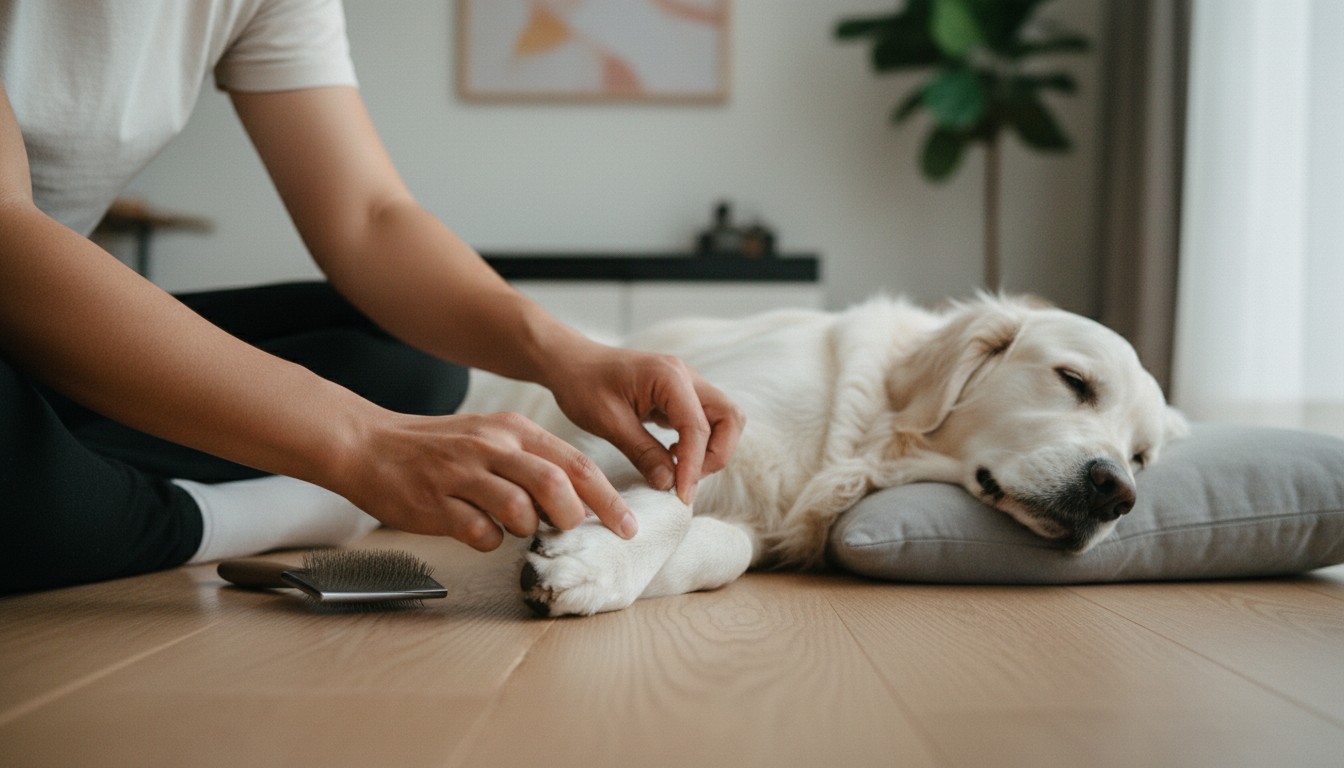
Even with regular line brushing, mats can appear, especially in high-friction areas like behind the ears, under the armpits, and where the collar or harness sits. If you find a mat, the first rule is: do not reach for the scissors. It is incredibly easy to accidentally cut a dog's thin skin, leading to an emergency trip to the vet. Instead, apply a detangling spray and use your fingers to gently pull the mat apart from the outside in. Once it is loosened, use the end tooth of your metal comb to slowly pick the fibres apart.
In New Zealand, we often deal with 'bidi-bids' and other sticky seeds from bush walks that can act as the core for a nasty mat. If a mat is too tight to be picked out, it may be 'pelted' to the skin. You can tell a mat is dangerous if the skin around it is red, or if the mat feels like a hard lump that doesn't move. In these cases, it is safer for the dog's welfare to have a professional groomer clip the mat out with safety-guarded blades. Always prioritize your dog's comfort over the aesthetics of their coat; a 'shave-down' is far kinder than hours of painful de-matting.
Adapting Your Routine to the New Zealand Environment
Our local environment significantly impacts how often you need to line brush. In the humid North Island summers, coats can become frizzy and prone to tangling more quickly. Conversely, during the muddy winters, the constant cycle of getting wet and drying off can cause the undercoat to tighten into mats almost overnight. If your dog enjoys swimming at the beach, the salt water and sand can also act as an abrasive that damages the hair cuticle, making it more likely to snag.
To combat these environmental factors, aim to line brush at least two to three times a week for most long-haired breeds. If your dog has been through the bush or the sea, a thorough line brushing session should happen as soon as they are dry. Remember that you should never brush a soaking wet coat with a slicker brush, as the hair is at its weakest and most prone to breakage. Wait until the coat is damp or dry, apply a leave-in conditioner, and then begin your line brushing routine to keep the coat resilient against the elements.
When to Seek a Professional Kiwi Groomer
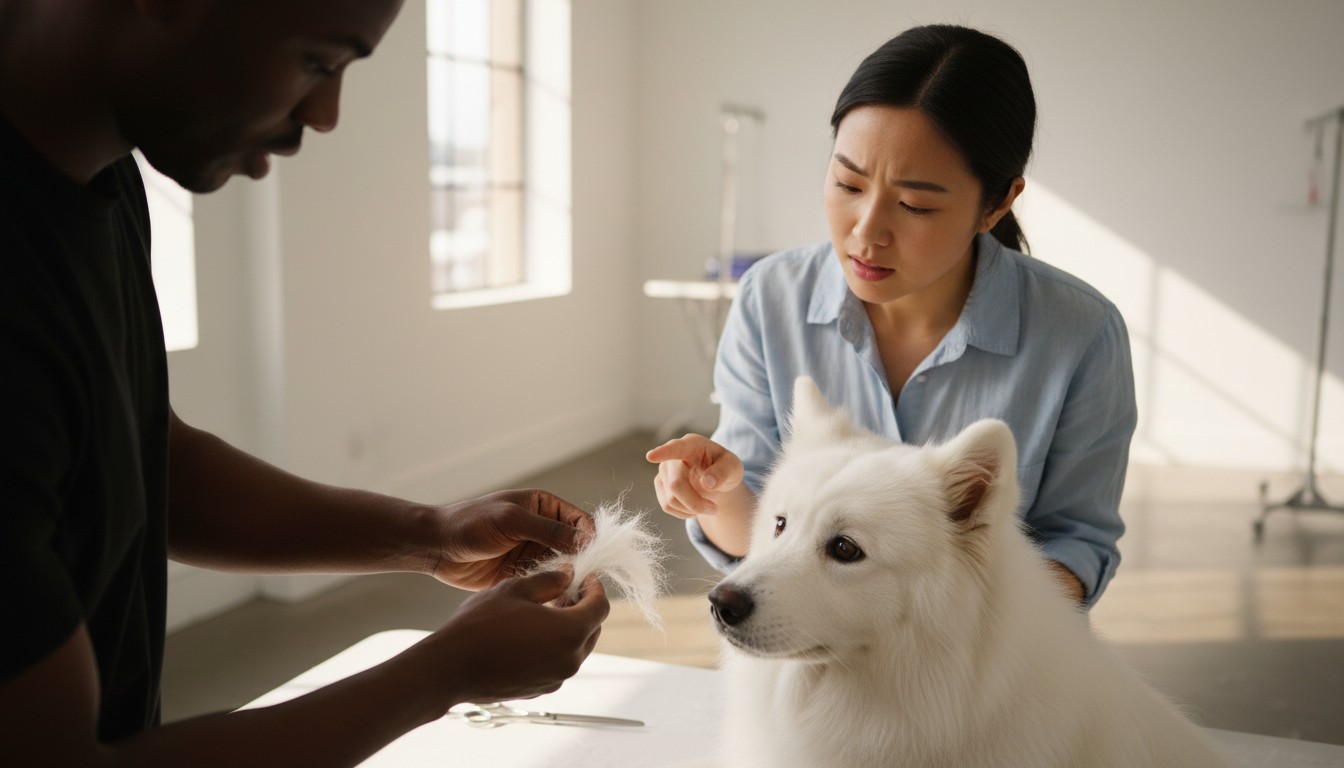
While line brushing is an excellent skill for home maintenance, it does not replace the need for professional grooming. A professional groomer has the tools and expertise to handle sensitive areas like the sanitary regions, paw pads, and inner ears safely. Furthermore, if you find that your dog's coat has become pelted—where the mats are so close to the skin that they restrict movement or trap moisture—this is a welfare issue that requires professional intervention. Attempting to de-mat a pelted dog at home can cause significant pain and skin tearing.
If you notice your dog is flinching, if the skin is inflamed, or if the matting covers more than 20% of the body, book an appointment with a local groomer. Most New Zealand groomers are happy to provide a 'grooming consultation' to show you exactly how to line brush your specific dog. This collaborative approach between owner and professional ensures the best outcome for the dog's health. Regular professional grooms every 6-8 weeks, combined with your diligent line brushing at home, will keep your dog's coat in championship condition year-round.
FAQ
How long does line brushing usually take?
For a medium-sized dog with a moderately long coat, a full body line brushing session can take between 30 to 60 minutes. It is often easier to break the task into sections, doing the legs one day and the body the next, to keep the experience positive for your dog.
Is line brushing painful for the dog?
When done correctly, line brushing is not painful and can actually be a relaxing bonding experience. However, if you are pulling on existing mats or using a brush with sharp pins too aggressively against the skin, it can cause discomfort. Always use a gentle touch and plenty of positive reinforcement.
What is the difference between line brushing and de-shedding?
Line brushing is a technique used to prevent mats in long-haired or curly-coated breeds by sectioning the hair. De-shedding usually refers to the removal of loose undercoat in double-coated breeds (like Huskies or Labradors) using specialized tools like a Furminator or undercoat rake to reduce shedding around the house.
Conclusion
Mastering the art of line brushing is the single most effective way to ensure your dog remains mat-free and comfortable. While it requires a greater time commitment than a quick surface brush, the benefits to your dog's skin health and overall well-being are immeasurable. By using the right tools, working systematically, and understanding when to call in a professional, you can navigate the challenges of New Zealand's climate and keep your dog looking and feeling their best. Start your new grooming routine today by focusing on just one leg—once you see the difference reaching the skin makes, you will never go back to surface brushing again.
References & Sources
This article was researched using the following sources:


