














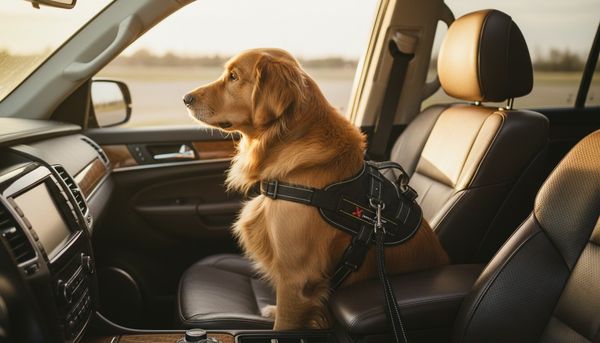
As road trips to destinations like Lonavala, Coorg, or the hills of Himachal become a staple for Indian pet parents, the demand for safety gear has skyrocketed. However, simply clicking a seatbelt into a harness isn't enough. To truly protect your canine companion, you must understand impact physics. When a vehicle travelling at 60 km/h comes to a sudden halt, an unrestrained 25 kg dog—roughly the size of a standard Labrador—transforms into a projectile exerting over 1,000 kg of force. This isn't just a safety concern; it is a matter of Newtonian mechanics. This guide moves beyond the glossy 'crash-tested' stickers found on e-commerce sites like Amazon India or Heads Up For Tails, teaching you how to evaluate the engineering of your dog car restraint based on first principles of kinetic energy and structural integrity.
The Mathematics of Momentum: Why Weight Multiplies
The fundamental principle governing car safety is kinetic energy, defined by the formula $KE = 1/2 mv^2$. In the context of impact physics, the velocity (speed) is squared, meaning even a small increase in speed results in a massive increase in the force of an impact. For Indian drivers navigating highways like the Mumbai-Pune Expressway, where speeds often hit 100 km/h, the danger is exponential.
When a car crashes, there are actually three collisions. The first is the car hitting an object. The second is the passenger's body hitting the interior of the car. The third is the internal organs hitting the skeletal structure. A dog car restraint is designed to manage the second collision. If the restraint has too much 'give' or 'stretch', the dog will still strike the back of the front seats or the dashboard with lethal momentum.
Experts suggest looking for restraints that limit forward excursion—the distance the dog moves forward after impact. A high-quality harness should have a short connection point to the vehicle's seatbelt system to minimise this travel distance. In India, many owners use long 'tethers' that attach to the collar; from a physics standpoint, these are nearly useless as they allow the dog to gain too much velocity before the tether snaps taut, likely causing severe neck trauma or hardware failure.
Rotational Forces and the Second Collision
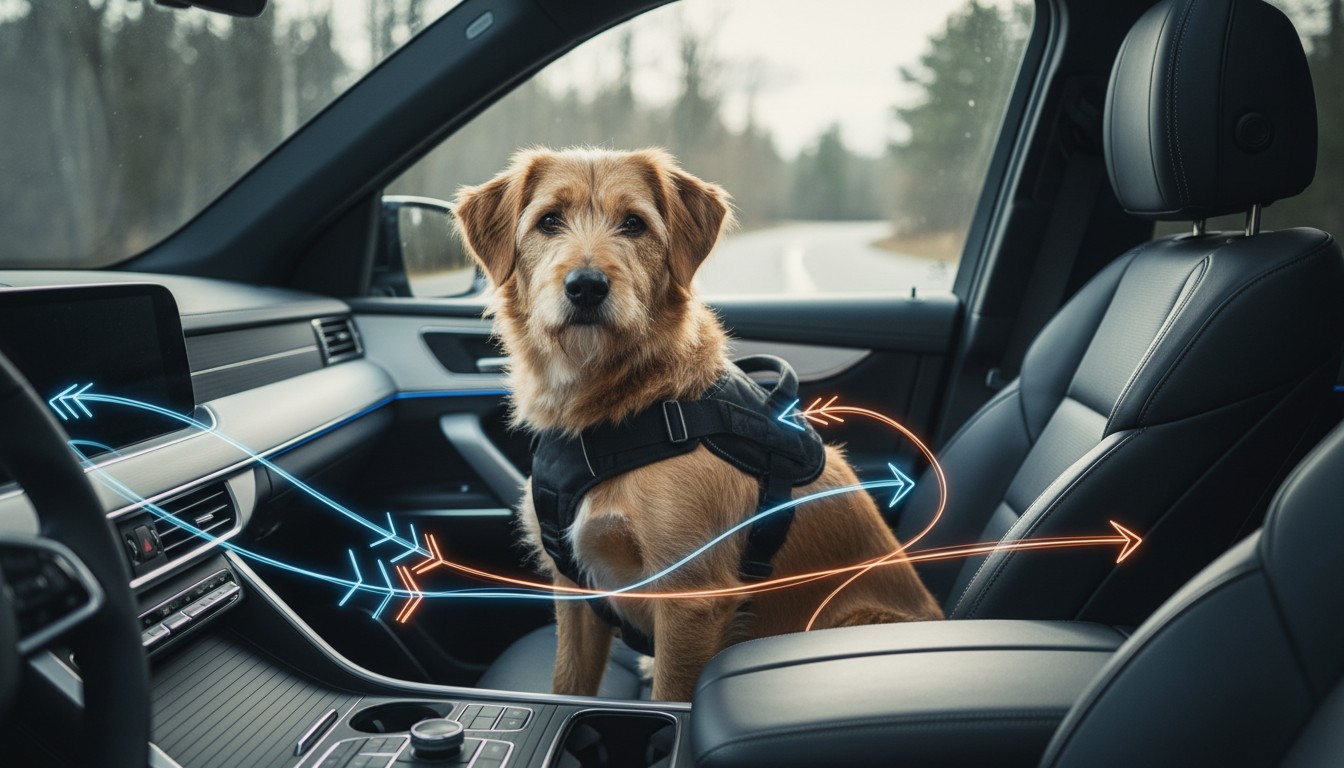
Most marketing focuses on 'frontal impact,' but real-world accidents in India often involve side-swipes or rollovers. This introduces rotational forces. If a harness is only anchored at one point on the dog's back, the dog's body can rotate violently around that axis. This 'spinning' effect can lead to spinal luxation or internal shearing injuries.
To counter this, a technically superior dog car restraint should feature a broad chest plate. This plate acts as a 'crumple zone' for the dog, distributing the impact force across the strongest part of the canine anatomy—the ribcage and sternum—rather than the soft neck or throat.
When evaluating a product, check the padding density. In the heat of an Indian summer, some cheap foam paddings can degrade, losing their energy-absorbing properties. Look for closed-cell foam or breathable mesh that maintains its structural thickness under pressure. This ensures that when the impact physics come into play, the harness absorbs the energy instead of the dog's bones.
Engineering the Anchor: Tensile Strength and Hardware
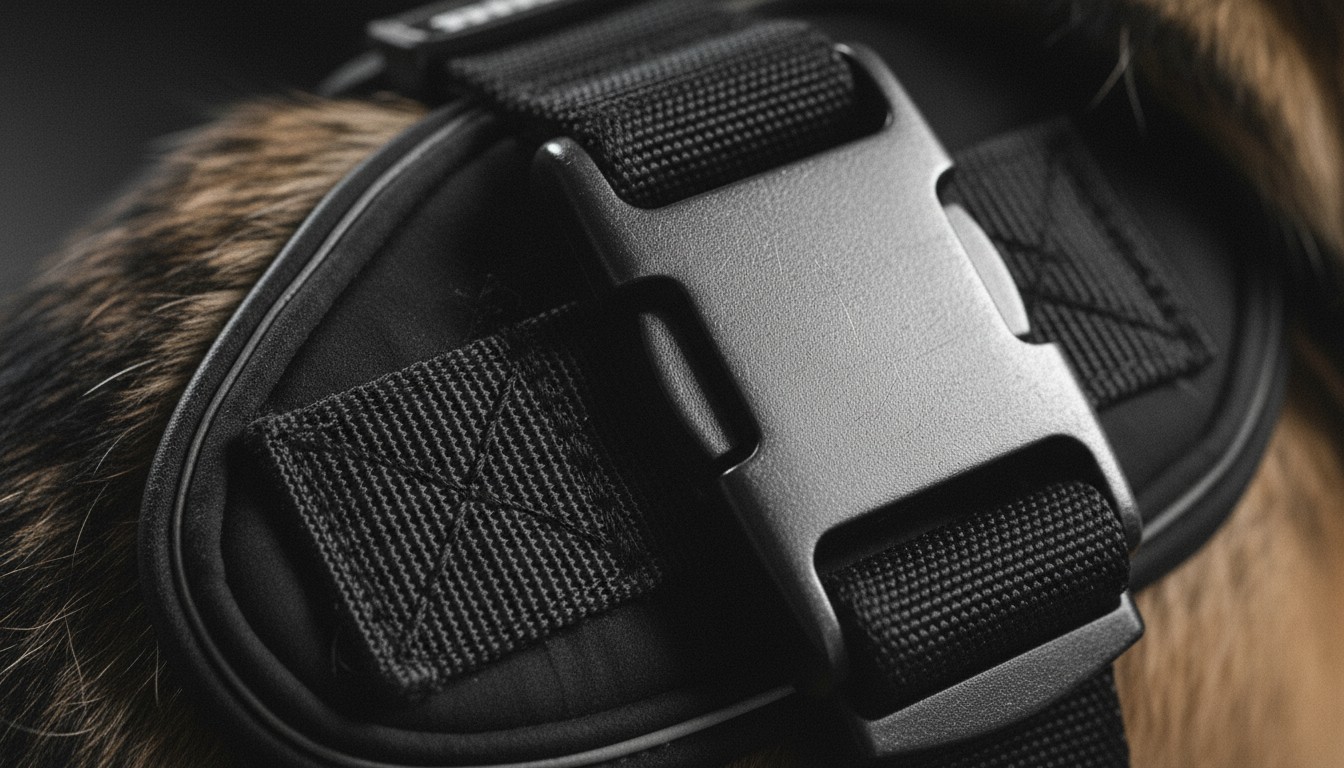
The weakest link in any restraint system is the hardware—the buckles, D-rings, and carabiners. In India, many budget-friendly restraints use plastic side-release buckles similar to those on school bags. Under the stress of impact physics, these plastic components shatter instantly.
True safety-rated restraints use 'all-metal' hardware, often made of forged steel or aircraft-grade aluminium. You should look for 'tensile strength' ratings. A reputable manufacturer will state that their hardware can withstand forces of at least 2,000 kg (approx. 20 kN).
Another critical engineering feature is the 'nesting buckle' design, inspired by rock-climbing harnesses. Unlike a 'click-in' buckle which relies on two small plastic prongs, nesting buckles loop through each other, meaning the more force applied, the tighter they hold. If you are shopping at premium pet stores in Delhi or Bangalore, ask specifically for 'climbing-grade' or 'forged' hardware. Avoid any restraint that uses a standard swivel-eye snap hook, as the gate of the hook is a common failure point during high-velocity snaps.
Decoding the 'Crash Tested' Marketing Label
In the Indian market, the term 'crash tested' is often used loosely because there is no domestic BIS (Bureau of Indian Standards) certification specifically for pet restraints. This allows brands to claim they are 'tested' even if the product failed the test or was only tested at low speeds.
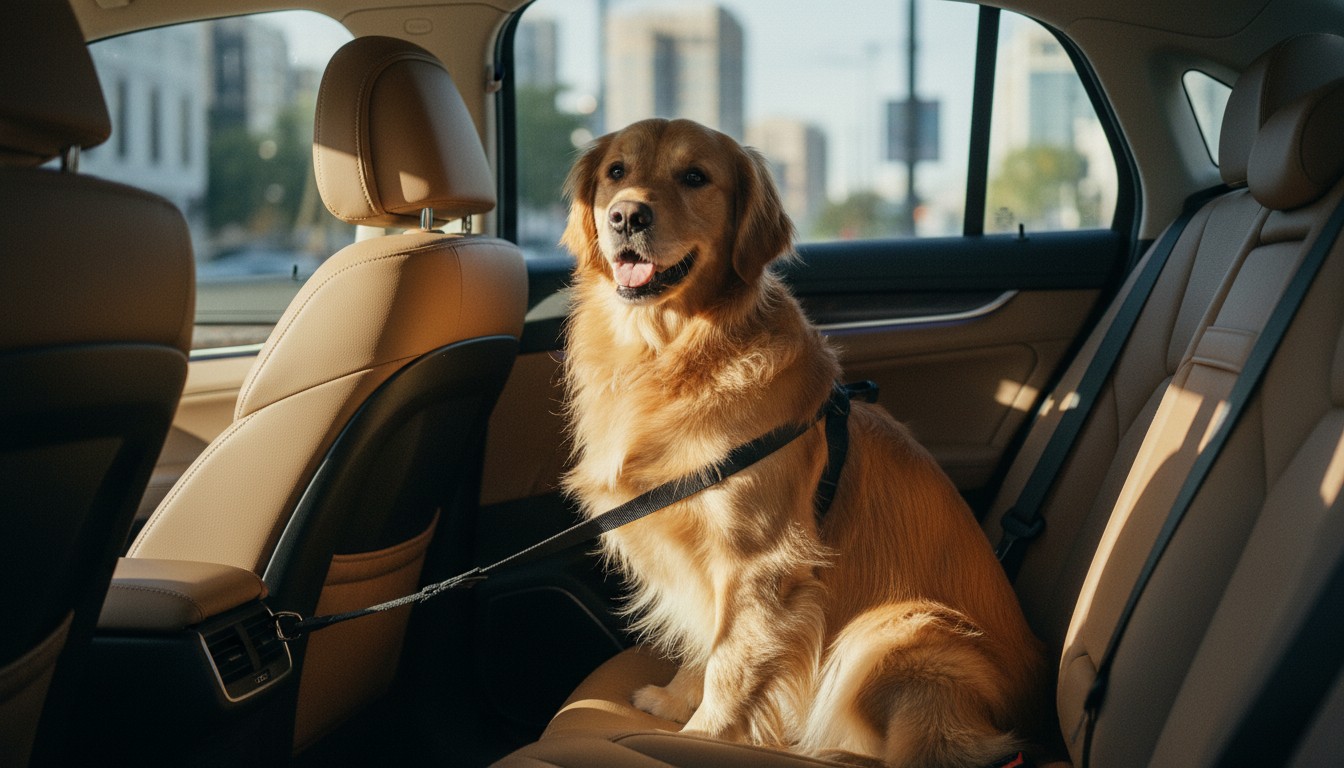
To evaluate a claim, you must look for third-party verification, such as from the Center for Pet Safety (CPS). A truly safe dog car restraint will have undergone dynamic crash testing using weighted 'crash test dogs' that simulate realistic anatomy. These tests look for 'structural integrity' (does the harness stay in one piece?) and 'stowage' (does the dog stay on the seat?).
Be wary of brands that say 'tested to child safety standards.' While the intention is good, the physics of a child in a car seat are entirely different from a four-legged animal with a different centre of gravity. A dog's weight is distributed horizontally, whereas a child's is vertical. Therefore, the restraint must be engineered specifically for canine morphology to be effective. Check the manufacturer’s website for actual slow-motion crash footage; if they don't show it, the 'test' might not have been successful.
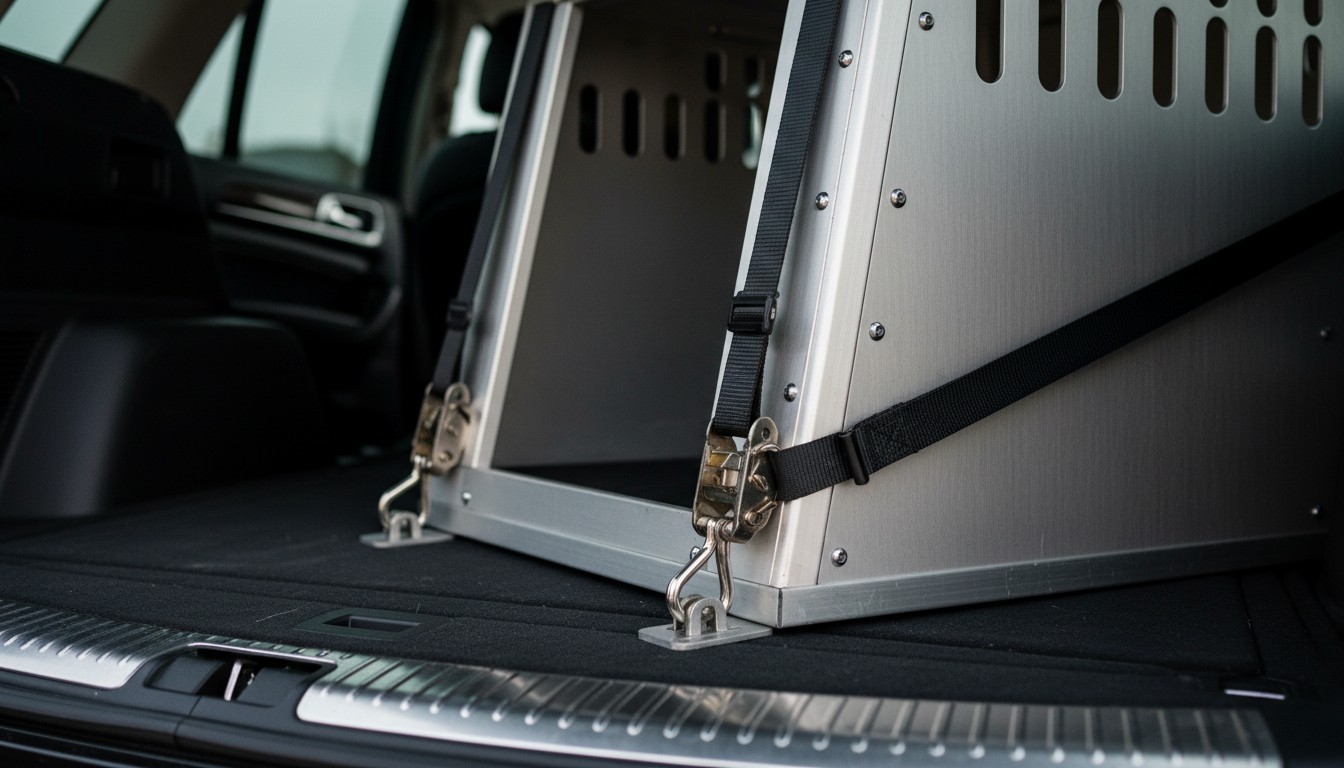
Troubleshooting: Fitment and Common Installation Errors
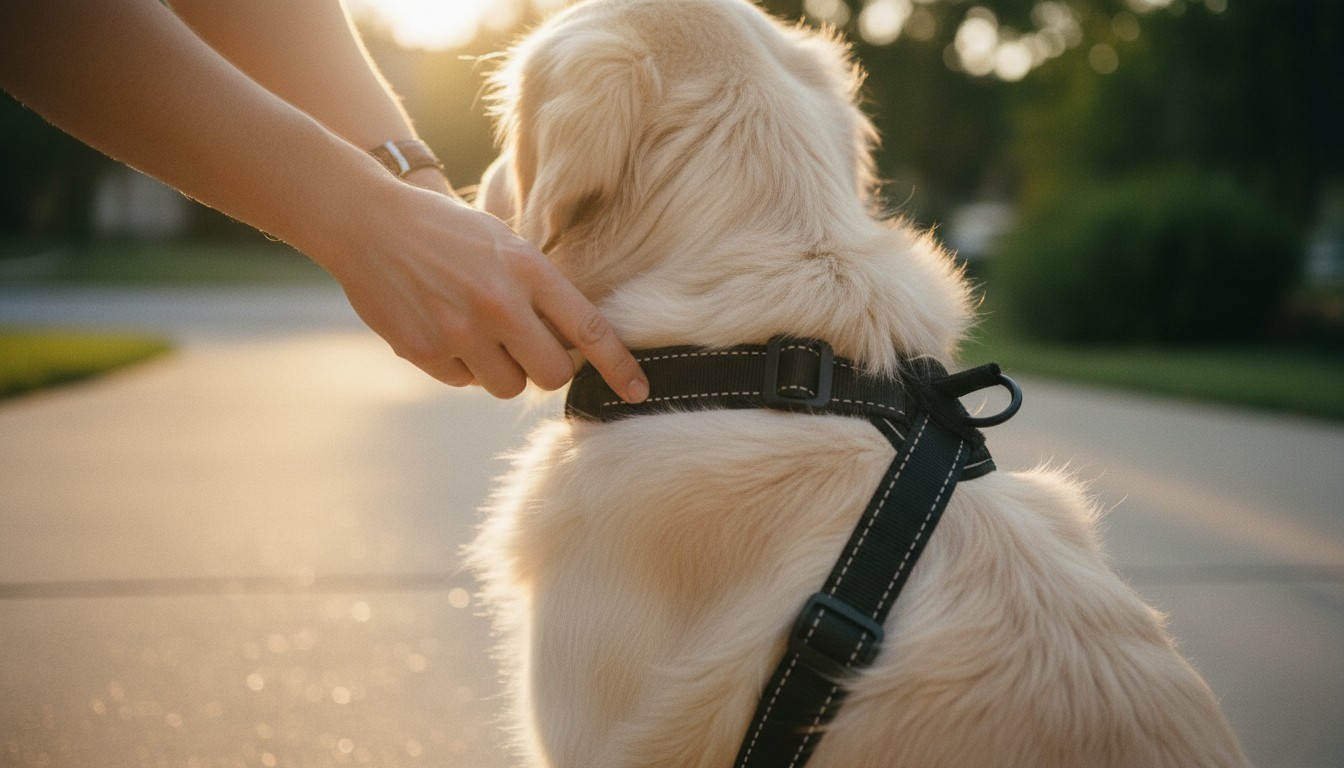
Even the best-engineered restraint will fail if fitted incorrectly. A common mistake among Indian pet owners is leaving the harness too loose to 'make the dog comfortable.' In impact physics, slack is the enemy. Any gap between the dog and the restraint allows for 'shock loading,' where the dog gains speed before being snapped back by the harness.
Signs your setup needs adjustment:
- You can fit more than two fingers under the straps.
- The harness slides to the dog’s side when they move.
- The tether is long enough for the dog to jump into the footwell.
If your dog is an 'escape artist' who can back out of harnesses, look for a three-point restraint system that includes a belly strap. Furthermore, always disable the airbag if your dog is travelling in the front seat. Airbags are designed for adult humans; the force of deployment can be fatal for a dog, regardless of the harness they are wearing. For the highest level of safety on Indian roads, the rear seat using the ISOFIX anchors or the car's integrated seatbelt system is the only recommended position.
FAQ
Is it legal to have a dog in a car without a restraint in India?
While the Indian Motor Vehicles Act does not explicitly mandate pet restraints, Section 177 and 184 can be interpreted to cover 'dangerous driving' or 'obstruction to the driver.' An unrestrained dog can distract the driver or block pedals, leading to heavy fines or vehicle impoundment in cities like Delhi and Mumbai.
Can I just use a regular walking harness for car travel?
No. Regular walking harnesses are designed to withstand the force of a dog pulling (approx. 50-100 kg), not the 1,000+ kg force of a car crash. The plastic buckles and thin nylon straps will likely snap or melt under the friction of a high-speed impact.
What is the safest place in the car for my dog?
The safest place is the centre of the rear seat, as it is furthest from side-impact zones and airbags. If your car has ISOFIX anchors, use a restraint compatible with those points for maximum structural stability.
Conclusion
Understanding impact physics transforms the way you view pet travel. It moves the conversation from 'what looks comfortable' to 'what will survive a 60 km/h deceleration.' By focusing on tensile strength, metal hardware, and minimizing forward excursion, you provide your dog with a genuine safety net rather than a false sense of security. As you plan your next drive across the Western Ghats or through the busy streets of Kolkata, take ten minutes to audit your gear. If it relies on plastic or allows for excessive movement, it's time for an upgrade. Always consult with a professional trainer if your dog shows extreme anxiety in a restraint, as a panicked dog can inadvertently cause gear failure. Safety isn't an accessory; it is an engineering requirement for every journey you take together.
References & Sources
This article was researched using the following sources:


