















Training a pet in a vibrant Indian household often feels like a battle against noise. Whether you are guiding a spirited Indian Pariah dog through a crowded park in Mumbai or teaching a Golden Retriever in a quiet Bengaluru apartment, the clarity of your communication is paramount. This starts with understanding cue selection and discrimination, the fundamental process of choosing and teaching distinct signals that your pet can easily distinguish from everyday background noise. Most owners assume pets understand 'words,' but science suggests they are actually decoding a complex linguistic architecture of sounds and symbols.
The Hierarchy of Senses: Why Visual Cues Lead the Way
To understand cue selection and discrimination, we must first look at how a dog’s brain prioritises information. Research from institutions like Emory University has shown that dogs process visual information significantly faster than verbal sounds. In fact, a dog’s brain may react to a hand gesture in under 75 milliseconds, whereas a spoken word requires more cognitive 'heavy lifting' to decode.
This leads to a phenomenon known as 'overshadowing.' If you simultaneously wave your hand and say 'Sit,' your dog likely ignores the word entirely because the visual signal is so much more salient. In the busy environments of urban India—where traffic horns and street sounds are constant—relying purely on verbal commands is often a recipe for failure. Effective training requires us to acknowledge this visual-first bias and intentionally separate hand signals from verbal cues during the initial learning phases to ensure the pet isn't just guessing based on your body language.

Designing Your Verbal Library: Choosing Distinct Sounds
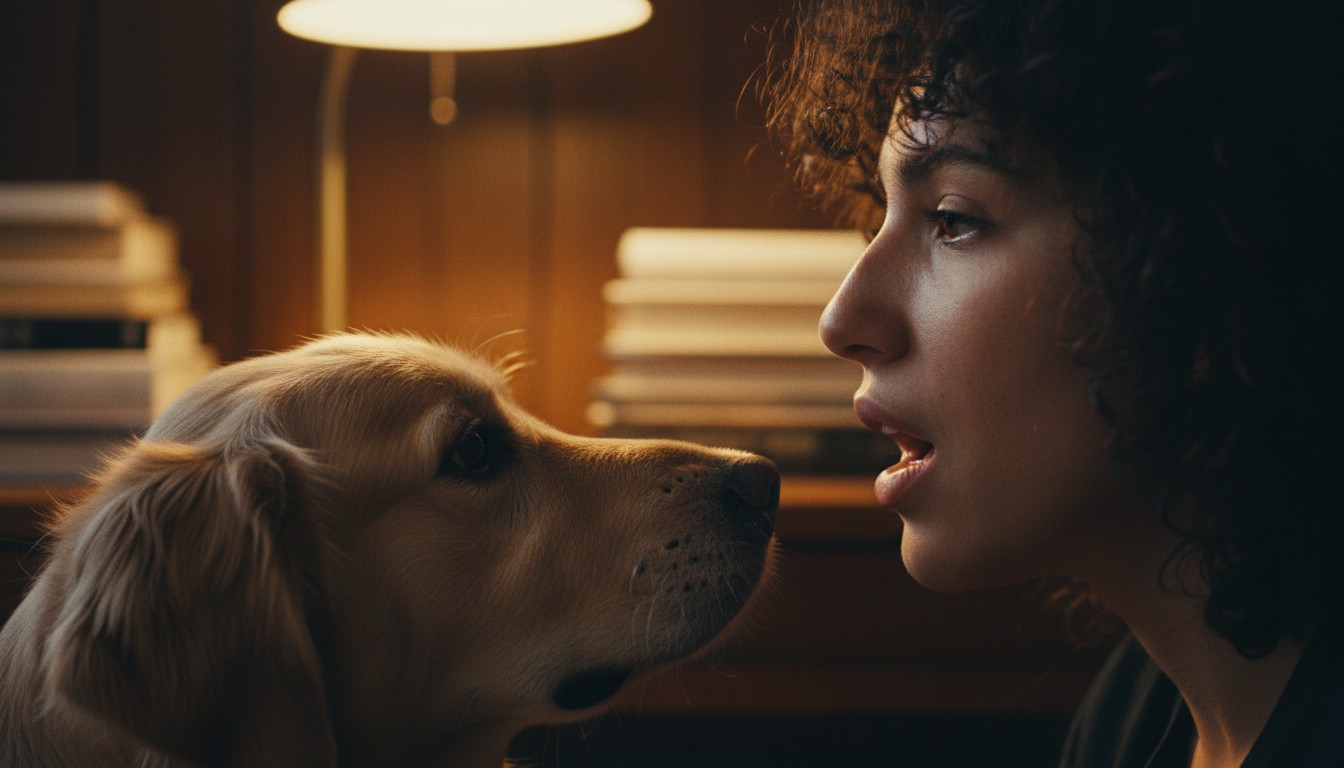
When selecting verbal cues, most Indian pet parents default to English words like 'Sit,' 'Stay,' or 'No.' However, the linguistic architecture of your training should avoid words used frequently in daily conversation. If you say, 'No, don't put that there' to a family member, your dog hears their 'command' used as background noise, which leads to 'cue callousing'—a state where the word loses its meaning.
Consider using distinct, punchy sounds or even words from different languages. For instance, using 'Baitho' (Hindi) or 'Stai' (Italian) for a stay can prevent confusion with the English words used in household chatter. Cues should be phonetically distinct; 'Sit' and 'Stay' actually sound quite similar to a dog (both start with a sharp 'S' sound). Experts recommend choosing words with different vowel endings, such as 'Stand' and 'Kukkur' (Bengali for dog, used as a focus cue), to help with cue selection and discrimination. This phonetic variety makes it easier for the pet to discriminate between different requests, especially when they are excited or distracted.
The Architecture of a New Command: Order of Operations
Building a solid linguistic architecture requires a specific 'order of operations.' To teach a new behavior using cue selection and discrimination, you should follow the 'New Cue, Old Cue' rule. If your dog knows a hand signal for 'Down' and you want to add the verbal word, you must say the new word first, pause for a split second, and then give the known hand signal.
This sequence allows the dog’s brain to predict the visual signal (which they understand) based on the new sound. Over time, the sound itself becomes the predictor of the reward. If you give them both at once, the dog never learns the word because the visual signal 'blocks' the learning of the auditory one. In India, where multi-generational homes mean many people might interact with the pet, having a standardised 'dictionary' of cues pinned to the fridge can ensure everyone follows the same architecture. Consistency across all family members prevents the cues from becoming 'muddy' or confusing for the pet.

Troubleshooting Muddy Cues and Contextual Guessing
Do you find that your dog only 'Sits' when you are standing in the kitchen with a treat bag? This is a failure of cue selection and discrimination; the dog has associated the kitchen and the bag as the 'real' cues, rather than your word. This is called 'contextual dependency.' To fix this, you must 'proof' your cues by changing the environment. Practice in the balcony, then the hallway, then near the local 'kirana' store.
If your pet is consistently getting cues wrong—such as lying down when you asked for a sit—they are likely 'guessing.' This often happens when the reward rate for one behavior is much higher than another. To clean this up, go back to basics. Use a high-value treat (like a small piece of unseasoned boiled chicken or ₹10-20 worth of local treats) and reinforce only the correct response. If they guess wrong, simply wait three seconds, reset your position, and try again. Never punish a wrong guess; it is simply a sign that the linguistic architecture of that specific cue needs more clarity and reinforcement in varied environments.

FAQ
Can I use multiple languages for the same pet?
Yes, pets can easily learn cues in multiple languages (e.g., English and Hindi) as long as each specific sound is consistently paired with one specific action. The 'language' doesn't matter to the pet; the distinctiveness of the sound frequency and tone is what aids in cue selection and discrimination.
Why does my dog ignore me when I'm not looking at them?
Dogs are highly sensitive to 'attentional cues.' If they ignore a verbal command when you aren't looking, it means they have included your 'eye contact' as part of the necessary signal. To fix this, practice giving the command while looking away or standing behind a chair to ensure they are discriminating the sound alone.
What is a 'poisoned cue' in pet training?
A poisoned cue occurs when a command is associated with something negative (e.g., calling 'Come' only to give a bath or trim nails). Once a cue is 'poisoned,' it is often easier to choose a completely new word (like 'Here' or 'Idhar') rather than trying to fix the old one.
Conclusion
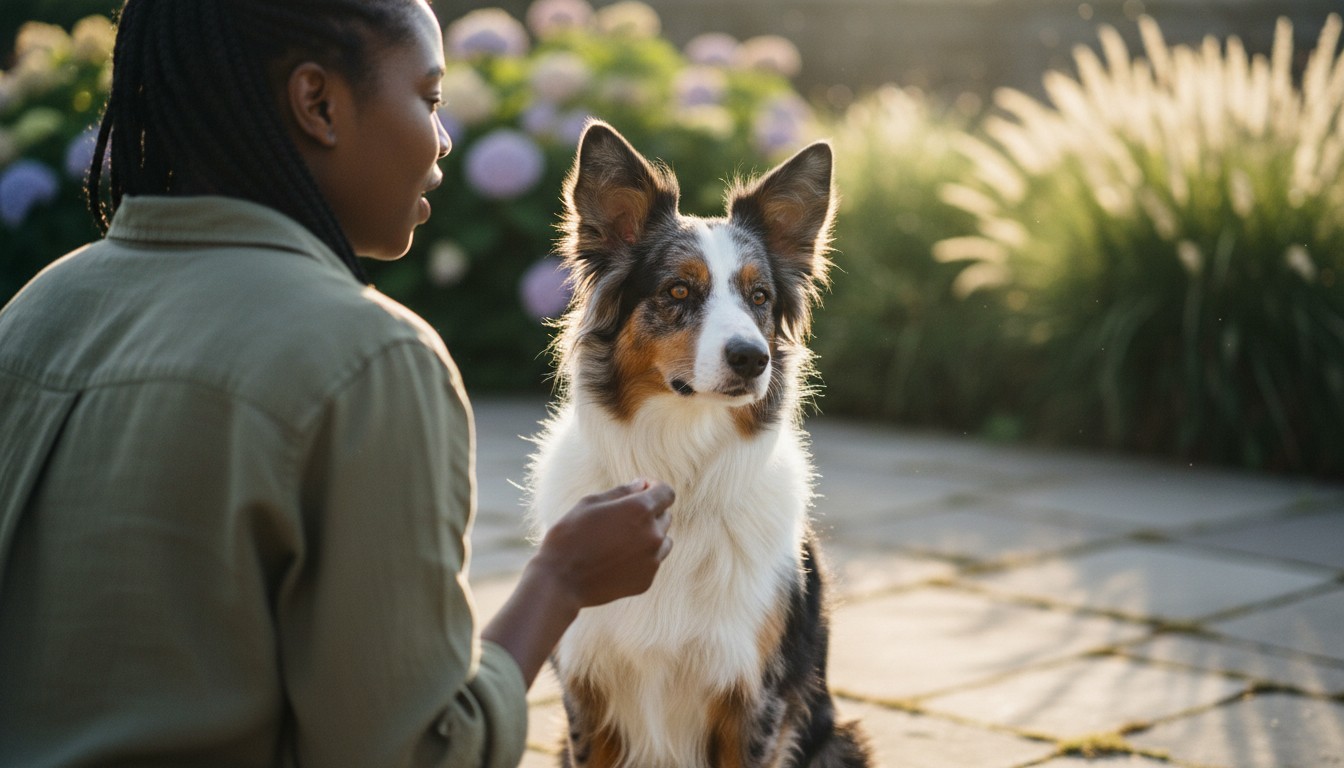
Mastering the linguistic architecture of training is about more than just obedience; it is about building a bridge of mutual understanding. By applying the principles of cue selection and discrimination, you transform 'noise' into meaningful communication. Remember to prioritise visual signals early on, choose phonetically distinct verbal cues, and always 'proof' your training across different contexts—from your living room to the local park. Training is a lifelong journey of refinement. If you encounter significant behavioral issues or 'shutting down' during sessions, consult a certified canine behaviorist in your city. Safety is paramount, especially when training near busy Indian roads or in high-distraction areas. With patience and clear architecture, your pet will soon be listening not just to your words, but to the intent behind them.
References & Sources
This article was researched using the following sources:


