














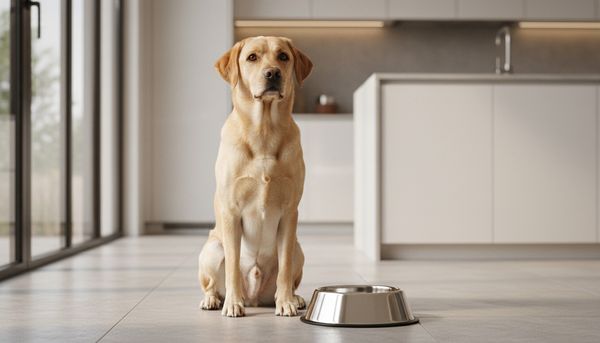
If you look at the back of a bag of pet food purchased in India, you will find a feeding chart. While these charts provide a starting point, they are often generic estimates that fail to account for your individual pet's unique metabolism. To truly manage your pet's health and prevent the growing epidemic of obesity, you must understand Resting Energy Requirements (RER). This scientific formula calculates the energy your pet needs to perform basic life-sustaining functions like breathing and digestion while at rest. By mastering the calculation of Resting Energy Requirements (RER), you move beyond the 'one-size-fits-all' approach and take professional-level control over your pet’s nutritional intake, ensuring they remain lean and energetic throughout their life.
The Inaccuracy of Generic Feeding Guidelines
Most pet owners in India rely on the feeding charts printed on the packaging of popular brands like Royal Canin or Farmina. These guidelines are designed for the 'average' dog or cat, but in clinical reality, very few pets fit this narrow definition. The charts typically overestimate calorie needs by up to 20% to 30% to ensure that even the most active animals do not lose weight. For a sedentary pet living in an apartment in Mumbai or Delhi, following these guidelines strictly often leads to gradual weight gain.
Furthermore, these charts use 'cups' as a unit of measurement. A standard kitchen 'katori' or a varied measuring cup can lead to significant discrepancies. One cup of dense kibble may contain 400 calories, while another brand might contain 250. Without knowing the kilocalories (kcal) per kilogram of the food and your pet's specific RER, you are essentially guessing. This lack of precision is the primary driver of pet obesity, which is linked to diabetes, joint issues, and a shorter lifespan for our companions.

Calculating Resting Energy Requirements (RER)
Resting Energy Requirements (RER) represent the number of calories required for a pet to stay alive in a thermoneutral environment while at rest. The most accurate veterinary formula used today is based on metabolic body weight rather than just linear weight. The formula is: RER = 70 × (body weight in kg)^0.75.
To calculate this at home, you need your pet's weight in kilograms. For example, if you have a 20kg Indie dog, you would raise 20 to the power of 0.75 (which is approximately 9.45) and then multiply by 70. This gives an RER of roughly 662 calories. If you find the exponent math difficult, a simpler (though slightly less accurate for very small or very large animals) version is (30 × body weight in kg) + 70.
Understanding this number is the foundation of nutritional science. It tells you the absolute minimum your pet needs. However, most pets need more than just their RER to thrive, as they also move, play, and grow. This is where Maintenance Energy Requirements (MER) come into play, which we will explore by applying multipliers to your base RER figure.

Adjusting for Lifestyle: Maintenance Energy Requirements
Once you have the RER, you must adjust it based on your pet's life stage and activity level to find the Maintenance Energy Requirement (MER). This is done using a multiplier. For a typical neutered adult dog with moderate activity, the multiplier is often 1.6. Therefore, our 20kg Indie with an RER of 662 would have an MER of approximately 1,059 calories (662 x 1.6).
However, these multipliers are nuanced. An intact (not neutered) adult may require a multiplier of 1.8, while a pet prone to weight gain or one that is very sedentary might only need a multiplier of 1.2 to 1.4. In India's hotter climates, pets may be less active during the summer months, necessitating a seasonal adjustment to their multipliers.
For cats, the multipliers are generally lower because they tend to be more sedentary than active dogs. A typical neutered adult cat might only require 1.2 times their RER. It is vital to observe your pet’s body condition; if they are gaining weight despite the math, the multiplier needs to be reduced. Always remember that these numbers are a starting point for a dynamic biological system.

The 90/10 Rule and Treats in India
In many Indian households, pets are treated as family members, often receiving scraps of roti, pieces of chicken, or commercial treats. While this strengthens the bond, these 'extras' frequently remain uncounted in the daily calorie budget. To maintain a healthy weight, you must follow the 90/10 rule: 90% of your pet's daily calories (MER) should come from balanced pet food, and no more than 10% should come from treats.
If our 20kg dog has an MER of 1,059 calories, only 106 calories can come from treats. A single medium-sized commercial biscuit can contain 30-50 calories. If you give three or four a day, plus a bit of table scrap, you have already exceeded the limit.
To manage this accurately, weigh your pet's primary meals on a digital kitchen scale in grams rather than using a scoop. Calculate the calories per gram (found on the bag) and subtract the calorie count of your planned treats from the total meal portion. This level of precision ensures that even with the occasional 'good boy' treat, your pet stays within their metabolic budget and avoids the slow creep of obesity.

Troubleshooting: When the Math Doesn't Match
Sometimes, despite precise calculations, a pet may still gain or lose weight. This is where troubleshooting becomes necessary. First, check for 'hidden' calories—is another family member feeding the dog? In joint families in India, this is a common occurrence. Second, consider the environment. If the weather is exceptionally hot, your pet’s metabolic rate may slow down as they spend more time sleeping in the shade or under a fan.
If your pet is losing weight despite meeting their MER, they may have a higher-than-average metabolism or an underlying health issue like parasites or malabsorption. Conversely, if they are gaining weight, you should first reduce the multiplier by 10%.
Signs you should adjust your approach include a loss of a visible waistline when viewed from above or being unable to feel the ribs with light pressure. If you have reduced calories to the level of the RER and the pet is still not losing weight, it is time to seek professional help. A veterinarian can rule out metabolic disorders like hypothyroidism in dogs or diabetes in cats which could be sabotaging your efforts.

The Importance of Body Condition Scoring (BCS)
Calculations are a fantastic tool, but the ultimate 'source of truth' is your pet's body. Veterinarians use a Body Condition Score (BCS) system, usually on a scale of 1 to 9. A score of 4 or 5 is considered ideal. In this state, you should be able to feel the ribs easily without a thick layer of fat covering them, and there should be a clear 'tuck' in the abdomen when viewed from the side.
You should perform a BCS check every two weeks. If the score shifts toward a 6 or 7, it is an immediate signal to recalculate your MER or reduce the treats. For long-haired breeds common in India, like Lhasa Apsos or Golden Retrievers, you cannot rely on sight alone; you must use your hands to feel the underlying structure.
Combining the mathematical precision of RER with the physical observation of BCS creates a foolproof system for weight management. This proactive approach is significantly easier than trying to put an obese pet on a restrictive diet later in life. Consistency is the most important factor in nutritional success.

FAQ
Can I just use the chart on the back of the food bag?
While charts are a good starting point, they are generic and often overestimate calories for sedentary pets. Calculating RER allows you to tailor the portion size to your pet's specific age, weight, and activity level, which is much more accurate.
What if I don't know the calories in my pet's food?
Look for the 'Metabolizable Energy' (ME) value on the packaging, usually expressed as kcal/kg. If it is not listed, you can contact the manufacturer or check their website. You need this number to convert your pet's calorie needs into grams of food.
Does my pet's RER change as they get older?
While the RER formula remains the same (as it is based on weight), the multiplier used to find the MER often decreases as pets age and their metabolism slows down. Senior pets generally require fewer calories than active young adults.
Is RER the same for dogs and cats?
The basic RER formula (70 x weight^0.75) is used for both dogs and cats. However, the multipliers used to calculate their total daily needs (MER) differ significantly because cats have different metabolic requirements and activity patterns.
Conclusion
Mastering Resting Energy Requirements (RER) is the most effective way to ensure your pet lives a long, healthy life. By moving away from vague feeding guidelines and embracing the precision of veterinary mathematics, you can prevent obesity and the myriad of health problems that come with it. Start by calculating your pet's RER today, choose an appropriate multiplier for their lifestyle, and use a digital scale for every meal. Remember that these numbers are a guide; always monitor your pet's Body Condition Score and consult with your veterinarian before making significant changes to their diet, especially if your pet has existing health conditions or is failing to lose weight despite caloric restriction.
References & Sources
This article was researched using the following sources:


