














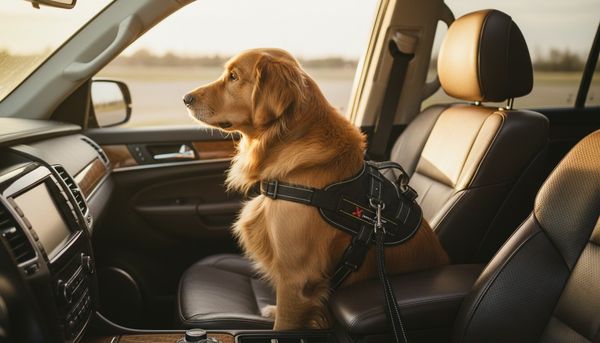
Every year, thousands of Irish pet owners take to the roads, from the busy M50 to the winding lanes of West Cork, assuming their pets are safe. However, many popular dog car restraints are sold based on marketing buzzwords rather than rigorous engineering principles. Understanding the physics of an impact is the only way to truly evaluate a product's safety. When a car stops suddenly at 50 km/h, an unrestrained 20kg dog becomes a projectile with the force of a small rhinoceros. This guide moves beyond brand claims to explain the mechanics of crash dynamics, ensuring you can choose dog car restraints that provide genuine protection based on first principles of physics.
The Law of Inertia: Why Weight Multiplies in a Crash
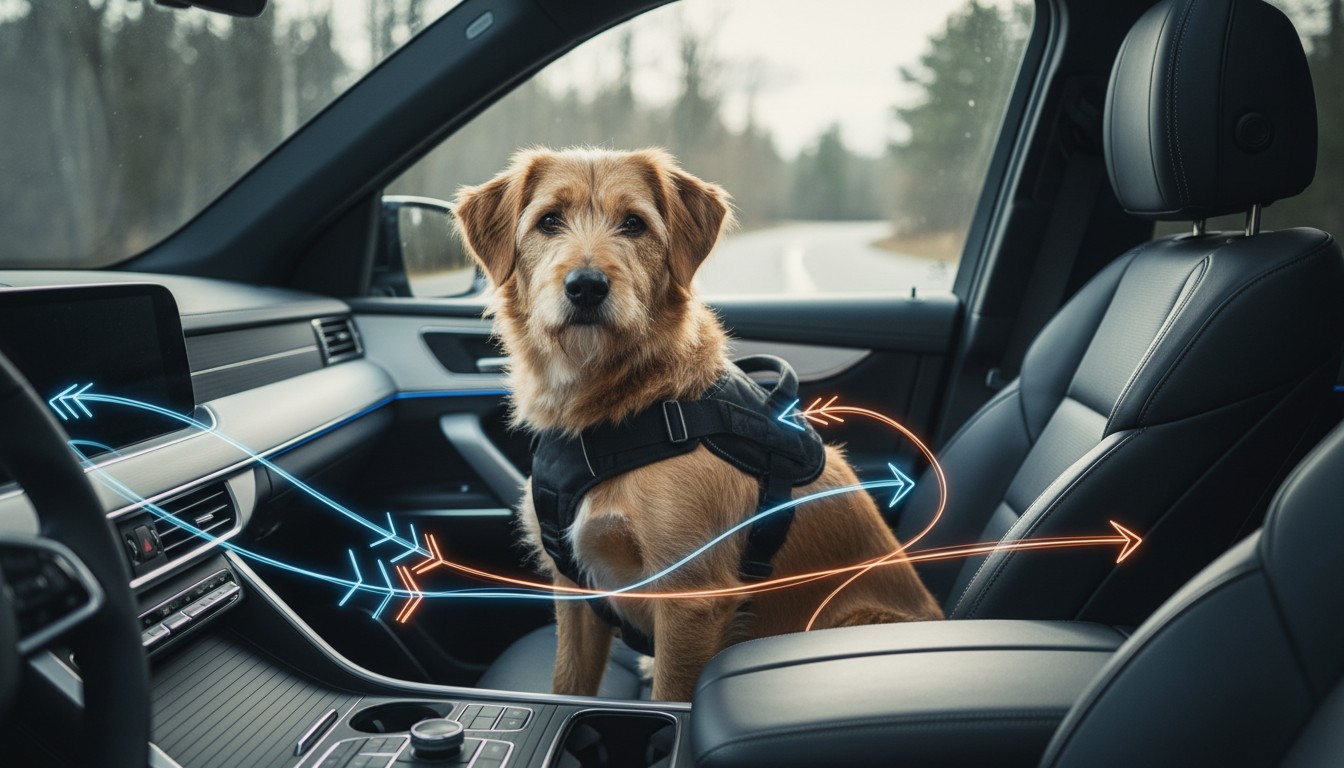
To understand why dog car restraints are non-negotiable, we must look at Newton’s First Law. In a collision, a vehicle stops almost instantaneously, but any unsecured object inside continues to move at the pre-impact velocity. In Ireland, a typical urban speed limit of 50 km/h might seem manageable, but the kinetic energy involved is staggering. If a dog weighing 25kg is unrestrained, an impact at this speed generates a forward force equivalent to roughly 1,000kg of mass.
This 'projectile effect' is not just a danger to the dog; it is a lethal threat to the human passengers. Engineering a restraint requires calculating the 'dynamic load'—the actual force exerted during the split second of impact. High-quality restraints are designed to anchor this force into the car's own safety structure, such as the chassis or ISOFIX points. When evaluating a product, look for data on its maximum load capacity in Newtons, rather than just a weight rating for the dog, as static weight is irrelevant during a high-speed deceleration event.
Tensile Strength and Material Failure Points
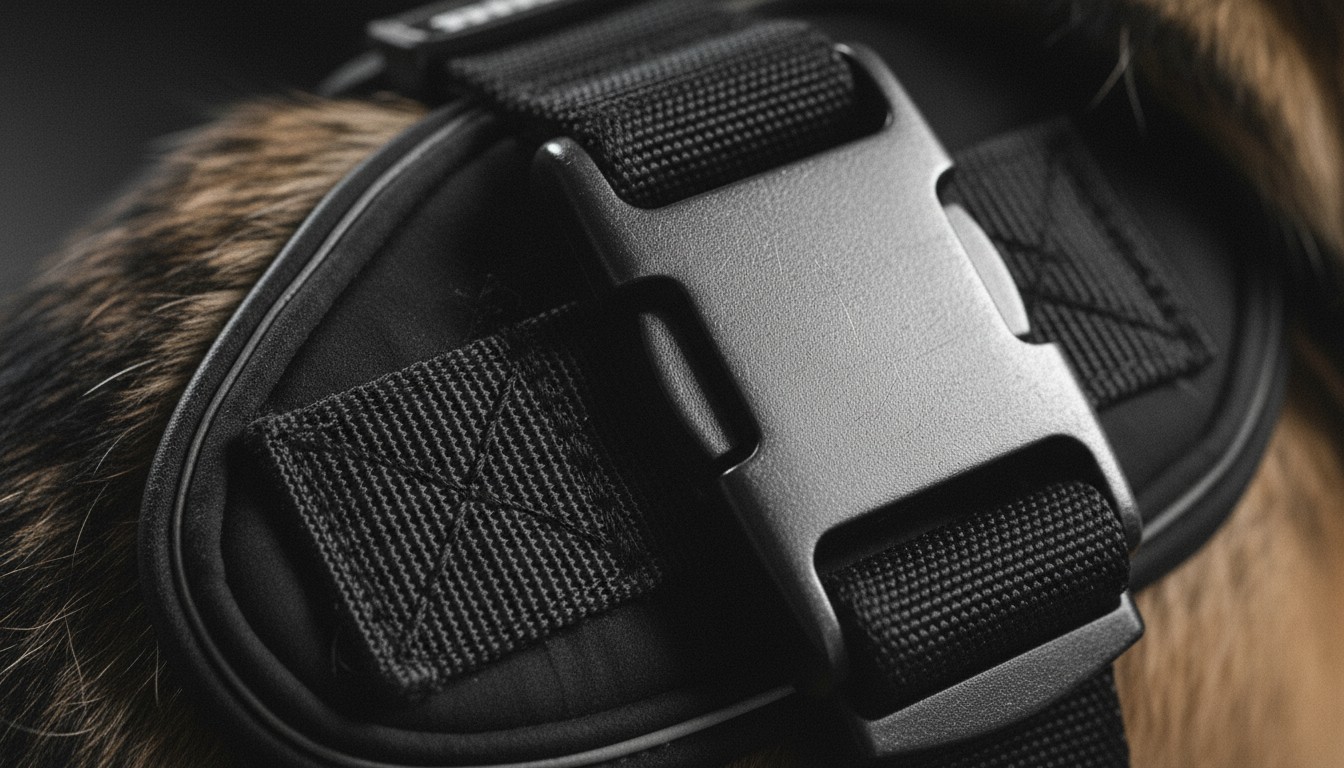
Many dog car restraints available in Irish retail shops use plastic buckles or lightweight nylon webbing that would fail under the stresses of a motorway-speed collision. To be effective, a harness must possess high tensile strength—the maximum load that a material can support without breaking while being stretched. Professional-grade restraints often utilise automotive-grade polyester webbing, which has a higher resistance to stretching and UV degradation than standard nylon.
Hardware is the most common point of failure. Look for 'all-metal' construction, specifically zinc alloy or stainless steel 'load-bearing' carabiners and buckles. Many manufacturers claim 'crash testing' but use plastic adjustment slides. Under impact, these slides can melt due to friction or simply snap, allowing the webbing to slip and the dog to be thrown forward. A truly safe restraint should be tested to withstand forces exceeding 20 kilonewtons (kN), ensuring the materials don't just hold the dog, but absorb the shock without disintegrating.
Crumple Zones and Energy Dissipation in Crates
For many Irish drivers, particularly those with estates or SUVs, a crash-tested crate is the gold standard for safety. Unlike a harness, which relies on the seatbelt's pre-tensioners, a crate must act as its own safety cell. The physics of crate safety relies on energy dissipation. If a crate is too rigid, the energy of the impact is transferred directly to the dog's internal organs. If it is too flimsy, it collapses and crushes the animal.
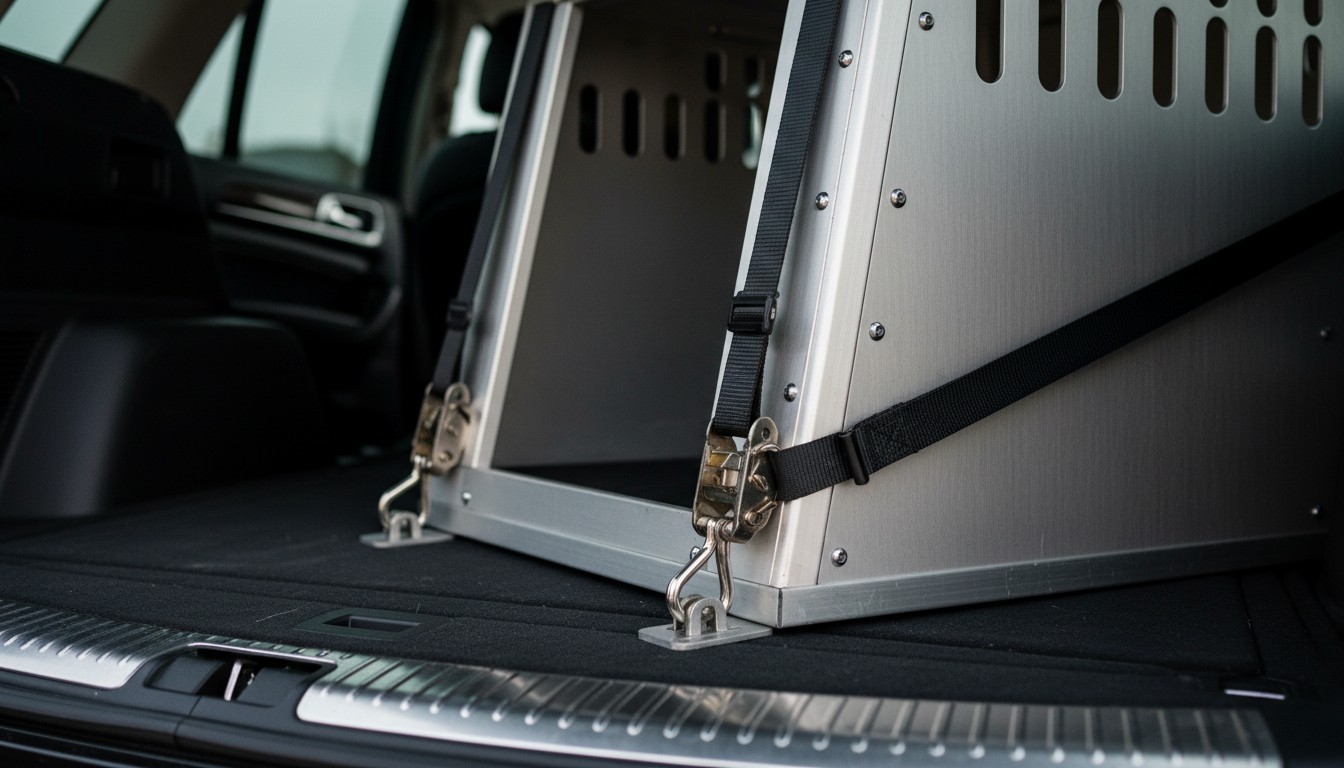
Engineered crates, such as those meeting the ECE R17 or ISO 27955 standards, feature built-in crumple zones. These sections are designed to deform in a controlled manner, absorbing the kinetic energy of the impact much like the front end of a modern car. This is particularly vital in rear-end collisions, a common occurrence in Dublin traffic. Furthermore, the crate should be secured to the boot's floor-mounted tie-down points using steel-core straps. Nylon straps without a steel core can stretch significantly, causing the entire crate to become a secondary projectile.
Rotational Forces and Excursion Limits
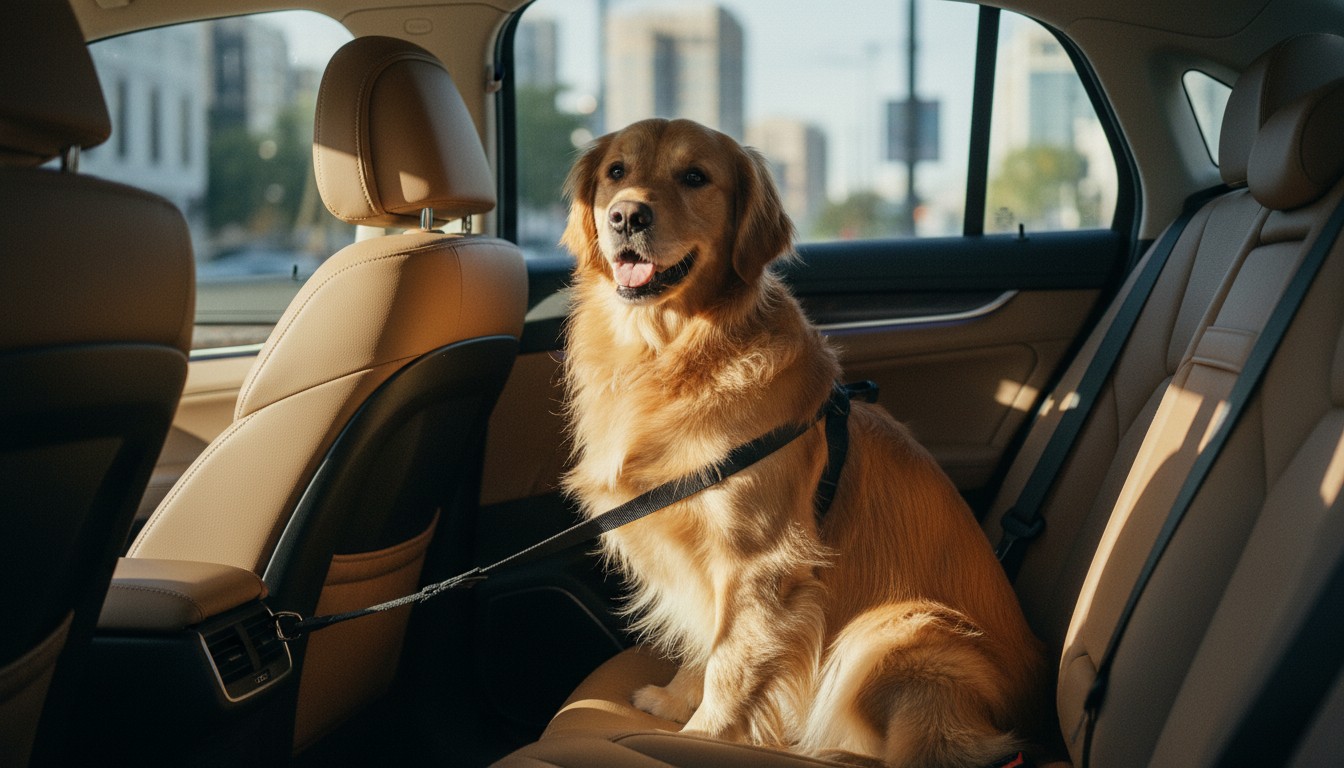
A critical but often overlooked aspect of dog car restraints is 'excursion'—the distance a dog moves forward before the restraint stops them. In a harness, excessive excursion can lead to the dog hitting the back of the front seats or the dashboard. However, the biggest danger is often rotational force. If a harness is only anchored at a single point on the back, the dog's body can rotate violently during a side-impact or offset collision, leading to spinal fractures or 'whiplash' type injuries.
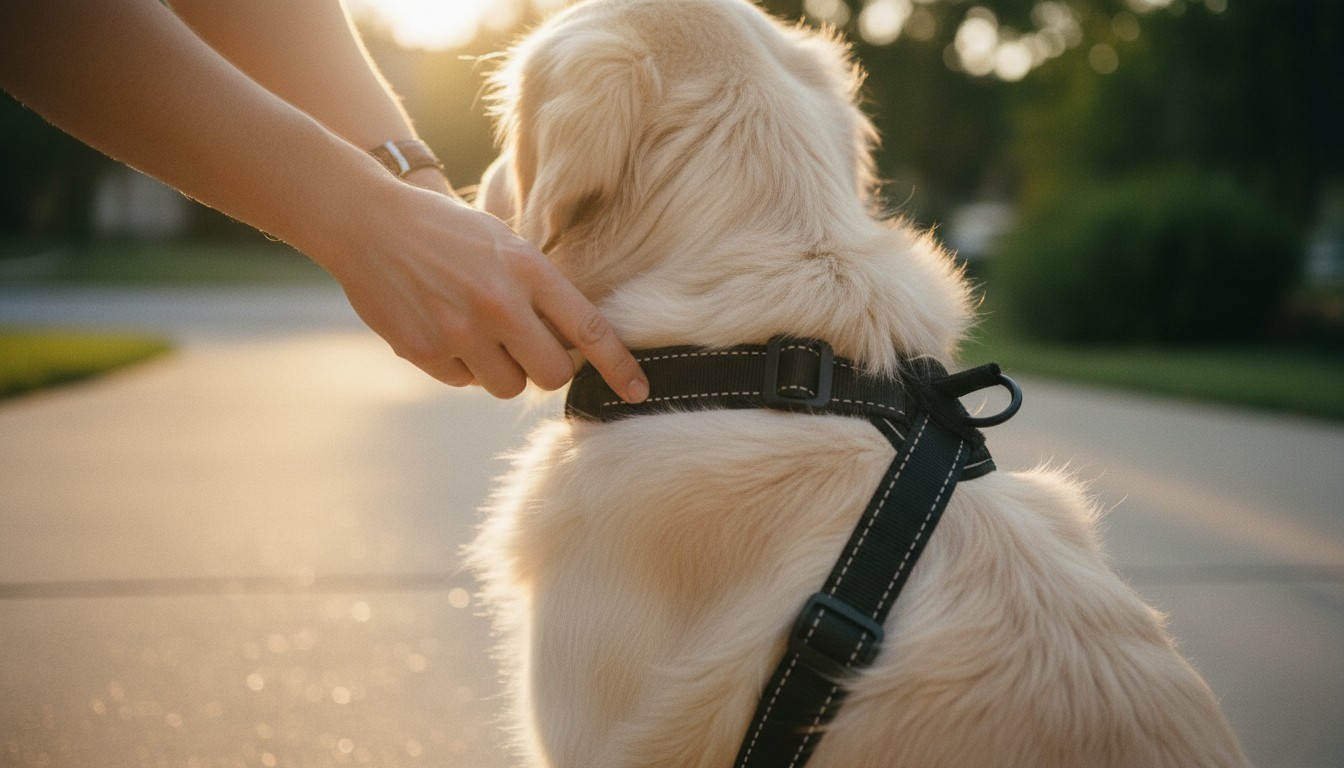
Broad chest plates are essential because they distribute the force across the strongest part of the dog’s skeletal structure—the ribcage and sternum. A narrow strap can cut into soft tissue or cause 'submarining,' where the dog slides out of the harness entirely. When fitting a restraint, ensure there is minimal slack. While we want our pets to be comfortable on long drives to Kerry or Donegal, every centimetre of extra webbing increases the force of the final 'snap' when the restraint reaches its limit.
Troubleshooting Installation and Common Pitfalls
Even the highest-rated dog car restraints will fail if installed incorrectly. One common mistake in Ireland is attaching a car tether to a standard walking collar. This is catastrophic in a crash, as the force is concentrated entirely on the neck, leading to immediate cervical spine failure. Another issue is using the 'extension' tethers that click into the seatbelt buckle; many of these are not load-rated and the buckle itself can release under the high-frequency vibrations of a crash.
If you find your dog is restless and tangles the tether, do not lengthen it. Instead, consider a 'zip-line' style restraint or a crate. If your car has ISOFIX points (standard in most Irish cars since 2006), look for restraints that click directly into these anchors rather than relying on the friction of a seatbelt. Periodically check for signs of wear: any fraying on the webbing or rust on the metal components means the restraint's integrity is compromised and it must be replaced immediately to ensure continued safety.
FAQ
Is it legal to drive with an unrestrained dog in Ireland?
While the Irish Road Traffic Act doesn't explicitly mention dogs, it requires drivers to be in control of their vehicle and for loads to be secured. An unrestrained dog can be considered a distraction or a dangerous load, potentially leading to 'careless driving' charges or invalidating your insurance in the event of an accident.
How do I know if a harness is truly crash-tested?
Don't trust the label alone. Look for independent certification from organisations like the Center for Pet Safety (CPS) or evidence that the product was tested to FMVSS 213 (child seat standards) or ECE R17. A reputable brand will provide video footage of their sled tests and technical data sheets showing the forces the product survived.
Can I use a boot guard instead of a crate?
A boot guard prevents a dog from jumping into the passenger area during normal driving, but most are not designed to withstand the force of a 50 km/h impact. Unless the guard is bolted to the vehicle's frame and rated for high impact, it may simply collapse or pop out of place when hit by the weight of the dog.
Conclusion
Evaluating dog car restraints through the lens of physics reveals that safety is about energy management, not just keeping a pet in one place. By focusing on tensile strength, energy dissipation, and excursion limits, you can look past clever marketing and choose gear that actually saves lives. Whether you choose a high-tensile harness or a crash-rated crate with integrated crumple zones, the key is consistency. Always ensure the restraint is fitted snugly and anchored to the strongest part of your vehicle. For complex setups or dogs with unique mobility needs, consulting a professional vehicle outfitter or a canine biomechanics expert is highly recommended. Drive safely, knowing that the laws of physics are working with you, not against you.
References & Sources
This article was researched using the following sources:

