















When you walk down the pet food aisle of a local SuperValu or specialty shop in Dublin, you are likely looking for one thing: quality. Most Irish pet owners have been taught to look for 'meat' as the first item on the list. However, this common advice often falls for a clever marketing loophole known as ingredient splitting. This tactic involves breaking down a single, less desirable ingredient—like corn, wheat, or peas—into several smaller components to ensure that meat stays at the top of the list. By understanding how ingredient splitting works, you can finally look past the clever branding and see exactly what is going into your pet's bowl. In this guide, we will reveal the industry secrets that keep fillers at the top of the bag and teach you how to do the 'mental math' required for true nutritional transparency.
The Weight Deception: Why Fresh Meat Isn't Always King
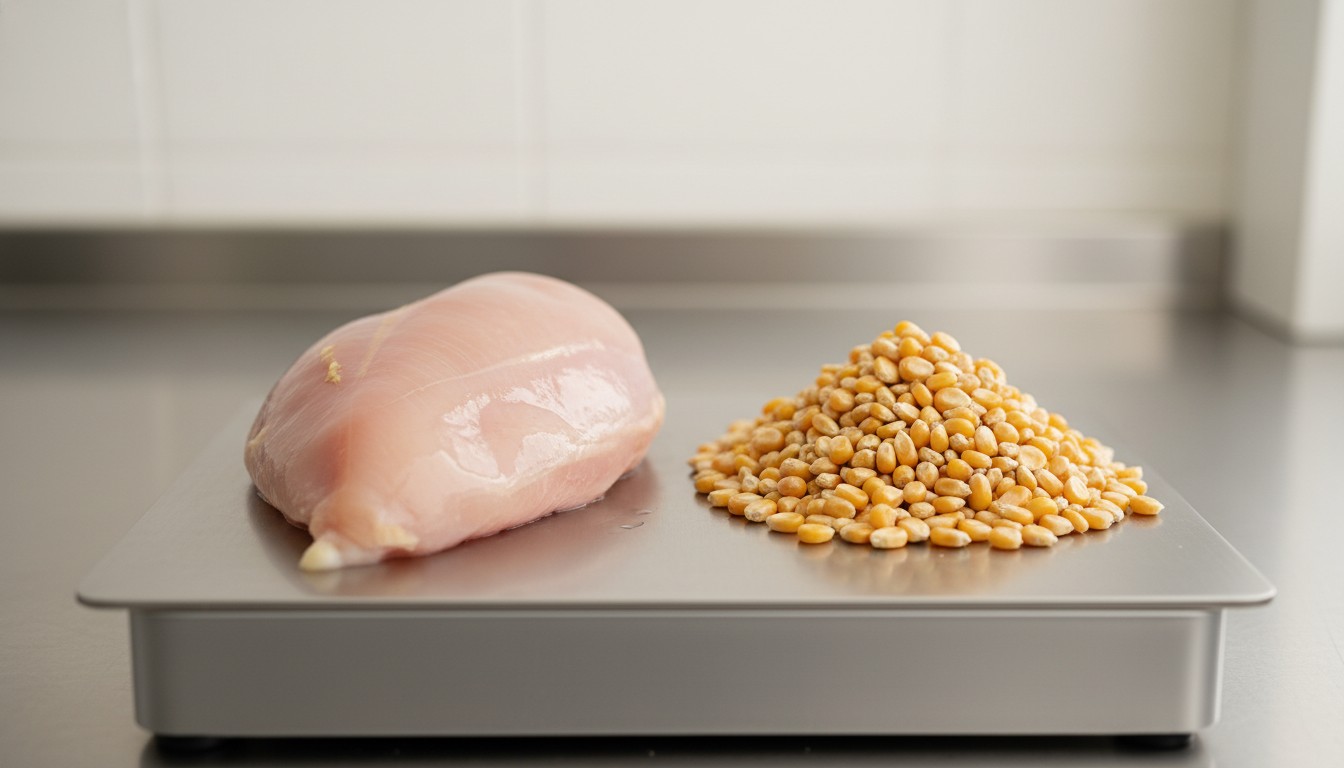
To understand the 'meat first' myth, we must first look at how European and Irish labelling laws dictate the order of ingredients. By law, ingredients must be listed in descending order of weight at the time of manufacture. This sounds transparent, but it creates a massive loophole regarding moisture content. Fresh chicken or beef is roughly 70% to 80% water. When a manufacturer lists 'Fresh Chicken' as the first ingredient, that weight includes all that water.
Once the kibble is processed and cooked at high temperatures, most of that water evaporates. If you were to weigh the ingredients after cooking, the meat would often drop significantly down the list, frequently falling behind the dry grains or pulses. This is why many premium-looking bags in Ireland may not be as meat-dense as they appear. A product listing 'Chicken Meal' (which is pre-rendered and dry) as the second ingredient might actually provide more animal protein than one listing 'Fresh Chicken' first. Understanding this distinction is the first step in moving beyond basic label reading and becoming a savvy consumer in the Irish market.
The Art of the Split: How Fillers Are Hidden
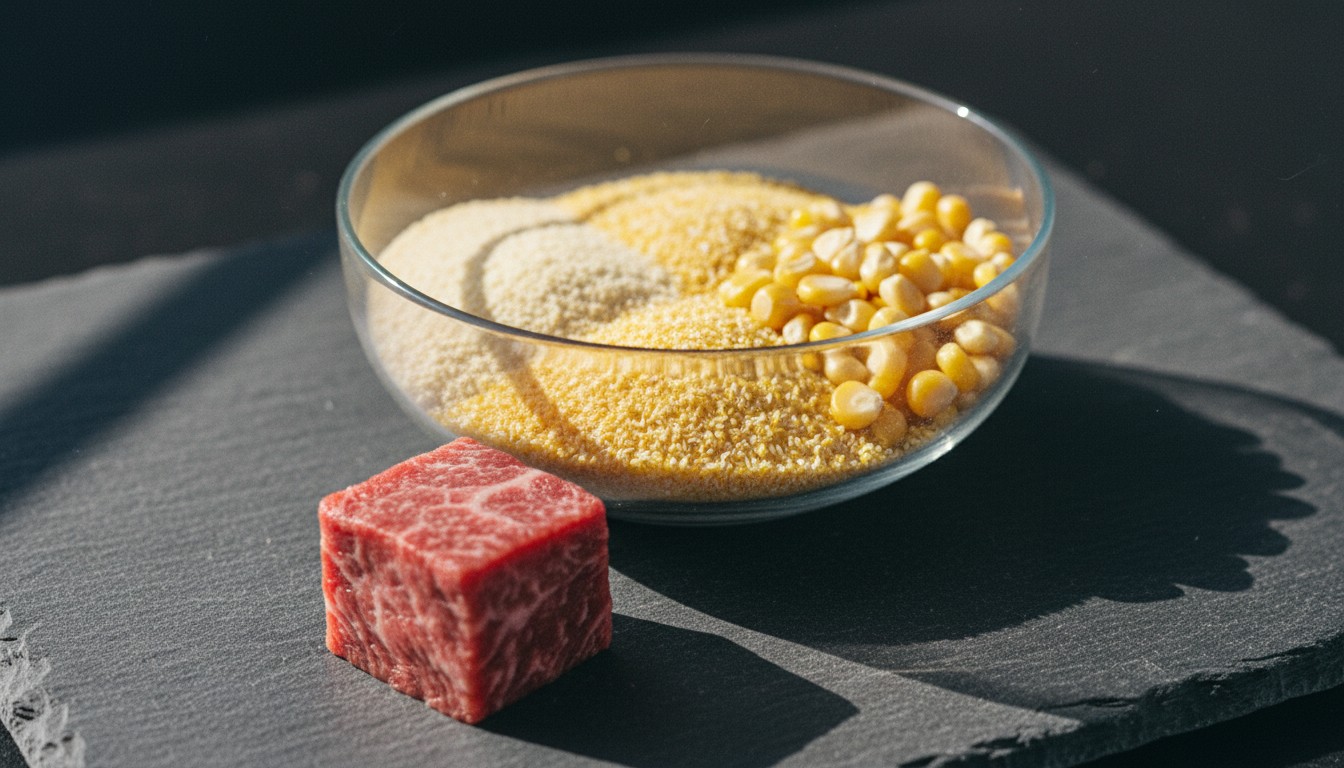
Ingredient splitting is the most common way manufacturers manipulate the 'descending order' rule. Imagine a bag of dog food where the total volume of corn is 40%, and the total volume of chicken is 25%. Under normal circumstances, corn would be the first ingredient. To avoid this, the manufacturer 'splits' the corn into different names: Corn Gluten Meal, Ground Whole Corn, and Corn Flour.
Because each of these 'different' ingredients now weighs less than the chicken individually, the chicken is legally allowed to move to the number one spot. In reality, the bag is still dominated by corn. This is particularly prevalent with plant-based proteins like peas or lentils in grain-free varieties. You might see 'Pea Protein,' 'Pea Fibre,' and 'Dried Peas' all on the same label. If you were to combine these, the 'pea' category would likely dwarf the meat content. When scanning labels in shops like PetStop or Maxi Zoo, look for these repetitive terms. If three of the top five ingredients are different versions of the same carbohydrate, you are looking at a product designed more for marketing than for optimal carnivorous nutrition.
Navigating Irish and EU Labelling Regulations
In Ireland, pet food labelling is governed by EU Regulation (EC) No 767/2009. This regulation allows for two types of ingredient declarations: 'Specific Names' and 'Category Names.' If a label uses category names like 'Cereals' or 'Meat and Animal Derivatives,' the manufacturer has even more leeway to hide ingredient splitting. They can change the recipe based on what is cheapest on the market that week without changing the label.
When you see specific names like 'Dehydrated Salmon' or 'Whole Brown Rice,' you are getting a better product, but you still need to be wary of splitting. Irish consumers should also pay attention to the 'Analytical Constituents' section. This tells you the percentage of protein, fat, and ash. However, keep in mind that these numbers don't distinguish between high-quality animal protein and lower-quality plant protein (like that found in split peas). To truly verify quality, you must look at both the ingredients and the analytical breakdown together. A high-protein percentage on a bag filled with split-pea components suggests that much of that protein is plant-based, which may have a lower biological value for your pet than animal-sourced proteins.

The Mental Recombination Hack: Seeing the True Recipe
To beat the system, you need to practice 'mental recombination.' When you look at a label, group all variations of the same ingredient together in your mind. If you see 'Chicken' followed by 'Rice,' 'Rice Flour,' and 'Rice Gluten,' combine the rice portions. Does the total 'Rice' now clearly outweigh the 'Chicken'? If the answer is yes, then rice is the primary ingredient.
This technique is essential when evaluating 'boutique' or grain-free foods that have become popular in Ireland. Many of these brands replaced grains with 'split' pulses. A common scenario involves a label listing: Duck (20%), Dried Potato, Potato Starch, Potato Protein. While Duck is first, the 'Potato' complex is likely 30-40% of the bag. Another red flag is the 'Salt Divide.' Most pet foods contain about 1% salt. Any ingredient listed after salt is present in a tiny, almost negligible amount. If a brand boasts 'Blueberries and Spinach' but they appear after salt on the label, your pet is getting less than a teaspoon of those 'superfoods' per kilogram of food. Focus your attention on everything listed before the salt to see the true core of the recipe.

Troubleshooting: When Your Pet Isn't Thriving
If you have chosen a 'Meat First' food but your pet is still experiencing issues, ingredient splitting might be the culprit. Common signs that a diet is too high in split fillers include dull coats, excessive shedding, large and frequent stools, or recurring skin irritations. Because many fillers like corn gluten or wheat middlings are highly processed, they can be difficult for some pets to digest compared to whole, animal-based ingredients.
If you notice these symptoms, it may be time to transition to a truly high-meat diet. However, never switch foods overnight. A sudden change can cause gastrointestinal upset. In Ireland, vets typically recommend a 7-to-10 day transition period. Start by mixing 25% of the new food with 75% of the old food for a few days, gradually increasing the ratio. If your pet’s issues persist despite a high-quality, non-split diet, consult a member of the Veterinary Ireland organisation. Chronic issues can sometimes indicate allergies or underlying health conditions that require professional diagnostics rather than just a change in kibble brand.
Buying Better: Top Tips for the Irish Shopper
Finding honest pet food in Ireland requires a bit of detective work, but it is worth the effort for your pet's long-term health. When shopping, prioritize brands that use 'closed' declarations—meaning they list every ingredient specifically rather than using broad categories like 'Cereals.' Look for products that list a named animal 'Meal' (e.g., Lamb Meal) alongside fresh meat, as this ensures a higher concentrated protein level that remains after the water is cooked out.
Support Irish brands that prioritize transparency. Several local manufacturers in the Republic and Northern Ireland are moving away from ingredient splitting to compete with high-end international brands. Don't be afraid to email a manufacturer and ask for the percentage of total carbohydrates in their food—a number often omitted from the bag. A truly high-quality company will be happy to provide this data. Finally, remember that price isn't always an indicator of quality. Some mid-priced 'supermarket' brands can actually have better ingredient structures than 'designer' bags that rely heavily on splitting. Trust your new label-reading skills over the pretty pictures of wolves or farms on the packaging.
FAQ
Is ingredient splitting illegal in Ireland?
No, it is entirely legal under current EU and Irish labelling regulations. Manufacturers are allowed to list different parts of a grain or vegetable separately, as they are technically different ingredients with different nutritional profiles, even if they come from the same source.
How can I tell if a grain-free food is using ingredient splitting?
Look for multiple entries for pulses like peas, lentils, or potatoes. If you see 'Pea Protein,' 'Pea Flour,' and 'Peas' on the same label, they are splitting the ingredient to make sure a meat source remains at the top of the list.
Does 'Meat First' mean the food is high quality?
Not necessarily. Because meat is weighed 'wet,' it may actually make up a small fraction of the final dry kibble. You must check for ingredient splitting further down the list to see if the bulk of the food is actually fillers like corn or wheat.
What are the best ingredients to look for on an Irish pet food label?
Look for specific animal proteins listed as 'Meal' (like Chicken Meal or Salmon Meal) as these are concentrated. Also, look for whole food sources like 'Whole Oats' or 'Sweet Potato' rather than refined by-products like 'Corn Gluten Meal'.
Conclusion
The 'Meat First' myth is one of the most successful marketing strategies in the pet care industry, but as an informed Irish pet owner, you now have the tools to see through it. By identifying ingredient splitting and performing mental recombination, you can ensure that your money is being spent on actual nutrition rather than clever labelling. Always prioritise specific, named ingredients over vague categories and be wary of products that list several variations of the same carbohydrate. Remember, the goal of house training your eye to these labels is to provide a diet that helps your pet thrive. If you are ever unsure about a specific food's impact on your pet’s health, especially if they have underlying conditions, always consult your local vet for personalised advice and safety guidance.
References & Sources
This article was researched using the following sources:

