














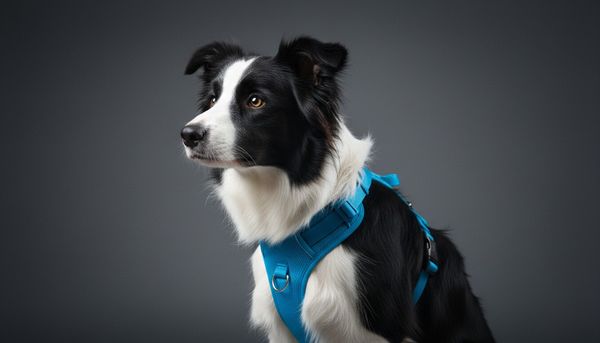
Finding the perfect harness fit is more than just a matter of comfort for your dog; it is a critical component of their long-term musculoskeletal health. In Ireland, where coastal walks and mountain hikes are part of the daily routine, ensuring your dog’s gear doesn’t hinder natural movement is vital. Many owners unknowingly choose harnesses that restrict the scapula, potentially leading to joint issues or altered walking patterns. This guide moves beyond simple product reviews to explore the actual biomechanics of how a harness should sit against the canine skeleton. By understanding the anatomy of a correct harness fit, you can prevent chafing, escaping, and restricted gait, ensuring your pet enjoys every Dublin park or Wild Atlantic Way trail in total safety and comfort.
The Biomechanics of the Shoulder and the Y-Shape Advantage
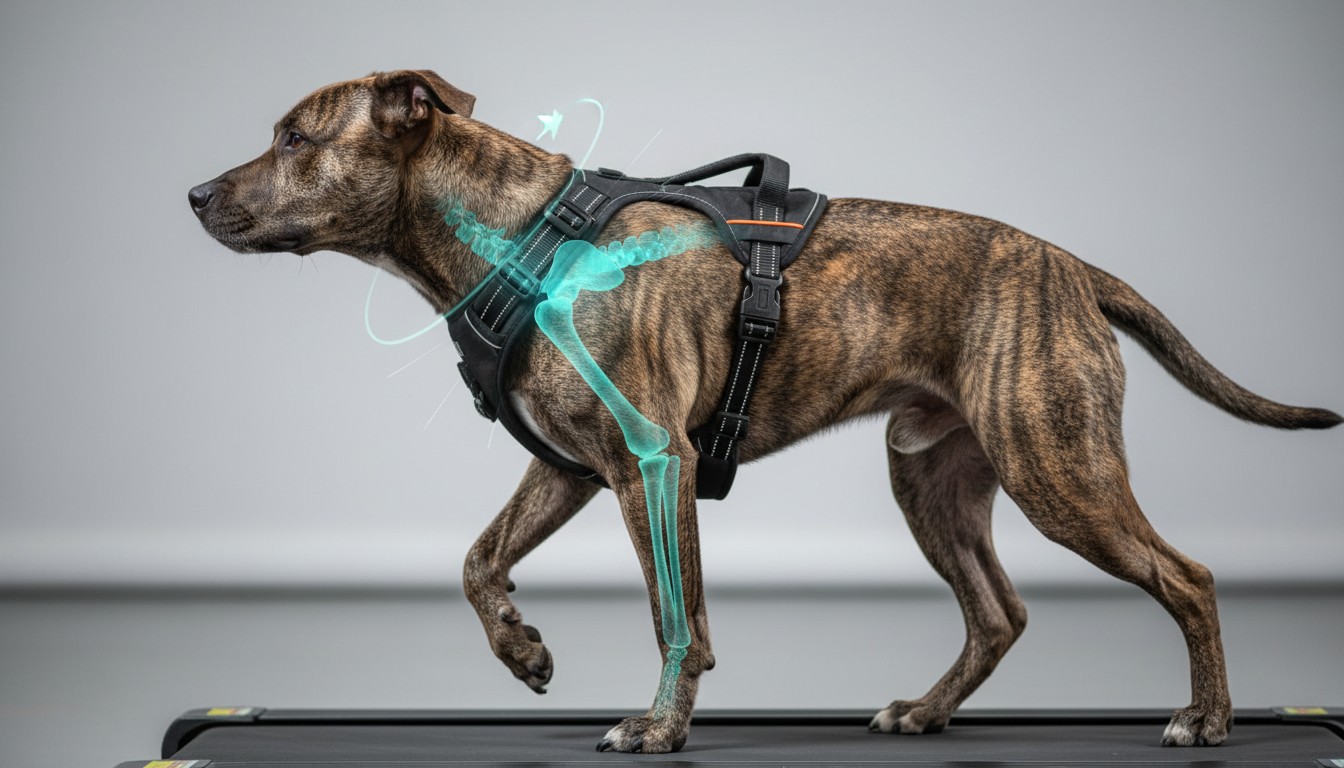
When assessing harness fit, the most critical anatomical landmark is the scapula, or shoulder blade. Unlike humans, a dog’s front legs are attached to the body primarily by muscle and ligament, allowing for a wide range of rotation. Many 'Norwegian' or 'T-shaped' harnesses feature a horizontal strap that sits directly across these shoulder blades. This design can significantly restrict the dog's forward reach and can cause the dog to alter its gait to avoid pressure.
Experts and canine physiotherapists generally recommend a 'Y-shaped' harness. This design features straps that meet at the sternum (the breastbone) and pass over the shoulders, forming a 'Y' when viewed from the front. This configuration leaves the shoulder joints entirely free to move through their full range of motion. For active Irish dogs tackling uneven terrain, this freedom is essential to prevent long-term repetitive strain injuries and to ensure the dog can balance themselves properly on slippery or steep surfaces.
Precise Measurements: Calculating the Three Critical Points
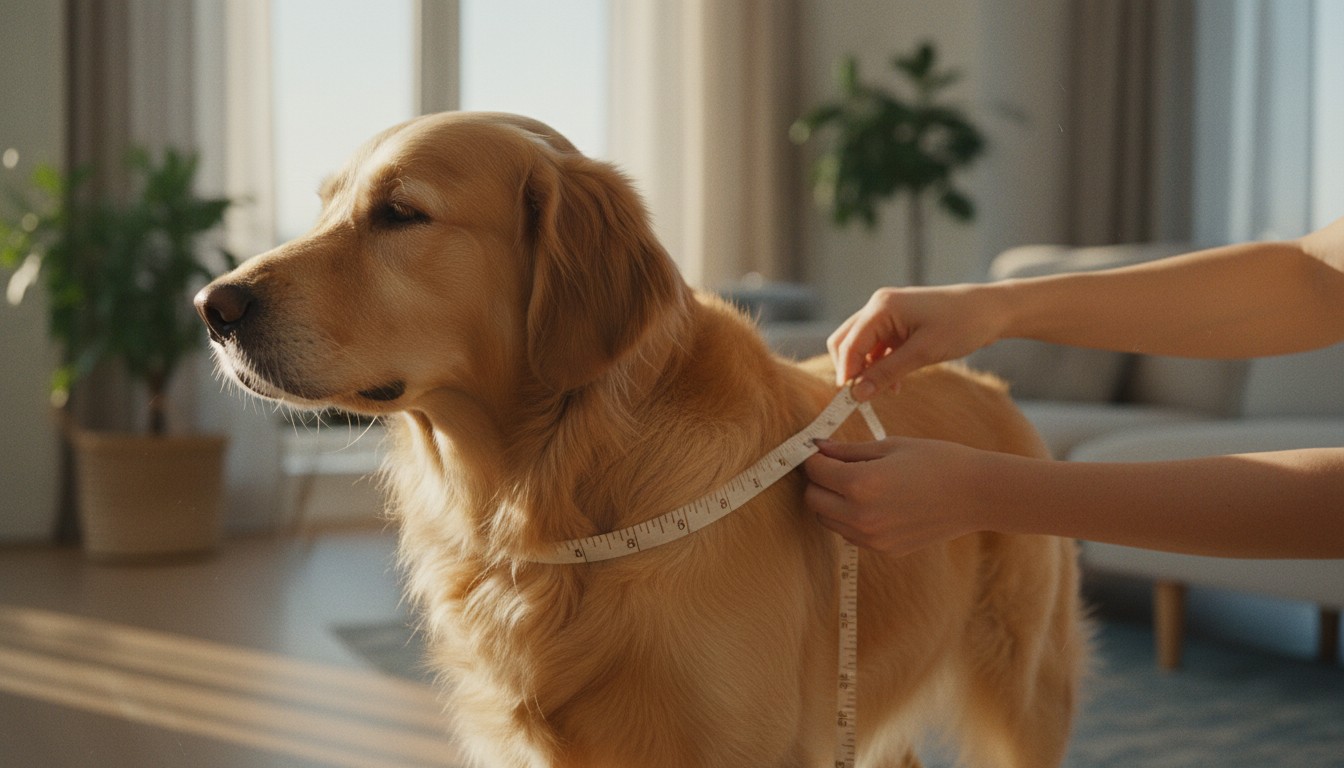
To achieve an expert harness fit, you must move beyond generic 'Small' or 'Medium' labels, which vary wildly between brands found in Irish retailers like Maxi Zoo or Petstop. You will need a soft measuring tape to record three specific dimensions in centimetres. First, measure the base of the neck, which is lower than where a collar typically sits; the harness should rest on the sturdy part of the shoulders, not the soft throat.
Next, measure the chest girth. This is the widest part of the dog's ribcage, usually about two to four fingers' width behind the front legs. Measuring too close to the armpits leads to painful chafing. Finally, measure the length of the sternum strap. A harness that is too short in the undercarriage will pull the girth strap into the sensitive axilla (armpit) area. Accurate measurements are the foundation of safety, especially for deep-chested breeds like Greyhounds or Lurchers common in Ireland, who often require specialized 'long' harness fits to prevent slipping.
The Two-Finger Rule and Practical Adjustments
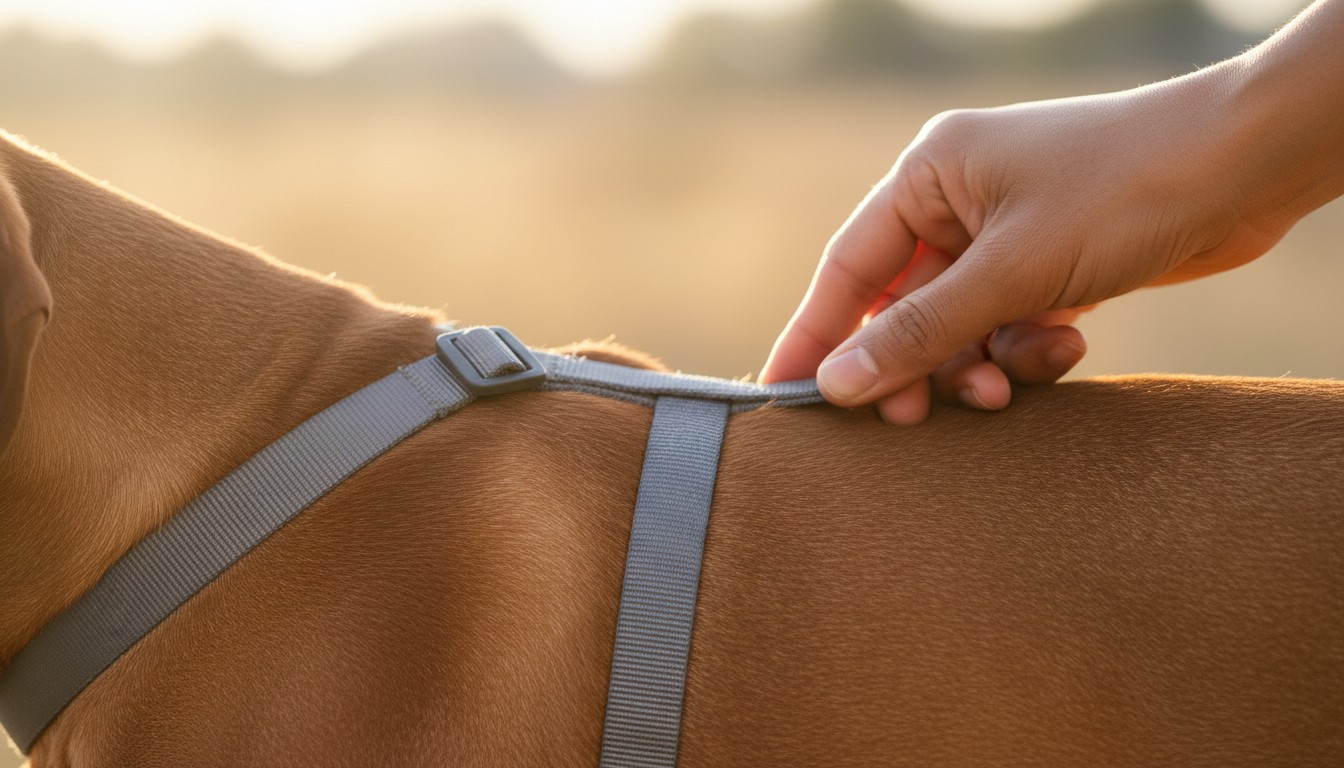
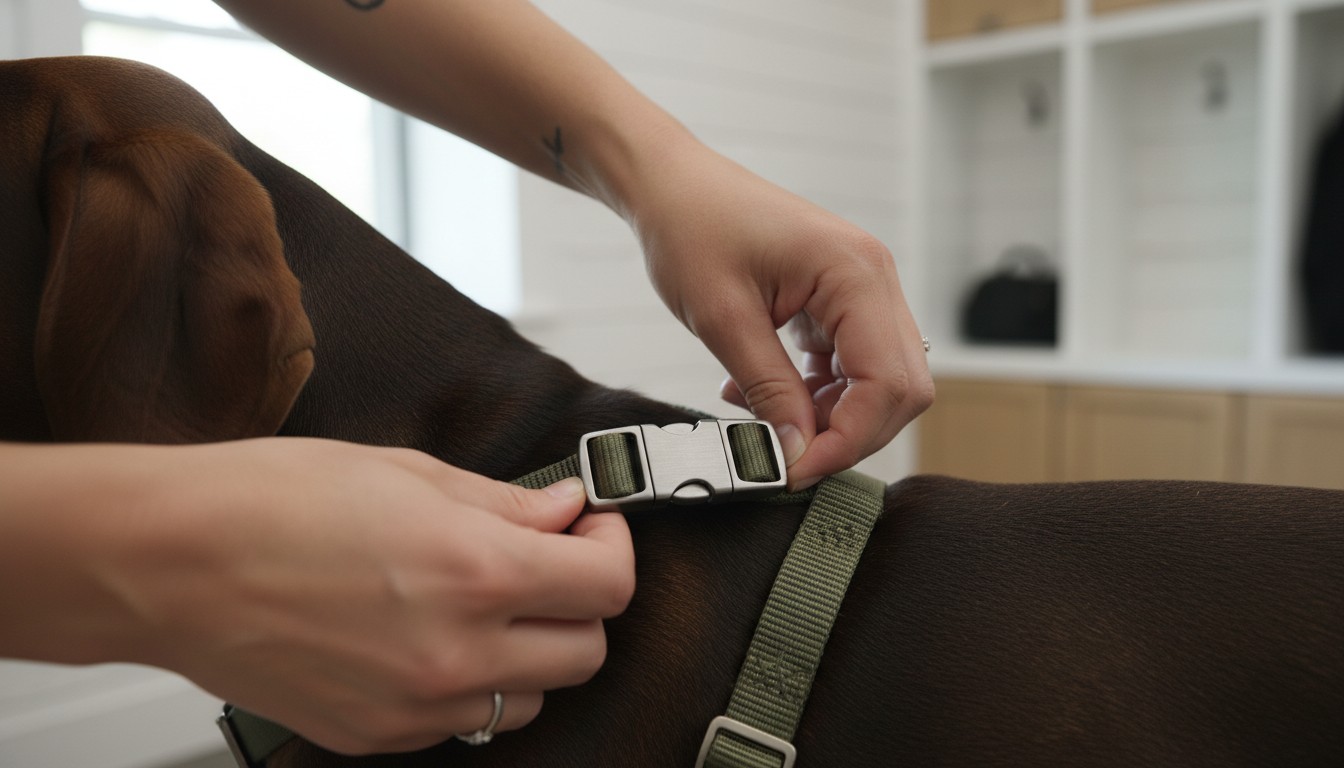
Once you have the harness on your dog, the real work of adjustment begins. A harness that is too loose can lead to escaping or 'backing out,' while one that is too tight can cause skin irritation and restrict breathing. The gold standard for checking tightness is the 'two-finger rule.' You should be able to slide two fingers flat between the harness straps and your dog’s body at any point. This ensures the gear is snug enough to stay centered without being constrictive.
Pay special attention to the 'V' where the straps meet at the front. This point should sit directly on the manubrium (the top of the breastbone). If it sits higher, it may press against the trachea, causing the dog to cough or gag when they lean into the lead. In the damp Irish climate, materials like nylon can stretch slightly when wet, so it is important to re-check these adjustments mid-walk if you are caught in a typical Atlantic shower. Ensure all sliders are locked and that the harness doesn't list to one side as the dog walks.
Identifying Gait Restriction and Chafing Signs
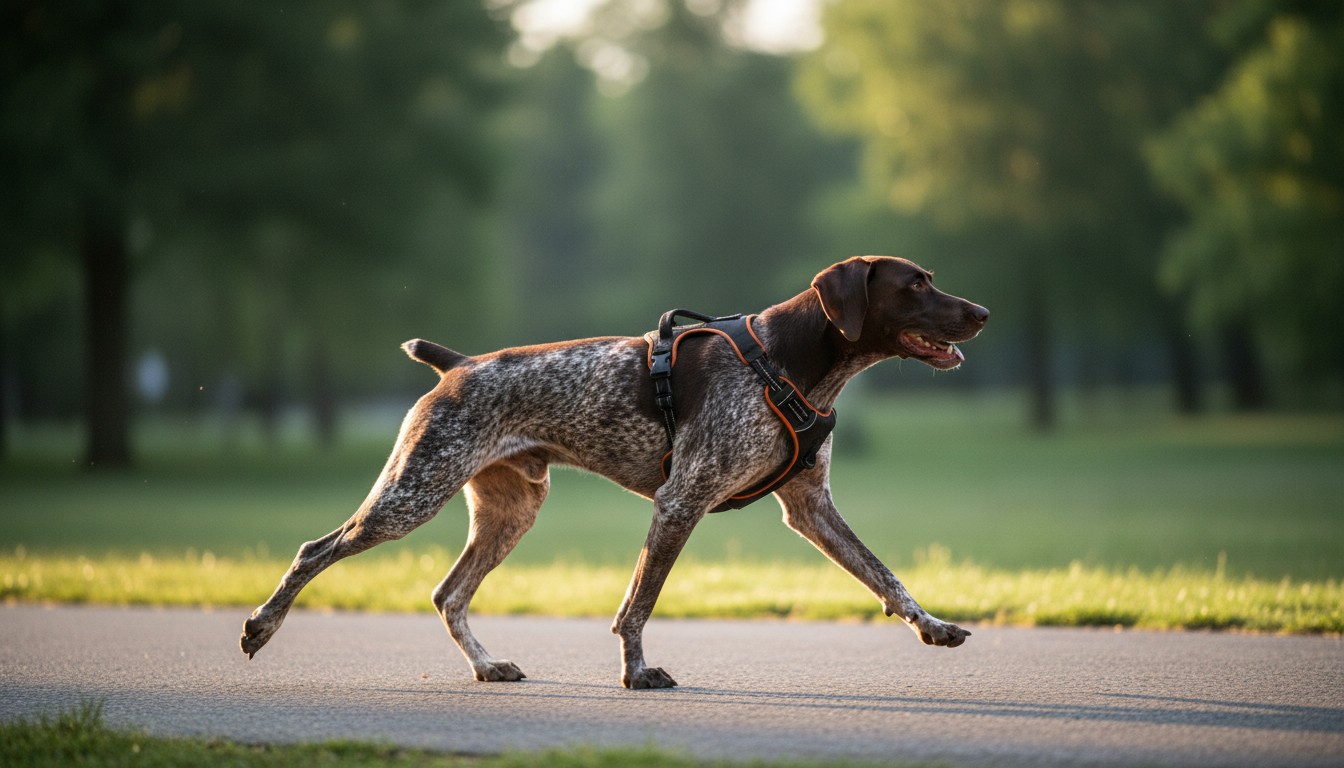
Even a harness that looks correct when the dog is standing still may fail the 'movement test.' To verify the harness fit, watch your dog walk and trot from both the side and the rear. Signs of gait restriction include 'crabbing' (walking at an angle), a shortened forward stride, or a reluctance to jump or climb. If you notice the harness shifting significantly or the 'saddle' part sliding to one side, the balance of the straps is likely uneven.
Secondary signs of a poor fit involve the skin and coat. After a walk, remove the harness and inspect the 'hot spots': the armpits, the chest, and behind the ears. Look for redness, thinning fur, or 'ruffled' hair that indicates the harness is rubbing. In Ireland’s humid weather, friction can quickly lead to painful sores. If your dog starts to avoid the harness or 'hides' when it is brought out, they may be experiencing discomfort that isn't immediately visible to the human eye. Listening to these subtle behavioral cues is just as important as the physical measurements.
Troubleshooting: Escaping and Specialized Anatomy
Not all dogs are shaped the same, and some present unique challenges for harness fit. 'Escape artists' or dogs with narrow heads—such as Whippets or Salukis—can often back out of standard harnesses if they spook. For these dogs, a 'three-strap' or 'no-escape' harness is recommended. This design includes a third strap that sits further back on the narrower part of the waist, making it physically impossible for the dog to pull their shoulders through the girth.
If you find the harness keeps rotating, it is often a sign that the front chest piece is too wide for your dog's specific frame, causing it to slip off the breastbone. Conversely, if your dog has a very prominent 'pigeon chest,' you may need a harness with more points of adjustment on the sternum. If you have tried multiple styles and still see gait changes or discomfort, it is time to consult a professional. A canine physiotherapist or a qualified trainer in Ireland can perform a dynamic assessment to identify if a specific skeletal quirk requires a custom-fit solution.
FAQ
How can I tell if my dog's harness is too tight?
Apply the two-finger rule: you should be able to fit two fingers between the strap and your dog's skin. If you see skin 'overflowing' the straps or if your dog's breathing changes, loosen the fit immediately.
Why does my dog's harness keep sliding to one side?
This usually happens because the side straps are unevenly adjusted or the front chest piece is too wide for the dog's frame. Ensure both sides are symmetrical and that the front 'V' is centered on the breastbone.
Is a harness better than a collar for a dog that pulls?
A Y-shaped harness is safer as it distributes pressure across the chest rather than the delicate neck. However, for heavy pullers, a front-attachment harness may be needed alongside positive reinforcement training to teach loose-lead walking.
What should I do if my dog has red marks under their front legs?
This is a sign of chafing, often caused by the girth strap being too close to the armpits. Look for a harness with a longer sternum strap to move the girth further back on the ribcage.
Conclusion
Achieving the perfect harness fit is an evolving process that requires regular checks and adjustments. By prioritizing the Y-shape design and respecting your dog's skeletal anatomy, you protect them from the hidden costs of gait restriction and skin irritation. Remember that a harness is a tool for safety and connection, not just a restraint. As your dog ages or their weight fluctuates, take the time to re-measure and re-evaluate their gear. If you are ever unsure about your dog's movement or if they show signs of lameness, consult your local Irish vet or a canine physical therapist. With the right fit, your dog is ready to explore the beauty of Ireland, from the Phoenix Park to the rugged hills of Kerry, in comfort and health.
References & Sources
This article was researched using the following sources:

