














If you have ever tried to change your pet's diet, you have likely been told the 'golden rule': mix the old and new food over seven days. However, for many owners in the UK, this process is rarely that simple. Stalled food transitions are a common frustration, particularly when your dog hits the 50/50 mark and suddenly develops a rumbly tummy or persistent diarrhoea. When the standard advice fails, many owners feel forced to choose between pushing through the discomfort or quitting the new food entirely. This guide explores the 'why' behind these digestive bottlenecks and provides a clear, clinical protocol for successfully navigating a difficult dietary switch without compromising your pet's well-being or your carpet's cleanliness.
The 50% Barrier: Why Transitions Often Stall Midway
Most stalled food transitions occur exactly at the halfway point. This is rarely a coincidence; it is the moment the gut microbiome undergoes its most significant shift. When you move from 25% new food to 50%, the digestive system is forced to produce different enzymes and accommodate new fibre types in significant volumes. For a dog with a sensitive stomach, this 'digestive bottleneck' can lead to loose stools or flatulence.
In the UK, many commercial foods found in shops like Pets at Home or Sainsbury's have vastly different protein structures. If you are moving from a grain-heavy 'biscuits' to a high-protein, grain-free alternative, the gut bacteria responsible for fermentation need time to adapt. If the stools become soft at this stage, it indicates that the rate of change is outstripping the gut's ability to process the new nutrients. This is the 'stall'—a signal to pause, not necessarily to stop the entire process.
The Reset Protocol: How to Step Back Safely
When a transition stalls, the worst thing you can do is 'push through'. This can lead to chronic inflammation of the bowel. Instead, implement the 'Reset Protocol'. This involves stepping back to the last ratio where your dog's stools were firm. For instance, if the 50/50 mix caused issues, return immediately to the 75% old / 25% new ratio for at least three days.
During this reset, you may want to support the digestive tract with a bland additive. In the UK, many vets recommend a short course of a probiotic paste such as Pro-Kolin or YuMOVE Digestive Care. If the diarrhoea is particularly watery, a 24-hour 'bland diet' of boiled chicken and white rice (or white fish) can help settle the system before resuming the transition at a much slower pace. Ensure your pet has constant access to fresh water to prevent dehydration during this period, particularly during warmer British summer months.
Ingredient Incompatibility vs. Adjustment Period
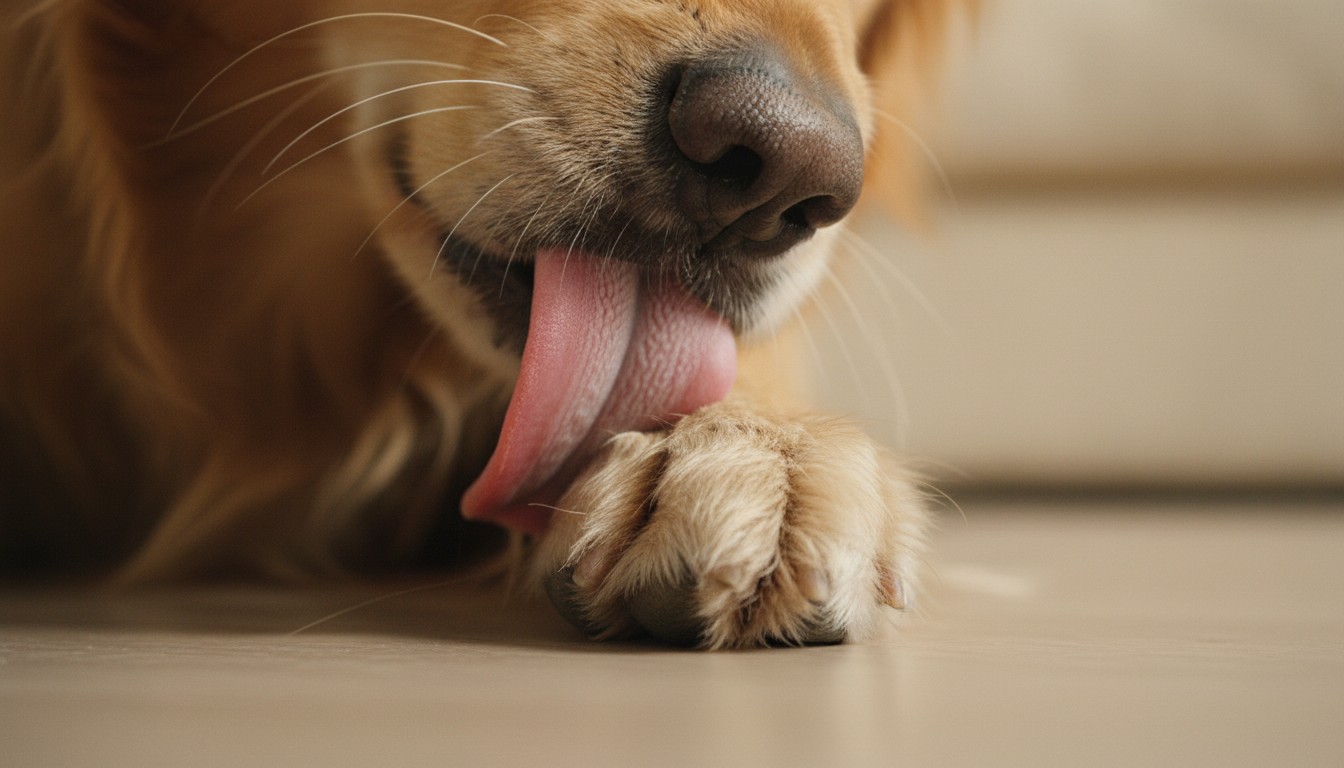
It is vital to distinguish between a slow adjustment and a genuine ingredient intolerance. A stalled food transition caused by adjustment usually improves within 48 hours of stepping back the ratio. However, if your pet exhibits 'red flag' symptoms regardless of the ratio, you may be dealing with an incompatibility. Look for signs beyond the digestive tract: excessive itching (pruritus), redness between the paws, or recurring ear infections.
Common culprits in UK dog foods include beef, dairy, or specific grains. If your pet is switching to a food containing a novel protein they have never had before—such as venison or duck—the stall might simply be a 'system shock'. However, if you see blood in the stool, persistent vomiting, or a total loss of appetite (anorexia), the food likely contains something your dog's immune system is actively rejecting. In these cases, no amount of 'slow mixing' will resolve the issue, and a different base ingredient should be sourced.
The 21-Day Extended Transition Schedule
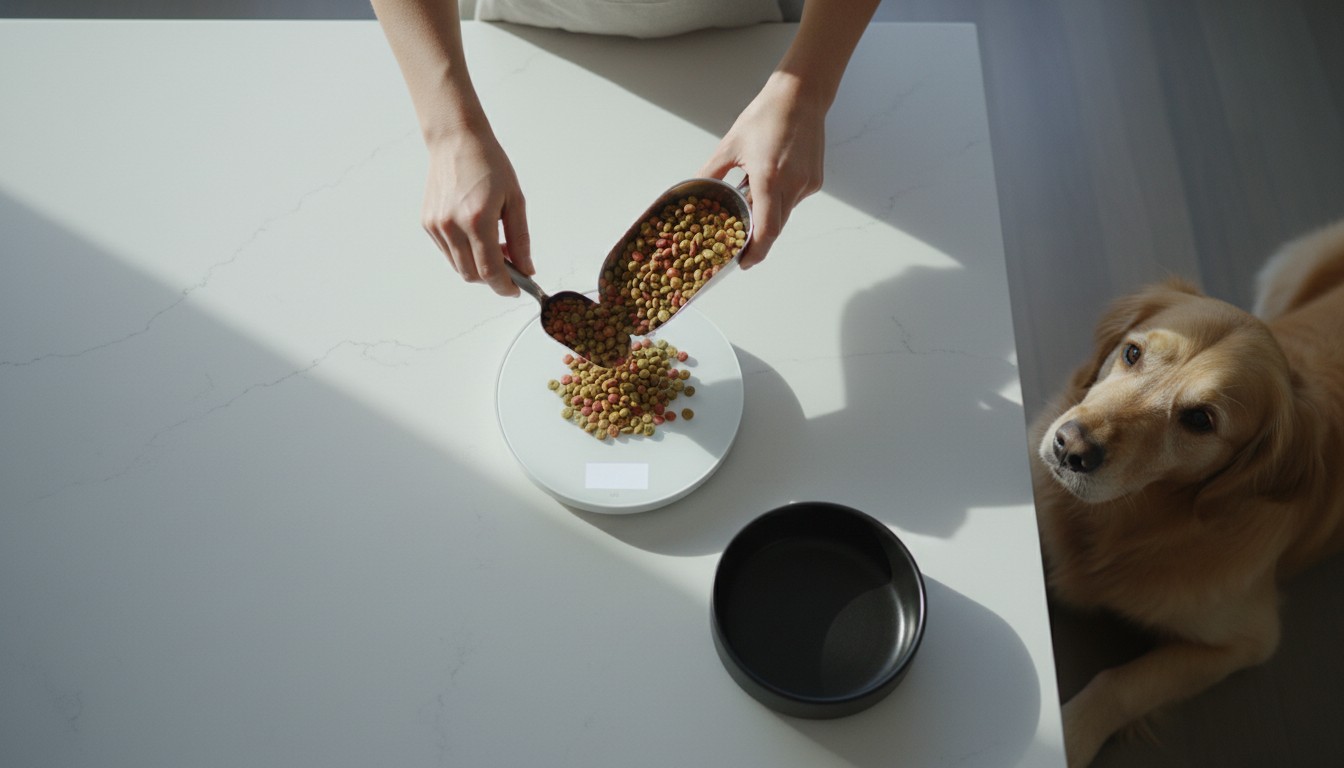
For pets prone to stalled food transitions, the standard 7-day window is simply too short. We recommend a 21-day 'Extended Transition' which provides the gut microbiome ample time to stabilise. This is particularly effective for dogs being moved onto specialised diets from brands like Royal Canin or Hill’s Science Plan.
The 21-Day Plan:
- Days 1-5: 10% new food, 90% old food.
- Days 6-10: 25% new food, 75% old food.
- Days 11-15: 50% new food, 50% old food.
- Days 16-20: 75% new food, 25% old food.
- Day 21: 100% new food.
This slower cadence significantly reduces the likelihood of a stall. If at any point the stool consistency changes, you simply stay at that stage for an additional three days rather than moving forward. It turns the transition into a 'sliding scale' rather than a rigid deadline, which is far more respectful of the individual animal's biological pace.
FAQ
How long should I wait if my dog has diarrhoea during a food switch?
If your dog has one or two loose stools, wait 24 hours while feeding the last successful ratio. If the diarrhoea persists for more than 48 hours or is accompanied by vomiting, stop the new food and consult your vet.
Can I use pumpkin to help with a stalled transition in the UK?
While tinned pumpkin is a popular US remedy, it is harder to find in UK supermarkets like Tesco. Instead, you can use steamed, mashed butternut squash or a veterinary-approved fibre supplement like Pro-Fibre to help firm up stools.
Why is my dog suddenly itchy during a food transition?
Itching can be a sign of a 'food flare', where the immune system reacts to a new protein or additive. If the itching starts exactly when the food transition begins, it is likely an ingredient intolerance rather than a simple digestive adjustment.
Conclusion
Navigating stalled food transitions requires a shift in perspective: from following a calendar to following your pet's biology. The 7-day rule is a helpful starting point, but it is not a universal law. By using the 'Reset Protocol', extending your transition timeline to 21 days, and supporting the gut with British-standard probiotics, you can overcome most digestive hurdles. However, always remain vigilant for red flags such as lethargy, blood in the stool, or persistent vomiting. If these occur, or if your dog refuses to eat for more than 24 hours, seek professional advice from your local vet or an out-of-hours service like Vets Now. Patience is your most valuable tool in ensuring a healthy, happy transition to a better diet.
References & Sources
This article was researched using the following sources:


