














When it comes to effective animal training, cue selection and discrimination form the foundational linguistic architecture of a successful partnership. Many pet owners in the UK find themselves frustrated when their dog or cat seems to 'ignore' a command, but the reality is often a breakdown in how signals are presented. By understanding the science behind how pets process information, we can move away from simple commands towards a sophisticated system of cues that reduces confusion. Whether you are walking through a busy park in Edinburgh or relaxing in a London flat, ensuring your pet can distinguish between different signals is the key to reliable behaviour and safety.
The Biological Priority of Visual Communication
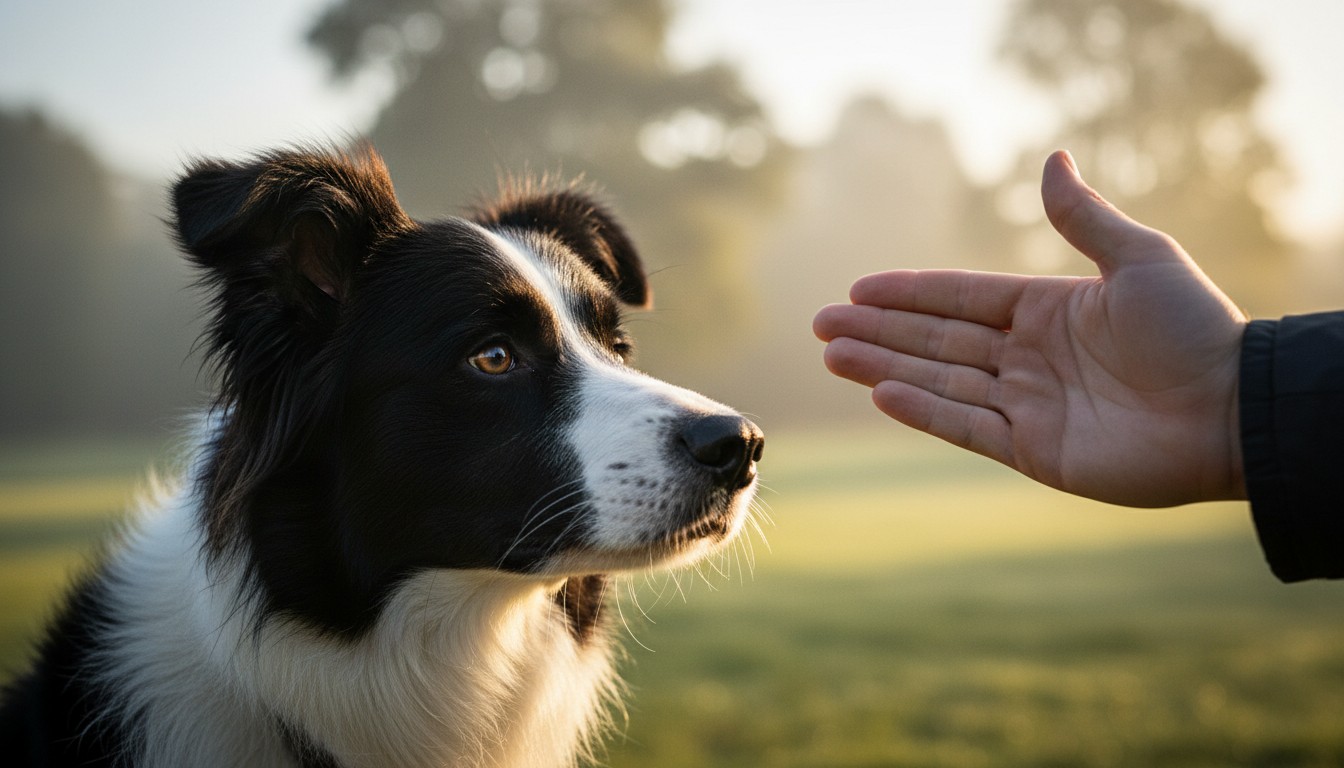
From an evolutionary perspective, most companion animals—particularly dogs—are biologically hardwired to prioritise visual information over auditory stimuli. In the field of cue selection and discrimination, this is known as the 'overshadowing' effect. When you give a verbal cue and a hand signal simultaneously, the pet's brain often filters out the spoken word to focus entirely on your body language. This is why many owners believe their dog knows the word 'Sit' when, in reality, the dog is responding to a slight shift in the owner's weight or a subtle hand movement near their pocket.
To ensure your pet actually learns the linguistic cue, it is essential to present signals in a specific sequence. Experts suggest using the 'New Cue, Old Cue' method. If you want to teach a verbal word for a behaviour the pet already does on a hand signal, say the word first, pause for a split second, and then provide the visual signal. This clear separation prevents the visual information from 'drowning out' the auditory input, allowing the pet to form a distinct mental association with the new sound. This process is the cornerstone of building a robust vocabulary that works even when you are out of the pet's direct line of sight.
Phonetic Clarity: Avoiding Linguistic Overlap
When selecting verbal cues, the phonetics of the words you choose matter significantly. Pets do not understand the English language; they recognise patterns of sounds, syllables, and inflections. A common mistake in cue selection and discrimination is choosing words that sound too similar to the human ear, which can be even more confusing for a pet. For instance, 'Stay' and 'Wait' are often used interchangeably by owners, but to a pet, the vowel sounds and lengths are distinct enough to be learned separately—unless they are shouted or delivered with inconsistent prosody.
More problematic are cues like 'Down' and 'No' (which share a similar 'o' sound) or 'Heel' and 'Here' (which both start with a strong 'H' and end with a similar vowel resonance). When choosing your 'vocabulary', aim for words with varied syllable counts or distinct starting consonants. In the UK, many trainers prefer using 'Settle' instead of 'Down' for a relaxed posture to avoid confusion with the 'Down' used for a formal lie-down. By choosing a unique linguistic architecture for your training, you reduce the cognitive load on your pet, making it much easier for them to offer the correct behaviour on the first request.
Cleaning Up Muddy Cues and Contextual Guessing
One of the most frequent issues in training is 'contextual guessing', where a pet performs a behaviour because they have learned the routine, not because they have discriminated the cue. For example, if you always ask your pet to 'Sit' before putting on their lead from John Lewis, they may sit the moment the lead appears, regardless of what you say. While this looks like obedience, it is actually a lack of cue discrimination. To test this, try giving a different cue in the same context, such as 'Hand Touch'. If the pet sits anyway, your cue is 'muddy' and the pet is simply guessing based on the environment.
To clean up these signals, you must vary the context. Practise your cues in different rooms, while you are sitting down, or even while you are facing away. This forces the pet to listen to the specific word or look for the specific gesture rather than relying on environmental 'breadcrumbs'. If a cue has become 'poisoned'—meaning it has been associated with something negative or has been repeated so many times without a response that the pet ignores it—it is often better to retire that word entirely. Replacing a failed 'Come' with 'Recall' or 'Here' provides a fresh linguistic start, allowing you to build a clean, high-value association from scratch without the baggage of previous failures.

The Science of Discrimination and Generalisation
Discrimination training is the process of teaching a pet that a specific reinforcement is only available when a specific signal is given. If you say 'Spin' and the pet 'Sits', and you still give them a treat because they look cute, you are actively destroying the discrimination process. For a cue to remain 'clean', the reward must be contingent on the correct response to that specific signal. This requires discipline from the owner; if the pet offers the wrong behaviour, simply reset, wait a few seconds, and try again without frustration. This 'non-reward marker'—even just the absence of a treat—is a powerful information source for the pet.
Once discrimination is achieved, the next step is generalisation. Pets are notoriously poor at generalising; a dog might perfectly understand 'Down' on the carpet at home but be completely lost when asked to do the same on the pavement outside a Tesco Express. This isn't stubbornness; it is a failure of the behaviour to generalise to new environments. To master cue selection and discrimination, you must 'proof' the cues in increasingly distracting environments. Start in a quiet hallway, move to the garden, then to a quiet street, and eventually to a busy park. This gradual increase in difficulty ensures that the 'architecture' of your training holds up under the pressure of real-world distractions.

FAQ
What is the difference between a command and a cue?
In modern training, a 'command' implies an order that must be followed to avoid punishment, whereas a 'cue' is a signal that a specific behaviour is now available for reinforcement. Using cues fosters a more cooperative and less stressful relationship between the pet and owner.
Can I use cues in a language other than English?
Yes, many UK trainers use German, French, or even nonsense words. The benefit of using a 'foreign' or unique language is that the pet won't hear those words in everyday conversation, which helps keep the cues distinct and highly salient.
My pet ignores the verbal cue but follows the hand signal. Why?
This is likely due to 'overshadowing', where the visual signal is so prominent the pet hasn't noticed the sound. To fix this, say the word clearly, wait one second, and then use the hand signal. Eventually, the pet will anticipate the gesture and respond to the word alone.
How do I know if a cue is 'poisoned'?
A cue is poisoned if the pet consistently shows hesitation, ignores it, or displays signs of stress (like lip licking or looking away) when they hear it. If a cue is poisoned, it is best to choose a new word and start the training process again with positive reinforcement.
Conclusion
Mastering cue selection and discrimination is an ongoing process that requires patience, consistency, and a keen eye for detail. By understanding that your pet is a visual learner first and a linguistic learner second, you can structure your training to play to their strengths. Remember to keep your verbal signals phonetically distinct, avoid the trap of contextual guessing, and always reward the specific behaviour you asked for. If you find your communication is consistently breaking down or your pet is showing signs of anxiety during training sessions, it is wise to consult a certified professional, such as a trainer from the Association of Pet Dog Trainers (APDT) or the Institute of Modern Dog Trainers (IMDT). With a clean linguistic architecture, you and your pet can enjoy a lifetime of clear communication and mutual respect.
References & Sources
This article was researched using the following sources:


