














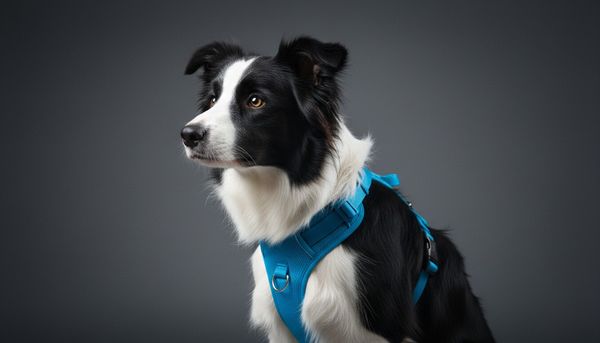
For Canadian dog owners, the daily walk is more than just a bathroom break—it is an adventure through local trails or a trek through a snowy Montreal winter. However, many owners unknowingly restrict their pet's health with poor gear. Achieving a perfect harness fit is not just about preventing an escape; it is about preserving the delicate biomechanics of your dog's skeletal system. A poorly fitted harness can cause long-term joint issues, gait compensation, and painful chafing. In this guide, we will explore how to physically verify a safe fit and identify when gear is restricting shoulder movement, ensuring your dog can move with the same freedom they have off-leash. Whether you are shopping at Canadian Tire or a local boutique, understanding the 'why' behind the fit is essential for any responsible pet parent.
Canine Biomechanics: Why Shoulder Freedom Matters
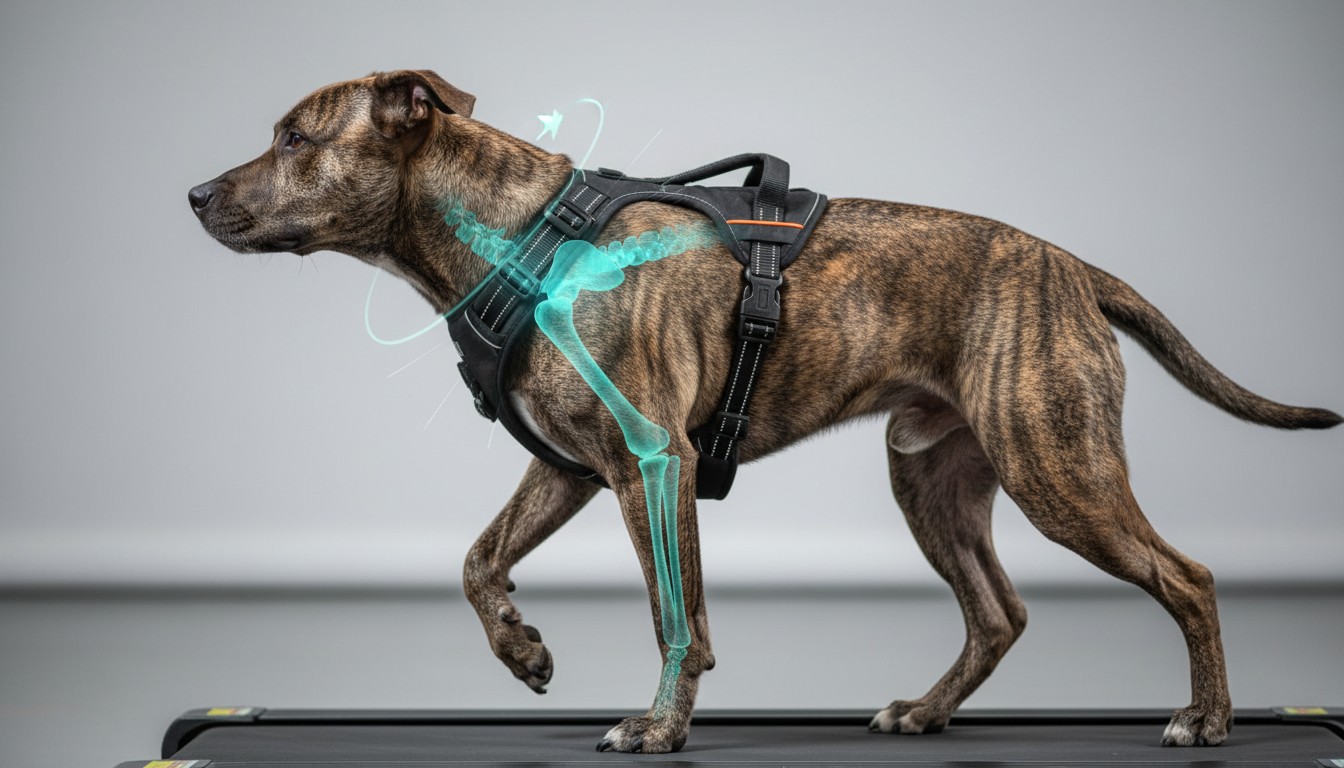
When discussing the perfect harness fit, we must first look at the scapula, or shoulder blade. Unlike humans, dogs do not have a collarbone connecting their front limbs to their skeleton; instead, the front legs are attached by muscle and tendon alone. This allows for incredible reach and shock absorption, but it also makes the area vulnerable to restriction. Many popular 'no-pull' harnesses use a horizontal T-bar design that sits directly across these shoulder blades. Every time the dog moves forward, the scapula must rotate. If a strap is sitting on top of it, the dog is forced to shorten their stride.
Over months and years, this restricted movement leads to 'gait compensation.' Your dog might begin to carry more weight on their hind legs or develop a 'crabbing' walk to avoid the pressure on their shoulders. To ensure a perfect harness fit, look for a 'Y-shaped' design. This configuration allows the straps to follow the contours of the neck and chest, meeting at the sternum (the breastbone). This leaves the shoulder joint and the surrounding musculature completely free to move through its full range of motion. Think of it like a well-tailored hiking pack versus a restrictive straightjacket; the goal is load distribution without interference.
The Three Critical Measurements for a Precise Fit
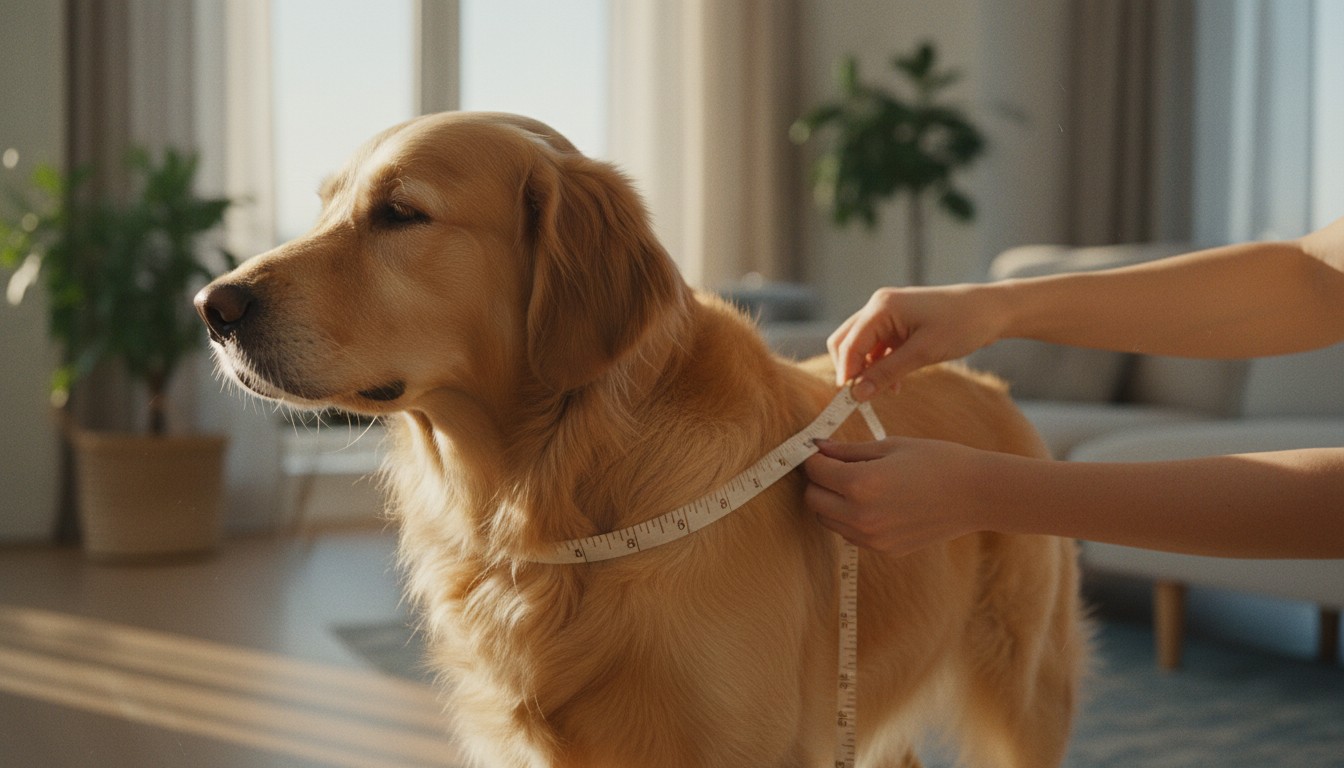
To achieve a perfect harness fit, you cannot rely on weight alone, as a 25kg Bulldog has a vastly different silhouette than a 25kg Greyhound. You need three specific measurements in centimetres to find the right size. First, measure the base of the neck. This is lower than where a standard collar sits; follow the line where the neck meets the shoulders. If the neck loop is too small, it will sit too high and put pressure on the trachea; if it is too large, it will slide down and block the points of the shoulders.
Second, measure the 'girth' at the widest part of the ribcage. In the pet aisles of stores like Canadian Tire or Shoppers Drug Mart, you will see this listed as the primary sizing metric. Always leave at least two to four finger-widths of space between the dog's front armpit and the girth strap. This is a critical zone for 'perfect harness fit'—if the strap is too close to the elbow, it will cause painful friction and skin irritation. Finally, measure the length of the sternum. The harness should sit firmly on the bone, not on the soft tissue of the throat. When these three points are aligned, the harness will remain stable even if the dog lunges or changes direction suddenly.
Static vs. Dynamic Fit: The Two-Finger Rule
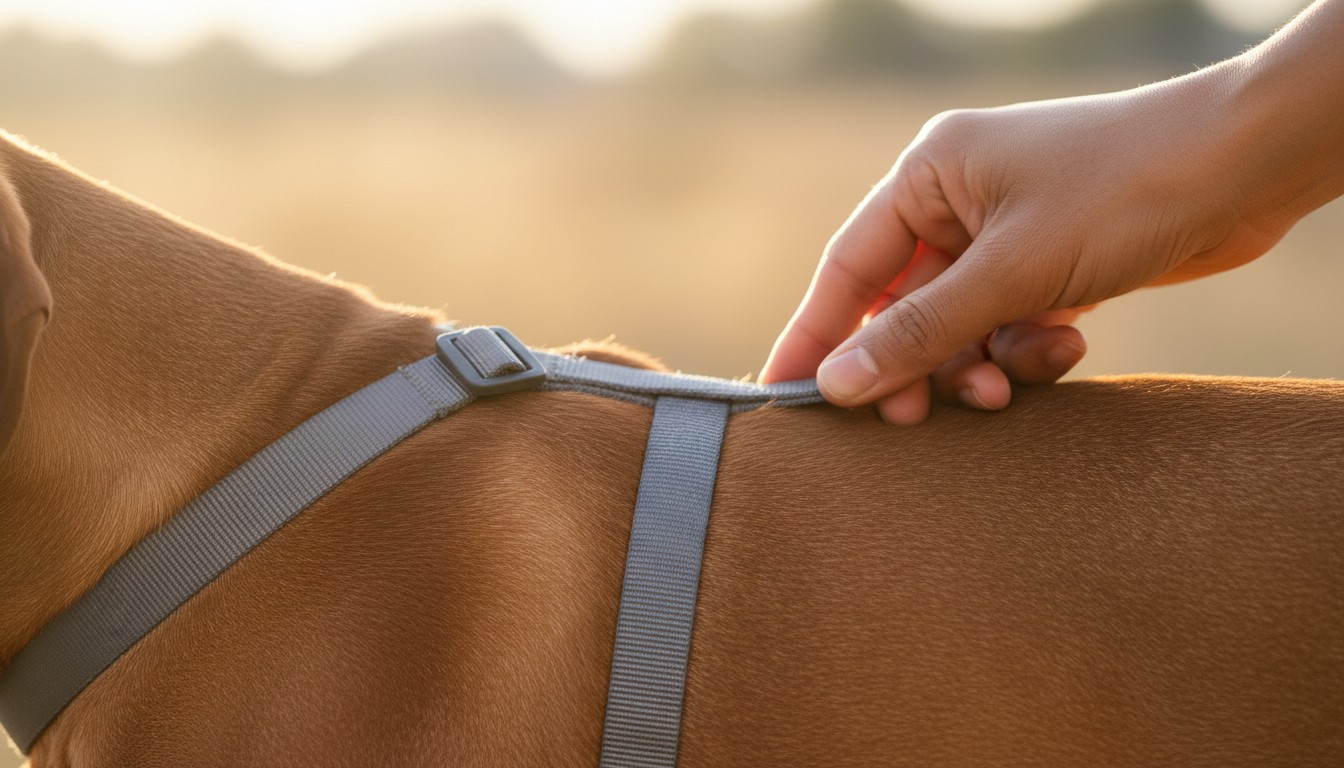
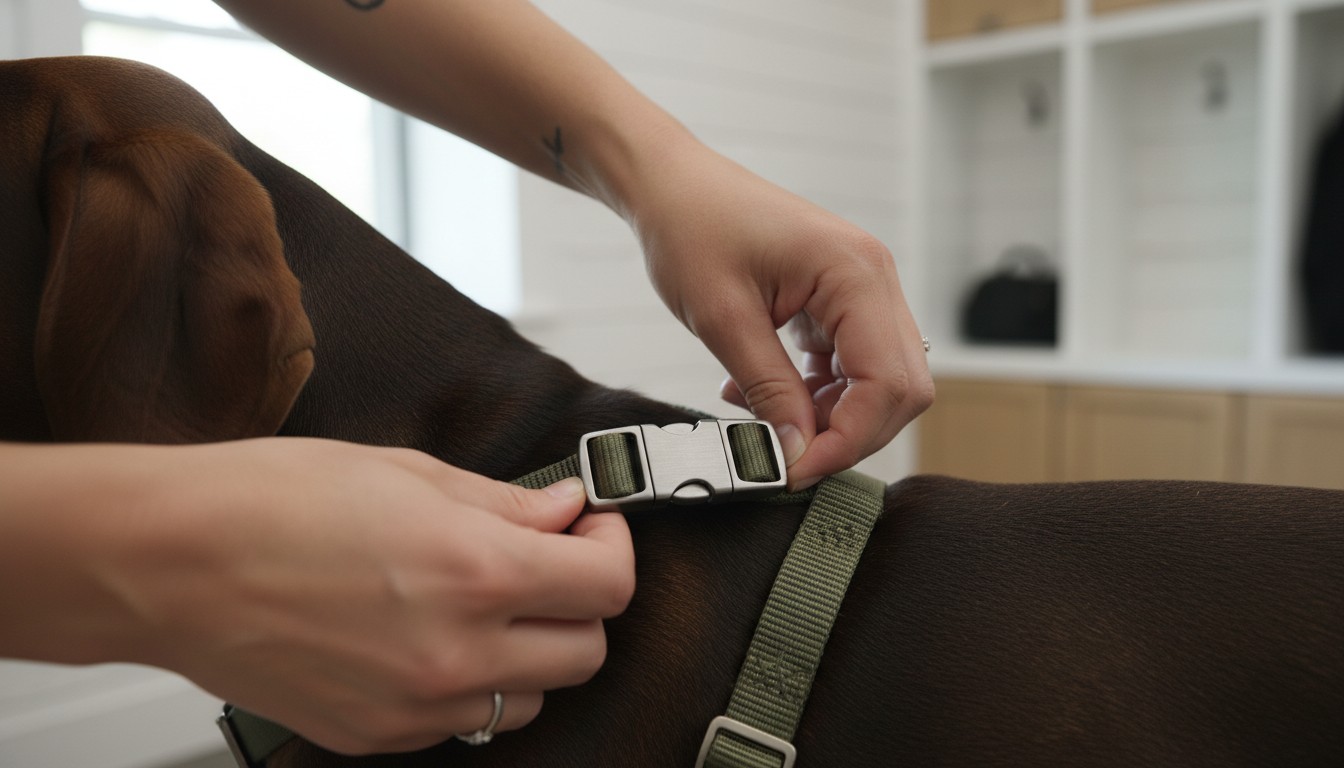
A harness might look great while your dog is standing still in the living room, but a perfect harness fit must hold up during movement. This is the difference between static and dynamic fitting. Start with the 'Two-Finger Rule': you should be able to slide two fingers flat between any strap and your dog's body. If you can fit more, the harness may shift and chafe; if you cannot fit any, it is too tight and will restrict breathing and movement. However, this is only the static test.
To check the dynamic fit, take your dog for a quick trot. Watch the harness from above. Does it shift wildly from side to side? This usually indicates the neck loop is too large or the chest piece is too long. Next, watch from the side. Does the back of the harness 'pop up' when the dog lowers its head to sniff? This is common in Canadian winters when dogs wear bulky coats under their gear. Adjust the straps to account for the extra layers. A truly perfect harness fit remains centred on the dog's body regardless of their posture, ensuring that the pressure from the lead is always distributed across the strongest parts of the dog's frame rather than pulling the harness into the armpits.
Troubleshooting Common Fit Issues and Escape Risks
Even with careful measurement, problems can arise. One of the most common issues is 'backing out,' where a dog moves backward and slips their head out of the harness. This usually happens because the neck loop is adjusted for comfort rather than security. For a perfect harness fit on 'escape artists' like Sighthounds, consider a three-strap harness that includes a second girth strap around the narrower part of the waist. This third strap makes it physically impossible for the harness to slide over the ribcage.
Another frequent complaint is chafing. If you notice redness or thinning fur behind the front legs, the harness is likely sitting too far forward. In Canada's humid summers or wet autumns, damp straps can exacerbate this friction. To fix this, look for a harness with a longer 'Y' plate on the chest, which pushes the girth strap further back toward the middle of the ribs. If your dog is between sizes, always size up and tighten the straps rather than squeezing them into a size too small. If the harness continues to slide to one side, check that you have tightened the straps evenly on both the left and right sides. An unbalanced harness is a leading cause of muscle tension and owner frustration during walks.
Identifying Restricted Gait: What to Look For
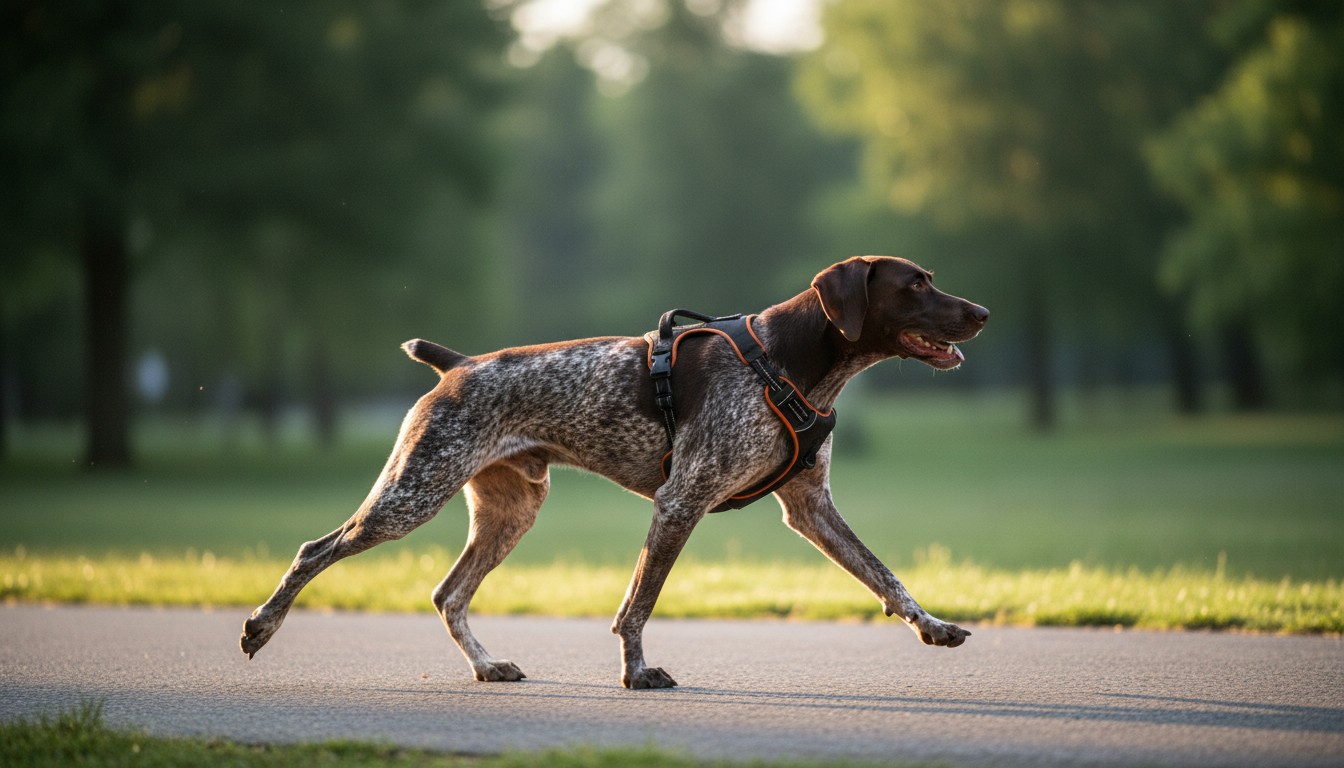
The ultimate test of a perfect harness fit is your dog's gait. An expert eye looks for symmetry and fluid movement. When your dog is trotting, their front and back legs should move in a coordinated, rhythmic fashion. If you notice that your dog's front steps seem 'choppy' or shorter than their back steps, the harness is likely blocking the shoulder. Another sign is 'pacing'—a movement where the legs on the same side move together—which dogs sometimes use to compensate for discomfort or restricted reach.
Watch your dog from the front as they walk toward you. Their front legs should move straight forward like pistons. If they are 'winging out' (swinging their front paws in a circular motion to the side), they are likely trying to move around a restrictive chest strap. This is a clear indicator that you do not have a perfect harness fit. Correcting this is vital; long-term gait restriction can lead to early-onset arthritis in the carpus (wrist) and elbows as the dog absorbs impact poorly. If you adjust the gear and the gait remains irregular, it is time to consult a canine physiotherapist or a veterinarian to rule out existing musculoskeletal issues. Expert owners know that gear should facilitate movement, never hinder it.
FAQ
How can I tell if my dog's harness is too tight?
Apply the two-finger rule: you should be able to slide two fingers comfortably between the straps and your dog's skin. If the skin is bulging around the straps or the dog is panting excessively even without exercise, loosen the adjustments immediately.
Is it better to have a front-clip or back-clip harness for a perfect fit?
For a perfect harness fit, a dual-clip is best. The back clip is ideal for everyday walking, while the front clip can help with training. However, ensure the front clip doesn't pull the harness sideways into the shoulder joint when tension is applied.
Should I take the harness off when my dog is at home?
Yes, it is highly recommended to remove the harness indoors. Constant wear can lead to matting of the fur, skin irritation, and 'hot spots,' especially in thick-coated breeds common in Canada like Huskies or Newfoundlands.
Why does the harness always slide to the side?
This is usually caused by uneven strap tension or a chest piece that is too wide for your dog's frame. Ensure both side straps are adjusted to the same length and that the lead is not consistently pulling from one side.
Conclusion
Achieving the perfect harness fit is a blend of science and observation. By focusing on the Y-shaped design and ensuring the shoulders remain free, you are investing in your dog's long-term mobility and comfort. Remember that fit can change; as your dog ages, gains muscle, or even grows a thick winter coat, you must re-evaluate your measurements. Always prioritise skeletal alignment over 'no-pull' gimmicks that rely on restriction. If you are ever unsure about your dog's movement, a quick video sent to a professional trainer or vet can provide peace of mind. Your dog's walk is the highlight of their day—make sure they can enjoy it with a full, natural range of motion. Safe travels on the trails!
References & Sources
This article was researched using the following sources:


