














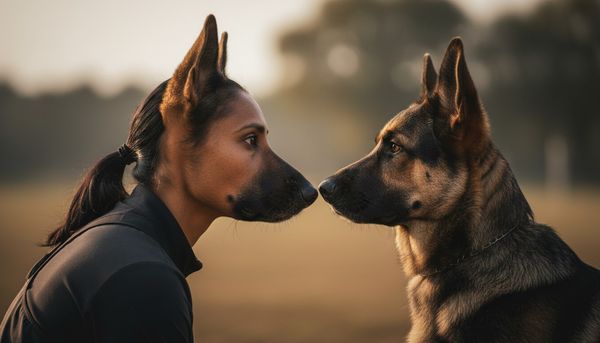
Cue selection and discrimination form the bedrock of any successful training relationship, yet they are often the most overlooked components of a pet's education. Many Australian pet owners find themselves frustrated when their dog 'ignores' a command, but often, the issue isn't stubbornness—it is a breakdown in the linguistic architecture of the training session. Your pet isn't necessarily being 'cheeky' at the local park; they might simply be struggling to differentiate between similar-sounding words or conflicting body language. By understanding the science of how animals process information, you can move away from 'muddy' communication and toward a crisp, clear dialogue that makes learning effortless for your furry mate. This guide explores how to choose distinct signals, why visual cues usually trump verbal ones, and how to ensure your pet actually understands what you are asking.
The Science of Salience: Why Visual Signals Lead the Way
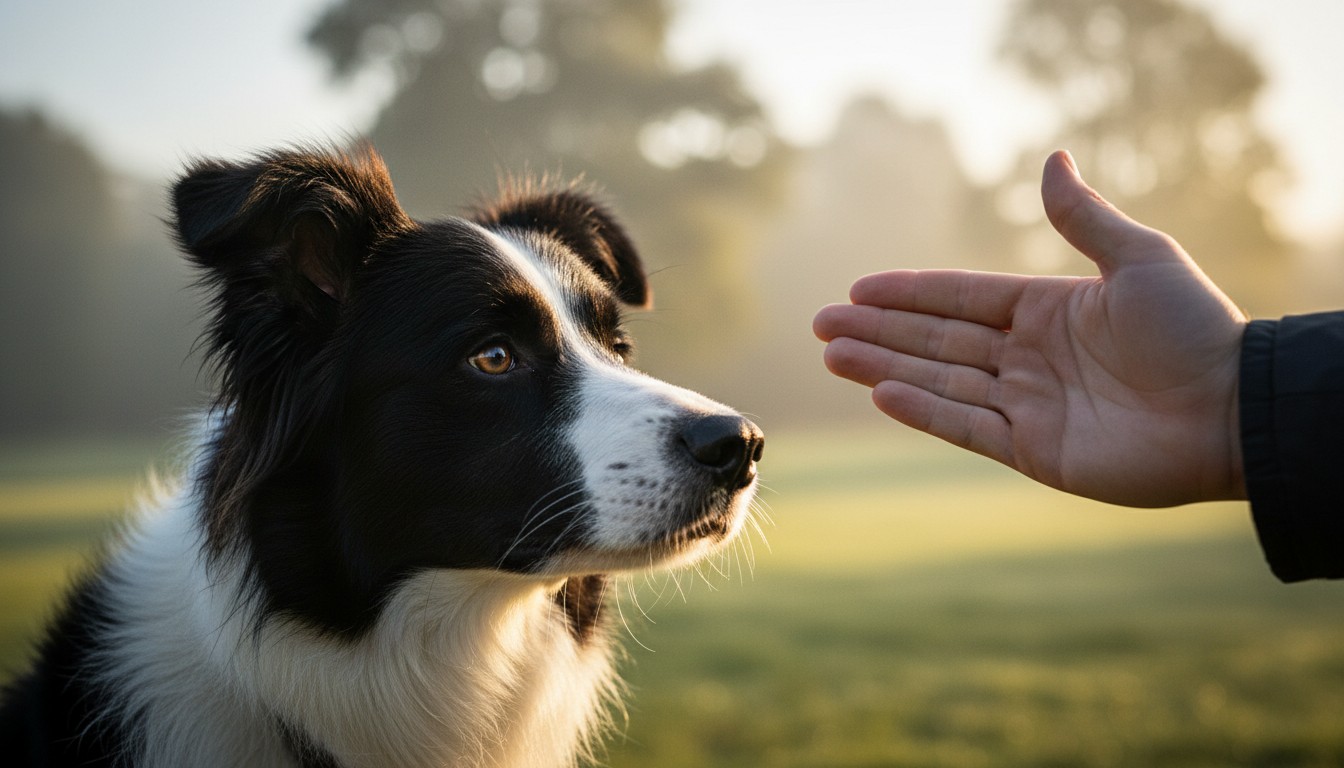
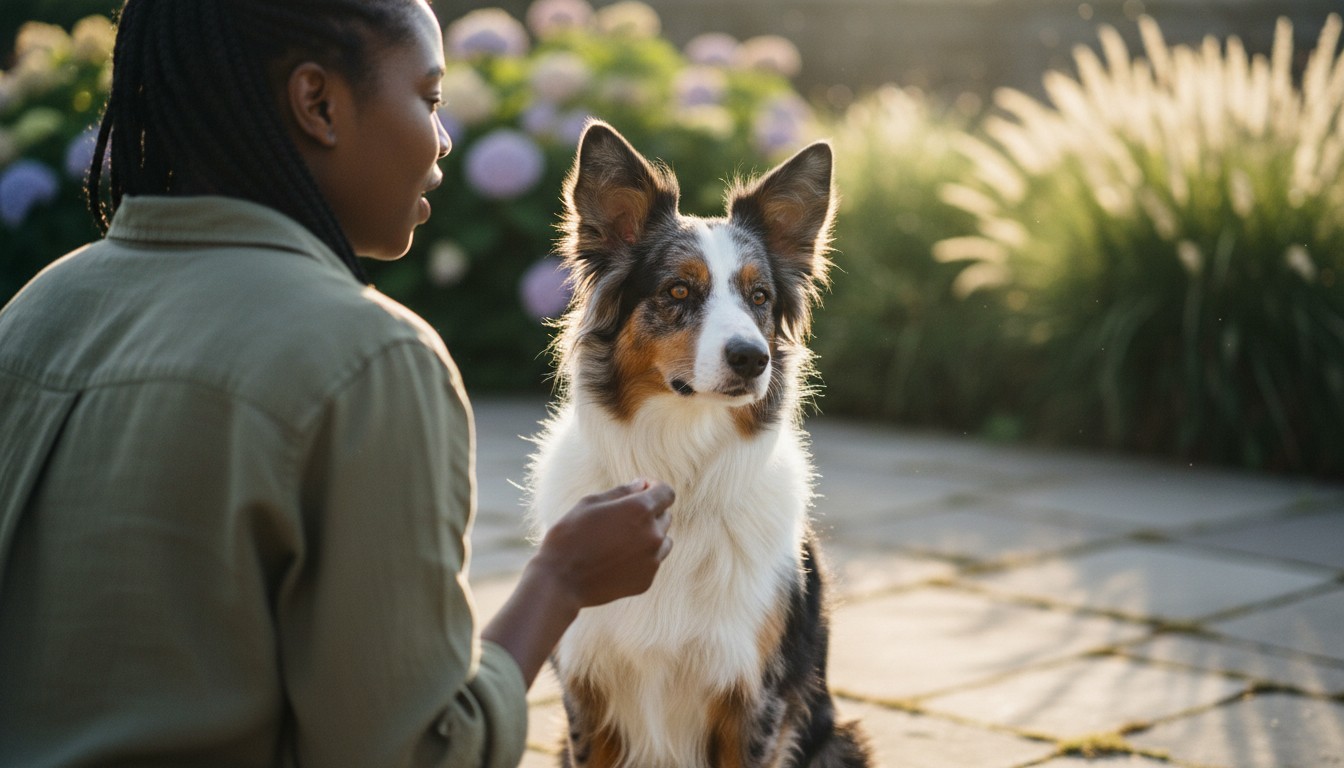
In the world of cue selection and discrimination, it is vital to acknowledge that dogs are primary visual communicators. Research into canine cognition consistently shows that when a verbal command and a hand signal are given simultaneously, the dog is far more likely to attend to the physical movement. This phenomenon is known as 'overshadowing.' If you are waving a treat from Woolworths while saying 'Sit,' your dog is almost certainly focused on your hand's arc rather than the phonetic sound of the word.
To build a robust training foundation, you must decide whether you want your pet to respond to a gesture, a word, or both. For most Australians training in high-distraction environments—like a busy Sunday morning at a Bunnings car park—hand signals are often more reliable. They cut through the noise of traffic and chatter. However, for a truly 'educated' pet, you want to establish clear discrimination between the two. This means the pet should be able to perform the behaviour when you give only the verbal cue or only the visual signal, without needing both to be present to succeed.
Phonetic Integrity: Choosing Distinct Verbal Cues
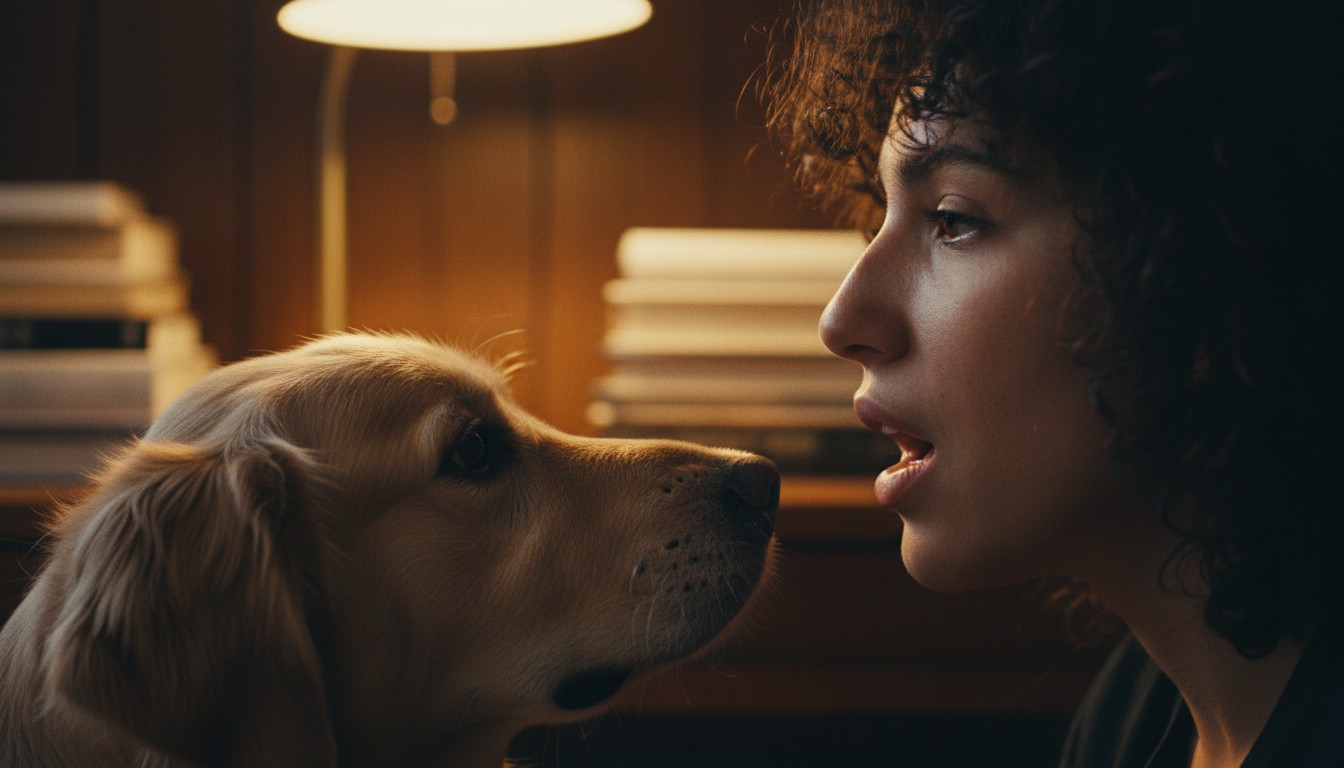
One of the biggest mistakes in cue selection is choosing words that sound too similar to the animal's ear. Dogs do not process language like humans; they rely on the cadence, vowel sounds, and hard consonants. For example, 'Sit' and 'Stay' both start with an 'S' sound and can be easily confused if whispered or shouted from a distance. If your pet is constantly breaking a stay to sit, or vice versa, you might have an issue with acoustic discrimination.
To 'clean up' your linguistics, try choosing words with distinct shapes. Instead of 'Stay,' many professional trainers use 'Wait' or 'Pause.' Instead of 'Down' (which many owners also use to mean 'get off the sofa'), try 'Couch' for the furniture and 'Drop' for the physical behaviour. By ensuring every verbal cue has a unique phonetic profile, you reduce the mental load on your pet. This is particularly important for breeds that are highly sensitive to sound, ensuring they don't have to guess which 'S-word' you just uttered while they are distracted by a passing lorikeet.
Eliminating 'Muddy' Communication and Poisoned Cues
A 'poisoned cue' occurs when a command becomes associated with something negative or becomes so inconsistent that the pet begins to ignore it entirely. This often happens with the 'Come' command. If you only call your dog to put them on a lead at the end of a fun run at the beach, or to give them a bath they dislike, 'Come' becomes a predictor of something unpleasant. This ruins cue discrimination because the dog is now weighing up the reward of staying away versus the 'punishment' of coming to you.
To fix muddy communication, you must restart the learning process with a new cue. If 'Come' is broken, switch to 'Here' or 'Check-in.' During this retraining phase, ensure the new cue is 100% associated with high-value rewards—think small pieces of roast chicken or their favourite toy from Kmart Australia. This 'clean' restart allows you to build a fresh association without the baggage of the old, ineffective command. Consistency from every family member is essential here; if one person says 'Come' and another says 'Get over here,' the architecture of your training will collapse into confusion.
The 'Tea Party' Test for True Discrimination
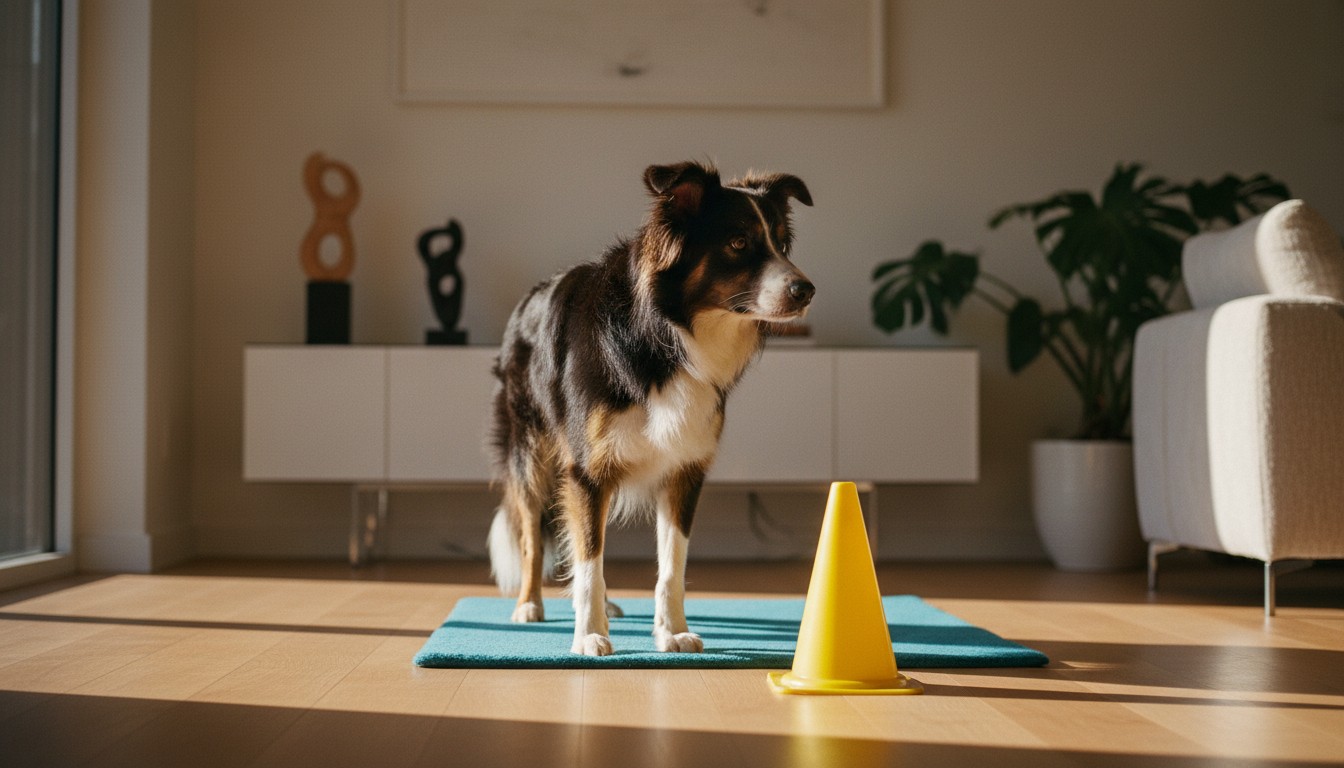
How do you know if your pet truly understands a cue or if they are just reading the context of the situation? Many pets appear to know 'Sit' because they are standing in front of their food bowl at dinner time. This isn't true cue discrimination; it is a learned routine. To test your pet's linguistic mastery, try the 'Tea Party' test. This involves giving cues in 'weird' positions—while you are sitting on the floor, lying on your back, or even looking away from them.
If your pet can only 'Drop' when you are standing directly in front of them with your hand held a certain way, they haven't generalised the cue. To achieve true stimulus control, you need to vary the environment and your body position. Practise in the kitchen, then move to the backyard, and eventually try it at the local park. This process ensures that the cue itself—the word or the specific signal—is the only thing that triggers the behaviour, regardless of whether you are wearing your work boots or your thongs.

Designing Ergonomic Hand Signals for Humans
While we focus on the pet's needs, cue selection must also account for human ergonomics. A hand signal that is too subtle might not be seen at a distance, while one that is too complex might be difficult for you to reproduce consistently under pressure. For example, a simple flat palm for 'Stay' is easy to see and hard to mess up. In contrast, a small finger flick might be missed if the sun is in your pet's eyes during an Aussie summer afternoon.
Consider the 'silhouette' of your signal. A good visual cue should be identifiable even if the pet can only see your outline. This is why many trainers use 'big' movements: an arm swept out to the side for 'Go Out' or a hand brought to the chest for 'Finish.' When everyone in the household uses the exact same 'big' signals, the pet's ability to discriminate between commands improves dramatically. It turns a guessing game into a clear set of visual instructions that can be followed from 20 metres away across a cricket pitch.
FAQ
Why does my dog ignore me when there are other dogs around?
This is usually a failure of generalisation, not disobedience. Your dog likely understands the cue in a quiet lounge room but hasn't learned to discriminate the signal amidst high-value distractions. You need to 'proof' the behaviour by gradually increasing distractions in a controlled way.
Can I use the same word for two different behaviours?
No, this creates massive confusion. Every unique behaviour must have a unique cue. If you use 'Down' for both lying down and jumping off the bed, your pet will never be 100% certain what you want, leading to hesitation or errors.
How long does it take for a pet to learn a new cue?
Most pets can learn to associate a new cue with a behaviour in 10-20 repetitions, but true discrimination—knowing it perfectly regardless of the environment—can take hundreds of repetitions across different locations and contexts.
Conclusion
Mastering cue selection and discrimination is the difference between a pet that 'sometimes' listens and one that is truly responsive. By prioritising visual signals, ensuring your verbal cues are phonetically distinct, and testing for generalisation, you build a language that survives the distractions of the real world. Remember that training is a conversation, not a series of one-way demands. If your pet is struggling, look first at the clarity of your 'architecture.' Are your signals muddy? Is the environment too loud? Always end your sessions on a high note with plenty of praise and a bit of play. For complex behavioural issues or if you feel you aren't making progress, don't hesitate to contact a professional force-free trainer in your local area to help refine your technique.
References & Sources
This article was researched using the following sources:

