















Walking down the pet food aisle at Woolworths or Coles can be a bit of a head-spinner. You have likely been told that the most important thing to look for is 'meat as the first ingredient'. It sounds like a simple, fair dinkum rule for ensuring your mate gets a high-protein diet. However, the pet food industry has a clever trick up its sleeve known as ingredient splitting. This labelling tactic allows manufacturers to break down inferior ingredients into multiple sub-categories so that meat appears to be the primary component, even when it isn't. Understanding how to navigate these labels is crucial for any Australian pet owner who wants the best for their dog or cat.
The Magic Trick of Ingredient Splitting
Ingredient splitting is a common practice where a single, bulky ingredient—usually a grain or a carbohydrate—is broken down into several smaller components. In Australia, ingredients must be listed by weight in descending order. By splitting one large ingredient into three or four smaller ones, the weight of each individual 'split' drops, allowing the meat source to climb the list into that coveted number-one spot.
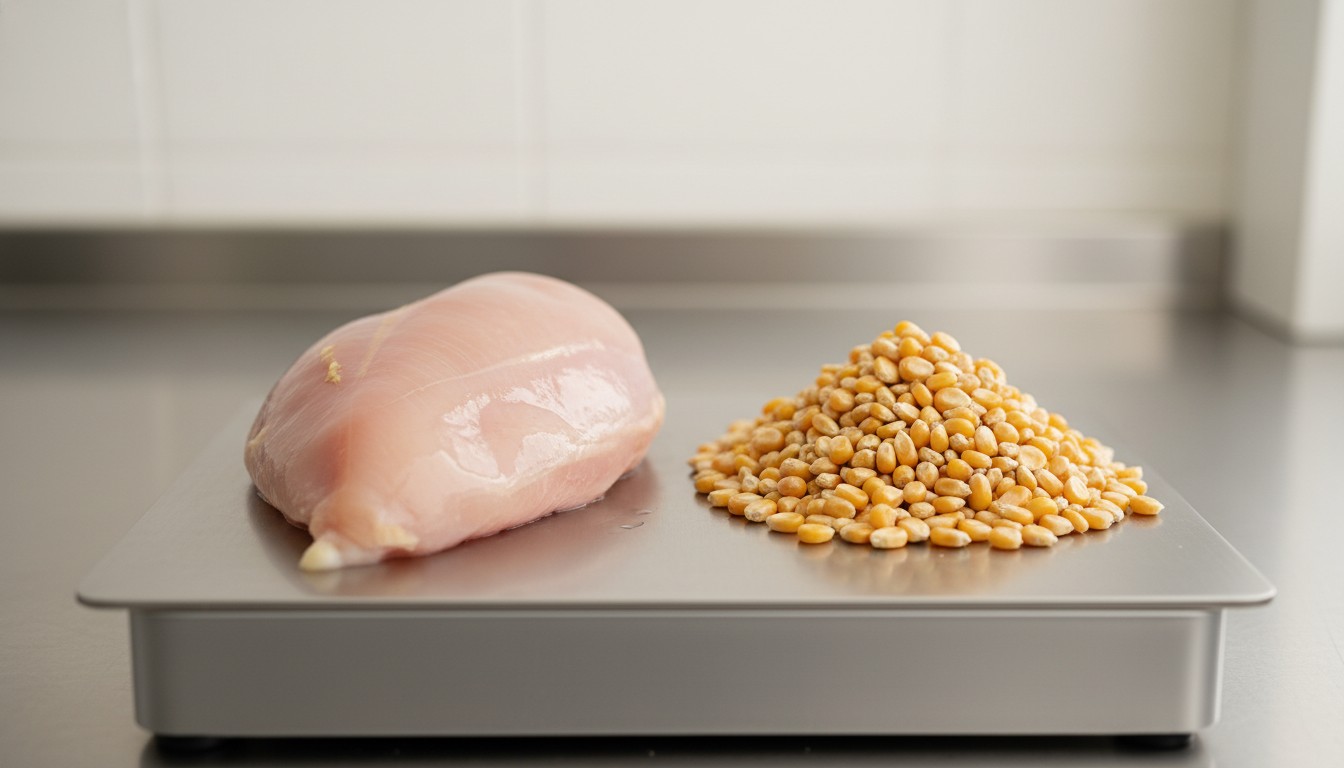
For example, imagine a bag of kibble that is actually 50% corn and only 25% chicken. On a transparent label, 'Corn' would be first. However, by using ingredient splitting, a manufacturer might list it as 'Chicken, Corn Gluten Meal, Corn Flour, and Ground Whole Corn'. Because the chicken weighs more than any single part of the corn, it gets listed first, even though the total corn content is double the amount of meat. This is a classic 'meat first' myth that many Aussie pet parents fall for while browsing the shelves at Petbarn or their local vet.
To spot this, you need to look at the ingredients as a whole group. If you see two or three variations of the same grain or legume within the first five to seven ingredients, you are almost certainly looking at a split. It is a way of making a grain-heavy food look like a meat-heavy one without changing a single gram of the actual recipe.
Common 'Splitters' to Watch For in Australia
When you're out doing the weekly shop, there are a few usual suspects you should keep an eye on. Manufacturers often use 'pulses' or 'grains' for splitting because they are cheap fillers that provide bulk. In many Australian-made 'grain-free' options, you will see a heavy reliance on peas and potatoes. These are frequently split into 'Pea Protein', 'Pea Flour', and 'Dried Peas'.
Other common splitters include:
- Corn: Look for corn gluten meal, corn mays, or yellow corn.
- Rice: Keep an eye out for brewers rice, rice bran, and rice flour.
- Wheat: Watch for wheat flour, wheat middlings, and wheat gluten.
- Potatoes: Notice potato starch, potato protein, and dried potato.
If you find these ingredients appearing together, try to mentally combine them. In your head, move that combined weight to the top of the list. If 'Pea Protein' is at position three and 'Peas' is at position four, their combined weight almost certainly outweighs the 'Lamb' listed at position one. This is especially true when the meat is listed as a fresh weight (which includes about 70% water) rather than a 'meal' weight.
The 'Fresh Meat' vs. 'Meat Meal' Dilemma
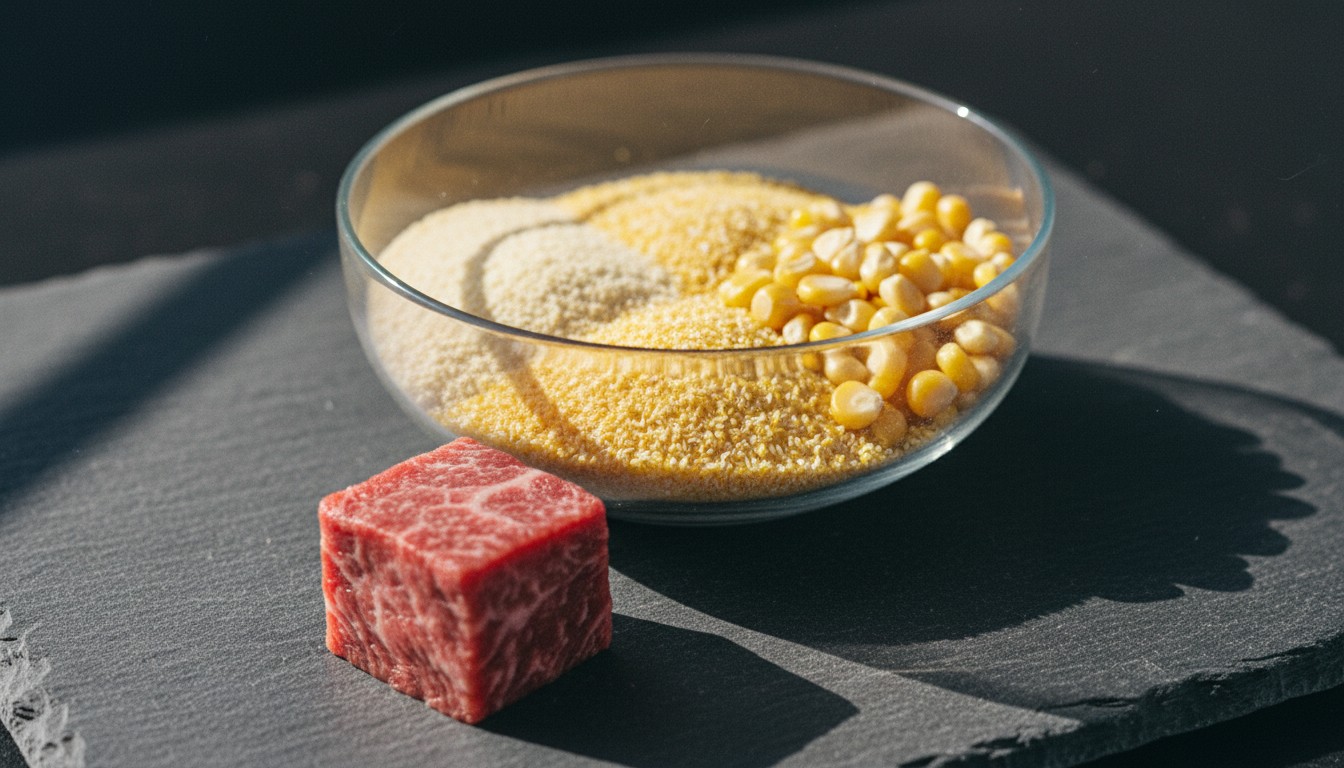
Another layer to the 'meat first' myth is the difference between fresh meat and meat meal. Australian labelling standards require ingredients to be weighed before they are cooked. Fresh chicken, for example, is very heavy because it is mostly water. During the extrusion process (making the kibble), that water is evaporated. This means the final 'meat' content is significantly lower than what the weight-based ingredient list suggests.
On the other hand, a 'Meat Meal' (like Chicken Meal) has already had the water removed. It is a concentrated protein source. Ironically, a food that lists 'Chicken Meal' as the second ingredient might actually contain more real protein than a food that lists 'Fresh Chicken' as the first ingredient. When you combine this 'water weight' factor with ingredient splitting, the true percentage of meat in some commercial foods can be shockingly low.
When evaluating a label at a store like Kmart Australia or a specialty pet shop, look for a high-quality meat meal in the top three ingredients. If 'Fresh Beef' is first, but is followed by four different types of rice and wheat, that beef is likely providing very little of the actual nutrition once the biscuits are baked.

Navigating Australian Standards: AS 5812
In Australia, the pet food industry is largely self-regulated, but reputable brands follow the Australian Standard for the Manufacturing and Marketing of Pet Food (AS 5812:2017). This standard aims to ensure that labels are not misleading. However, while it provides a framework, it doesn't outlaw ingredient splitting; it simply dictates how the weights must be recorded. Many members of the Pet Food Industry Association of Australia (PFIAA) adhere to even stricter guidelines to build trust with consumers.
If you want to be a savvy shopper, don't just look at the marketing claims on the front of the bag like 'Premium' or 'Natural'. These terms are not strictly defined by law in the same way human food terms are. Instead, flip the bag over and look for the 'Guaranteed Analysis' and the 'Ingredient List'. The guaranteed analysis will tell you the minimum crude protein and fat percentages, which provides a better baseline than the ingredient list alone.
If a food claims to be 'High Protein' but the guaranteed analysis shows only 22% protein, and the ingredients show three types of corn, you know the marketing doesn't match the reality. Aim for foods where the first two or three ingredients are clearly identified animal proteins, with minimal splitting of secondary carbohydrate sources.

Troubleshooting: What to Do if You're Confused
If you are finding it difficult to decipher a label, or if the manufacturer uses vague terms like 'Cereals' or 'Meat by-products' without specifying the source, it is usually a sign to look elsewhere. Vague labelling is often a way to hide inconsistent sourcing—manufacturers might change the ratio of wheat to corn based on which is cheaper at the time of production.
If your pet is showing signs of food sensitivity, such as itchy skin, loose stools, or a dull coat, the 'hidden' split ingredients might be the culprit. A dog might react to 'Corn Gluten' but not 'Whole Corn', yet both could be in the bag. If you suspect a food is not agreeing with your mate, consider switching to a limited-ingredient diet where the labels are easier to read and the protein sources are clearly defined.
When in doubt, contact the manufacturer directly. Ask them for the total percentage of animal-based protein versus plant-based protein. A transparent company will be happy to provide this information. If they dodge the question or cite 'proprietary recipes,' it's a red flag. For complex nutritional needs or severe allergies, always consult an Australian registered veterinarian who can provide a tailored nutrition plan.
FAQ
Is ingredient splitting illegal in Australia?
No, ingredient splitting is not illegal. As long as each individual ingredient is listed by its correct weight at the time of manufacture, it complies with Australian Standards (AS 5812). It is a marketing tactic rather than a legal violation.
How can I tell if meat is actually the main ingredient?
Look at the first five ingredients. If you see only one meat source and several variations of the same grain (e.g., rice, rice flour, rice bran), the grain is likely the main ingredient once combined. A truly meat-dense food will often have two or three animal proteins listed at the very beginning.
Does 'Grain-Free' mean there is no ingredient splitting?
Not at all. Grain-free foods often use ingredient splitting with legumes and tubers. Look out for multiple listings of peas (pea protein, pea starch, pea fibre) or potatoes, which serve the same filler purpose as grains.
Are 'Meat Meals' lower quality than fresh meat?
Actually, meat meals are often higher in actual protein content because the water has been removed. A high-quality, named meat meal (like Lamb Meal) is a great ingredient. You only need to worry if it's a 'mystery' meal, like 'Meat Meal' or 'Poultry Meal', which doesn't specify the animal.
Conclusion
The 'meat first' myth is one of the most successful marketing campaigns in the pet food industry, but as an informed Aussie pet owner, you now have the tools to see through it. By recognising ingredient splitting and understanding the difference between fresh weight and dry weight, you can choose a food that truly nourishes your pet. Don't be swayed by fancy packaging or the first item on a list; look for transparency, named protein sources, and a balanced 'Guaranteed Analysis'.
If you're unsure about your pet's current diet, or if they are experiencing health issues, the best next step is to chat with your vet. They can help you cut through the marketing noise and find a diet that suits your pet's specific breed, age, and activity level. Your mate depends on you to get the nutrition right, and now you're equipped to do just that.
References & Sources
This article was researched using the following sources:


