














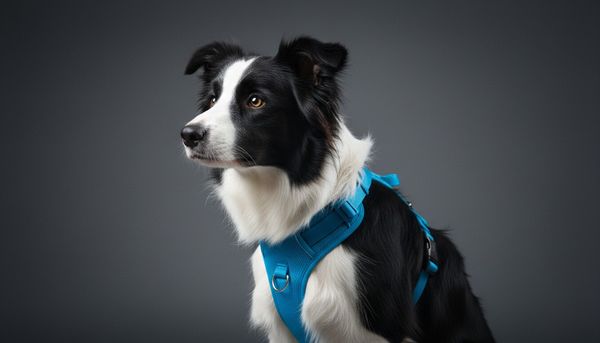
Whether you are heading to the local park or packing the car for a weekend in the Blue Mountains, a high-quality harness is a staple of the Australian outdoor lifestyle. However, simply buying the most popular brand at Petbarn doesn't guarantee a safe ride for your dog. A poor dog harness fit can lead to restricted movement, long-term joint issues, and even daring escapes. Understanding the anatomy of a perfect fit means looking past the fabric and focusing on your dog's skeletal structure to ensure their natural gait remains unimpeded.
The Biomechanics of Movement: Y-Front vs. Horizontal Straps
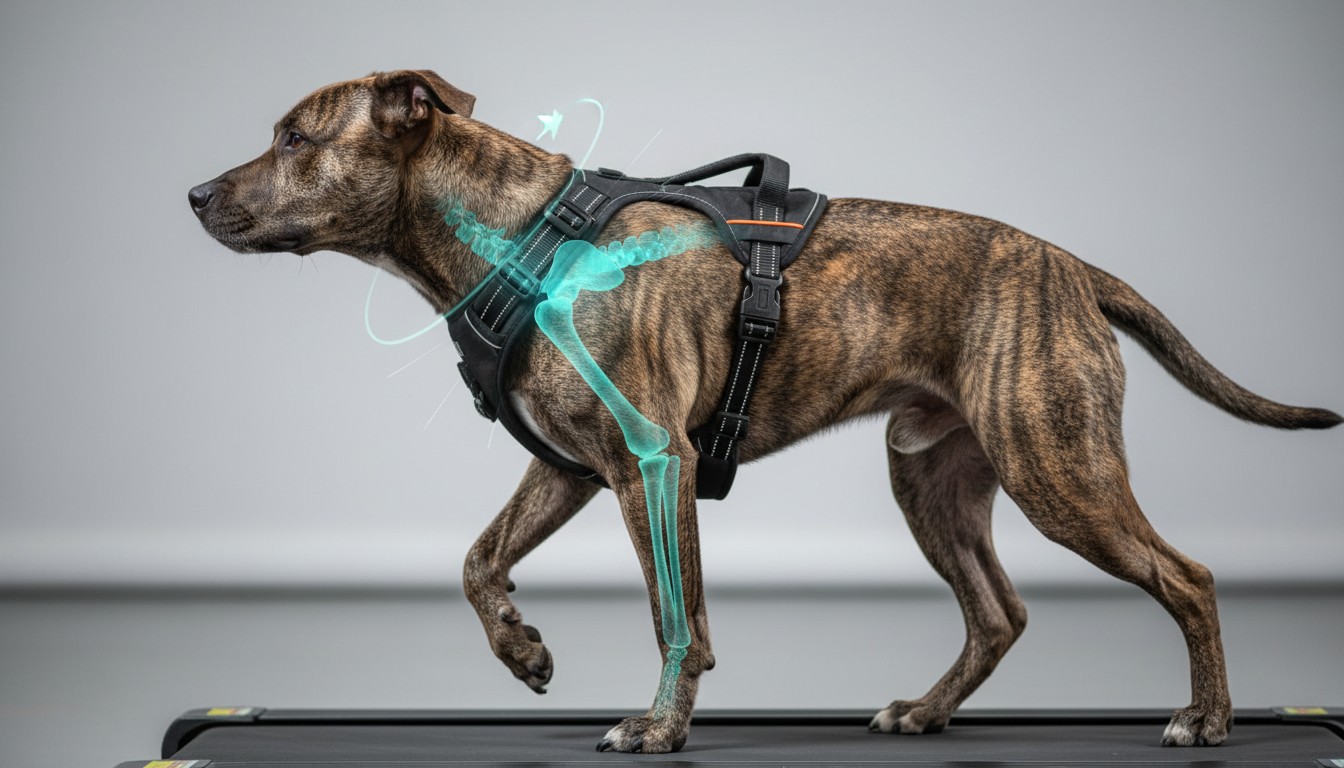
When assessing dog harness fit, the first thing to consider is how the gear interacts with the scapula (shoulder blade). Traditional 'Norwegian' or T-shaped harnesses feature a horizontal strap across the chest. While easy to put on, recent biomechanical studies, such as those published in the Veterinary Record, suggest these can significantly limit shoulder extension. When a dog walks, their front legs need to reach forward; a horizontal strap can act like a physical brake, potentially leading to muscle strain or compensatory gait changes over time.
In contrast, Y-shaped harnesses are designed to follow the contours of the dog's neck and chest, meeting at the sternum (breastbone). This configuration ideally leaves the shoulder joints free to rotate. However, it is not enough to just buy a 'Y-front' style; the 'V' of the neck must sit high enough on the chest bone to avoid soft tissue pressure but low enough to clear the windpipe. A perfect fit ensures that the straps don't cross over the moving parts of the shoulder, allowing your mate to take full, natural strides during your morning walkies.
The Three Critical Measurements for Australian Dogs
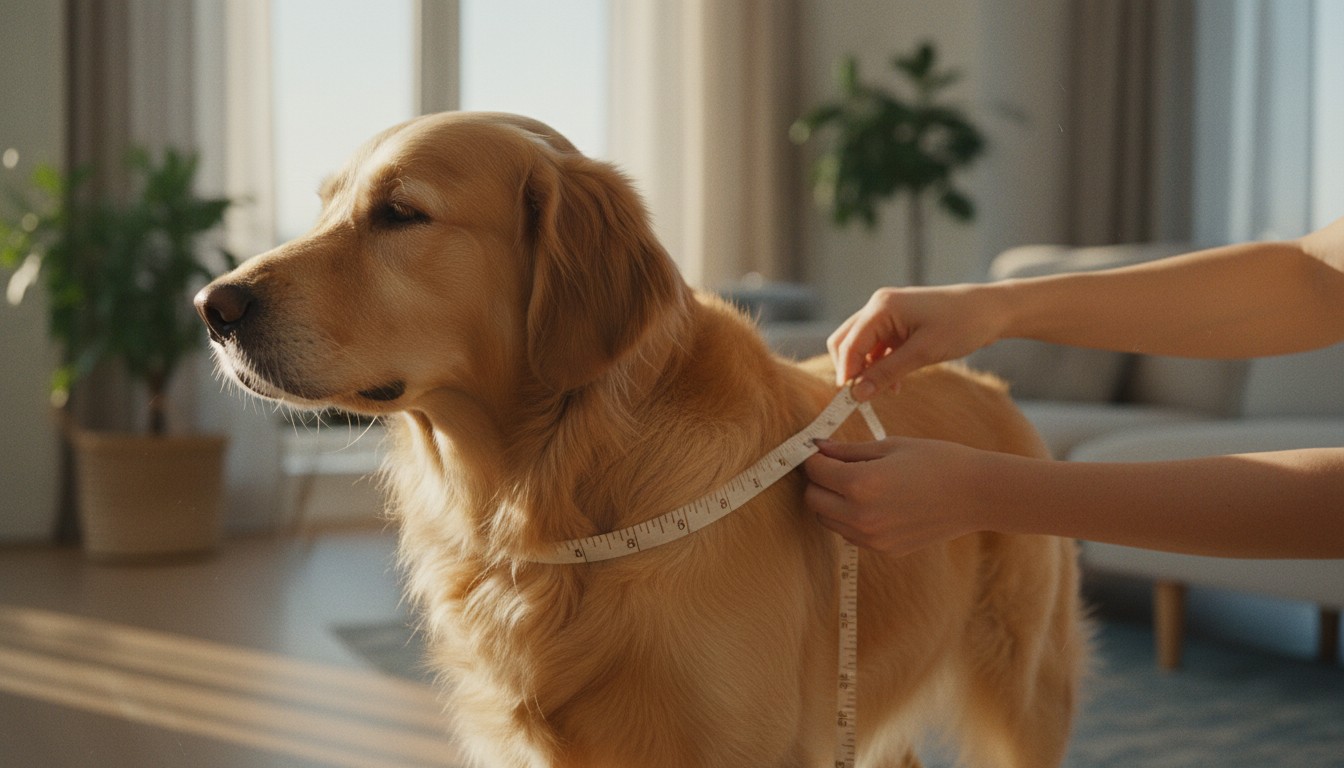
To find the right size at stores like Kmart Australia or specialty pet boutiques, you need more than just your dog's weight. Accuracy starts with three key metric measurements: the lower neck, the girth, and the chest plate length. Use a soft tailor’s tape for the best results. For the neck, measure from the withers (the ridge between the shoulder blades) down to the top of the breastbone and back up. This is usually lower than where a standard collar sits.
The girth is the most vital measurement. Wrap the tape around the widest part of the ribcage, typically about 5–10 cm behind the front legs. Finally, for Y-front harnesses, measure from the point of the breastbone, through the front legs, to where the girth strap will sit. This ensures the harness is long enough to prevent the 'armpit chafe' common in deep-chested breeds like Boxers or Greyhounds. Always record these in centimetres, as most Australian retailers use the metric system for their sizing charts.
The Skeletal Check: Finding the Bone Markers
Once the harness is on, you must verify it sits on the skeleton, not on soft tissue. The front 'V' or 'O' ring should rest directly on the manubrium—the hard, bony point at the top of the sternum. If the harness sits too high, it will press against the trachea, causing coughing or restricted breathing when the dog pulls. If it sits too low, it will slide down and impede the front legs' forward reach.
At the back, the harness should sit on the withers, with the girth strap resting on the ribcage. It is a common mistake to tighten the harness so far back that it sits on the 'floating ribs' or the soft abdomen. These areas provide no skeletal protection for the internal organs. A well-adjusted harness uses the ribcage as a protective cage, distributing pressure across the strongest parts of the body. Feeling for these bony landmarks ensures you are prioritising your dog's internal health over mere aesthetic fit.
The Two-Finger Rule and Armpit Clearance
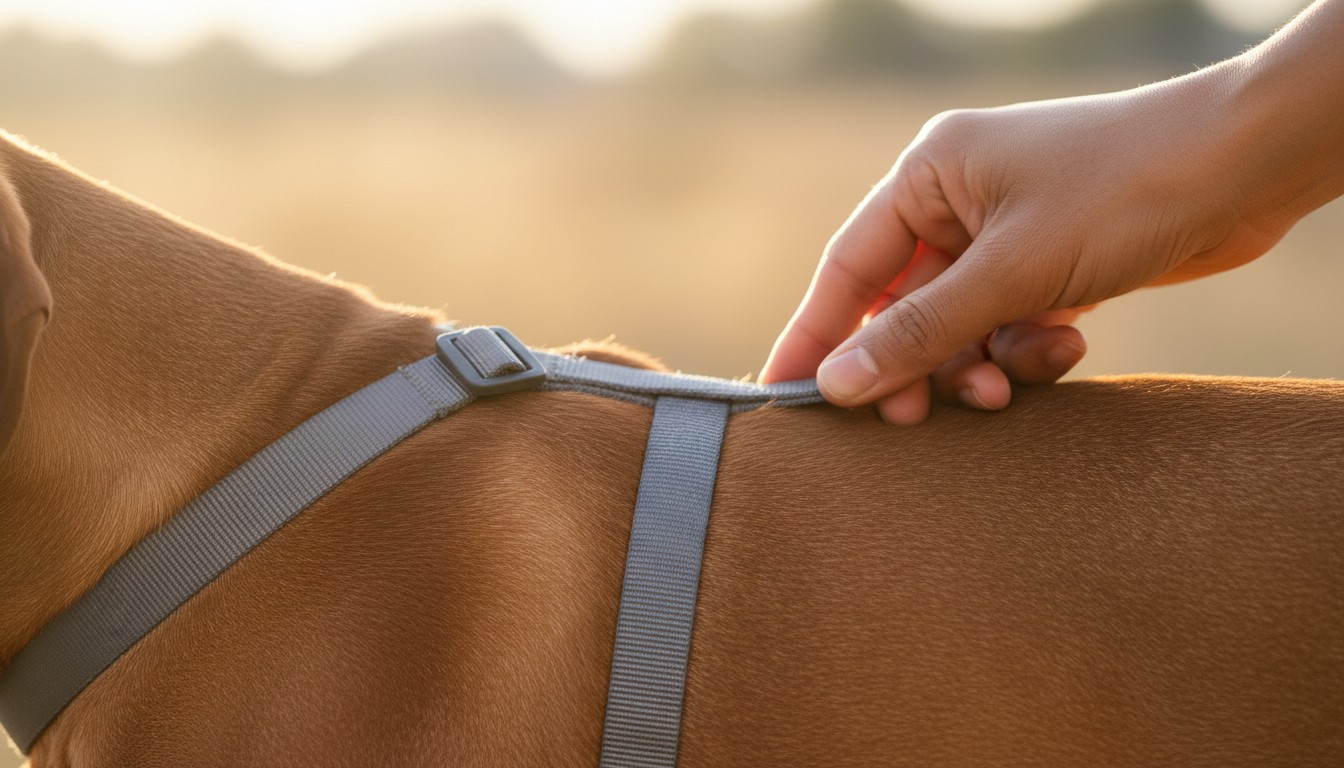
In Australia, the 'two-finger' rule is the gold standard recommended by the RSPCA for checking harness tension. You should be able to slide your index and middle fingers flat between the harness straps and your dog’s body. If you can fit more, the harness may shift and cause friction; if you can't fit two, it is too tight and will likely cause 'hot spots' or chafing, especially in our humid summer weather.
Clearance behind the front legs is equally crucial. The girth strap should sit far enough back to avoid the 'axilla' or armpit area. This region is full of sensitive nerves and thin skin. If the harness is too close to the legs, it will rub every time the dog moves, leading to painful sores. For most dogs, a gap of two to three fingers' width behind the elbow is ideal. This 'freedom of movement' check is the difference between a dog that loves their gear and one that begins to avoid walks because of discomfort.
The Dynamic Test: Checking Fit in Motion
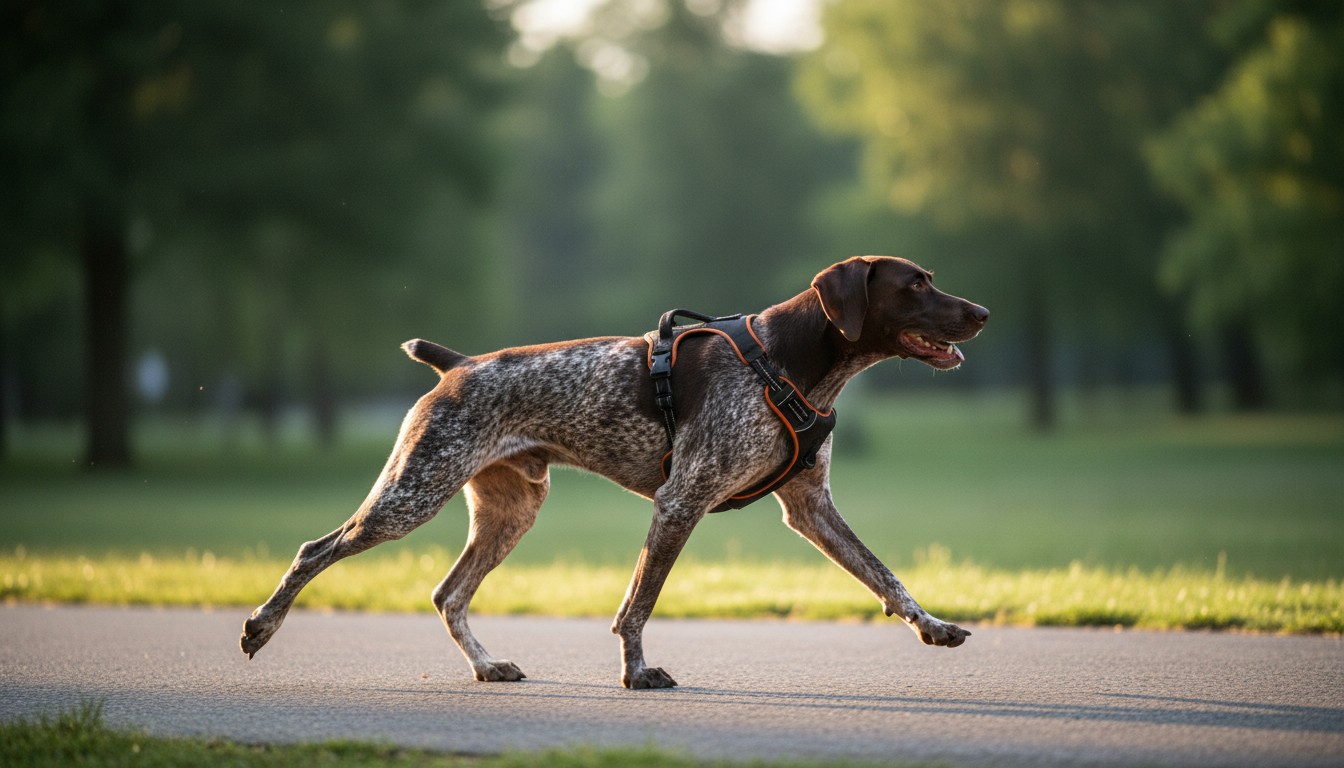
A harness may look perfect while your dog is standing still, but the real test happens when they move. Observe your dog's gait at a walk and a trot. Do they seem to be taking shorter steps than they do when off-lead? Do the straps gape or slide significantly to one side when the leash is taut? A harness that rotates excessively can cause the 'Y' to pull into the shoulder, creating the very restriction you were trying to avoid.
Check the fit when your dog performs a 'sit' or a 'down'. Many harnesses that fit well during a walk will ride up into the throat when the dog sits. If you notice the front piece hitting the neck or the dog looking uncomfortable when resting, the chest plate may be too short. Likewise, watch for 'gapping' at the back; if the harness lifts off the spine significantly when the dog sniffs the ground, the neck opening might be too large. A truly perfect fit is dynamic, accommodating the full range of canine gymnastics without shifting out of alignment.
Troubleshooting: Escape Artists and Chafing
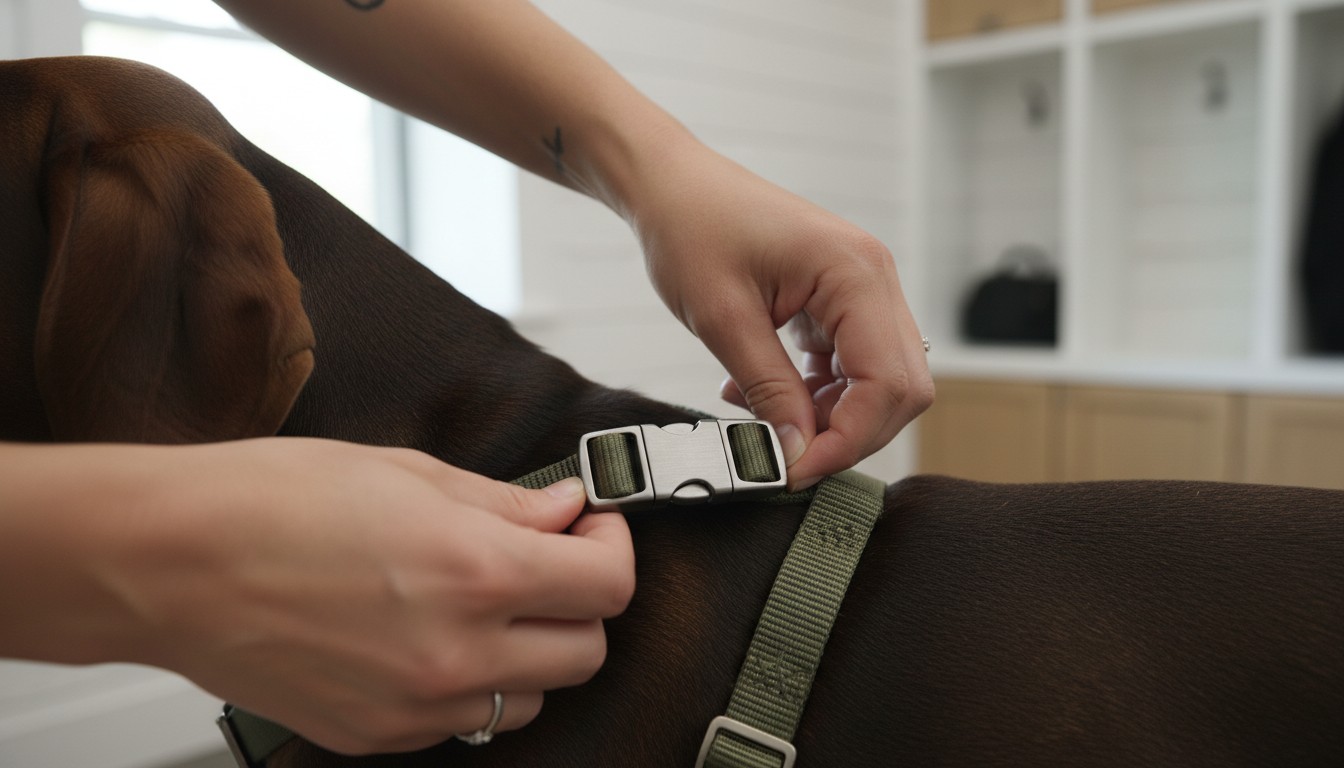
If you have a 'Houdini' dog—one who can reverse out of their gear—it is usually a sign of a neck opening that is too large or a girth strap that is too loose. For deep-chested breeds like Whippets, a 'three-strap' harness with an additional belly strap can be a life-saver, as the third strap sits behind the widest part of the ribs, making it physically impossible to slip off. If you notice your dog scratching at the harness or showing reluctance to have it put on, immediately inspect for 'redness' or fur loss in the armpits or chest.
When things go wrong, don't just tighten the straps. Tightening a poorly shaped harness often worsens the pressure. Instead, reassess the measurements or consider a different style that better suits your dog's specific conformation. If your dog continues to have gait issues or shows signs of lameness after walks, it is time to consult a canine physiotherapist or a vet. They can provide a professional gait analysis to ensure your gear isn't contributing to musculoskeletal issues. Remember, a harness is a tool, and like any tool, it must be maintained and adjusted as your dog grows or their weight changes.
FAQ
How do I know if my dog's harness is too tight?
Use the two-finger rule: you should be able to slide two fingers flat between the strap and your dog's skin without force. If you struggle to fit your fingers, or if the skin bulges around the straps, it is too tight and may cause chafing or restrict breathing.
Why does my dog's harness always slide to one side?
Sliding usually happens because the neck opening is too large or the girth straps are unevenly adjusted. Ensure the 'Y' is centred on the breastbone and that the leash is being used with a balanced gait; if the dog pulls significantly to one side, consider a dual-clip harness for better control.
Can a harness cause permanent damage to a dog's shoulders?
Yes, if a harness is chronically restrictive (like a tight T-strap) it can alter a dog's natural gait, leading to muscle shortening and joint strain. Long-term use of ill-fitting gear can contribute to osteoarthritis or bursitis in the shoulder joints, which is why checking for 'freedom of movement' is essential.
Is it better to have a front-clip or back-clip harness?
Back-clips are great for casual walking and hiking as they don't interfere with the dog's legs. Front-clips are training tools used to redirect pulling behaviour. For most Aussie owners, a 'multi-point' harness with both clips offers the best versatility for different environments.
Conclusion
Finding the perfect dog harness fit is a blend of science and observation. By focusing on your dog's skeletal landmarks—the sternum, withers, and ribcage—you can ensure their gear supports their health rather than hindering it. Remember that no single harness is 'set and forget'; check the tension regularly, especially after grooming or weight changes. If your dog shows persistent signs of discomfort or changes in how they walk, don't hesitate to seek advice from a veterinary professional or a certified trainer. Your dog's comfort is the foundation of every great adventure you share together.
References & Sources
This article was researched using the following sources:


