














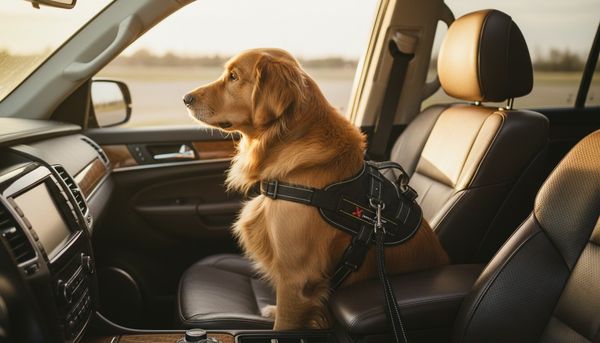
When we click our seatbelts, we trust the engineering of modern automotive safety. However, when it comes to our canine companions, the landscape is far more complex. Understanding dog car restraint physics is essential for any pet owner who wants to move beyond the 'crash-tested' marketing labels and evaluate safety through the lens of engineering. In a 30 mph (48 kph) collision, an unrestrained 50-pound (23 kg) dog can exert approximately 1,500 pounds (680 kg) of force, becoming a lethal projectile for human occupants and facing catastrophic injury themselves. This article explores the mechanical realities of crash dynamics and how to identify gear that actually holds up under pressure.
Kinetic Energy and the Law of Inertia in Collisions
To evaluate any dog car restraint, one must first understand Newton’s First Law: an object in motion stays in motion unless acted upon by an external force. In a vehicle traveling at highway speeds, your dog possesses significant kinetic energy. When the car stops suddenly during an impact, that energy must be absorbed or redirected.
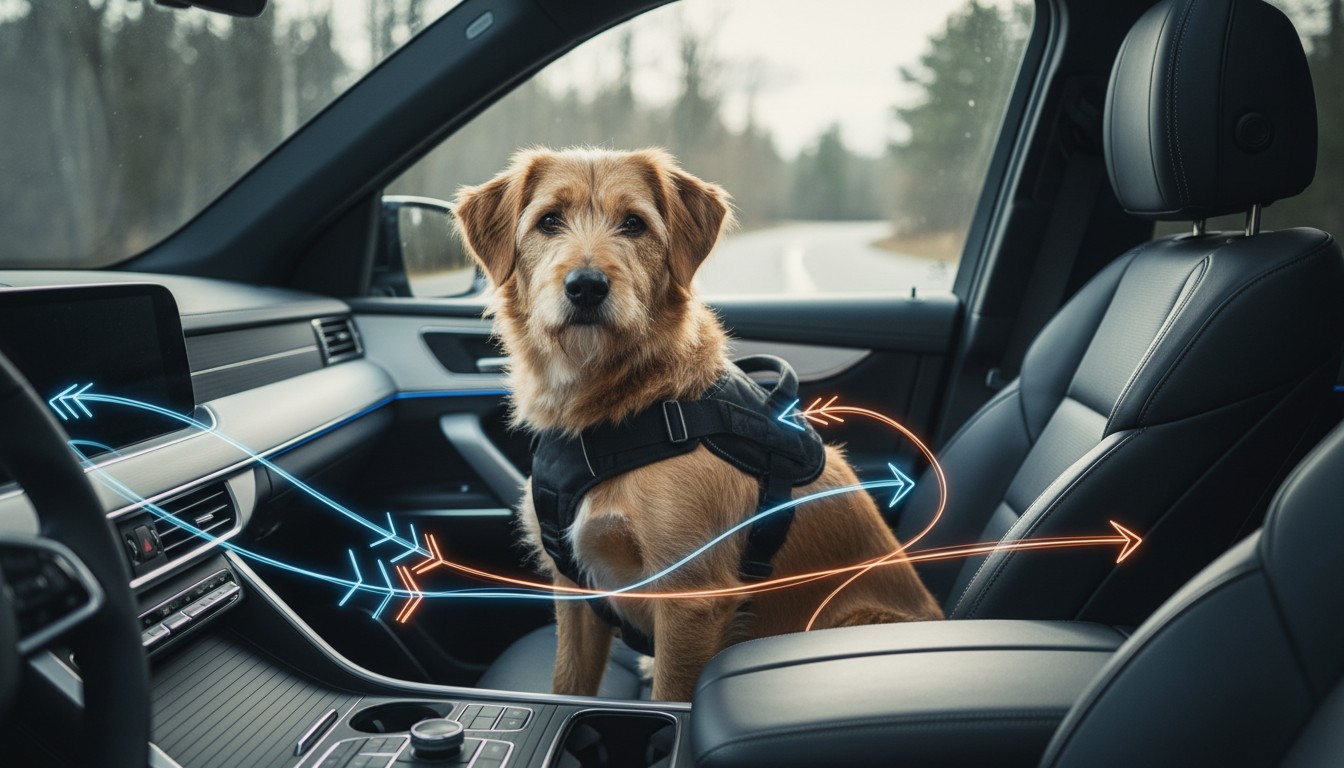
Calculations for impact force are sobering. The formula (Weight x Speed = Force) is a simplified way to visualize the danger, though true physics accounts for deceleration time (delta-v). A 10-lb (4.5 kg) dog in a 50 mph (80 kph) crash doesn't just 'fall' forward; it hits with the force of 500 lbs (226 kg). High-quality restraints are designed to manage this 'dynamic load' by distributing the force across the strongest parts of the dog’s anatomy—the chest and ribcage—rather than the neck or soft tissue. Look for harnesses with wide, padded chest plates that increase the surface area of the restraint, thereby reducing the pressure per square inch on the animal's body.
Tensile Strength and Hardware Failure Points
Many manufacturers claim their products are made of 'high-strength' materials, but without specific ratings, these claims are often empty. In the world of dog car restraint physics, tensile strength refers to the maximum load a material can support without breaking while being stretched.
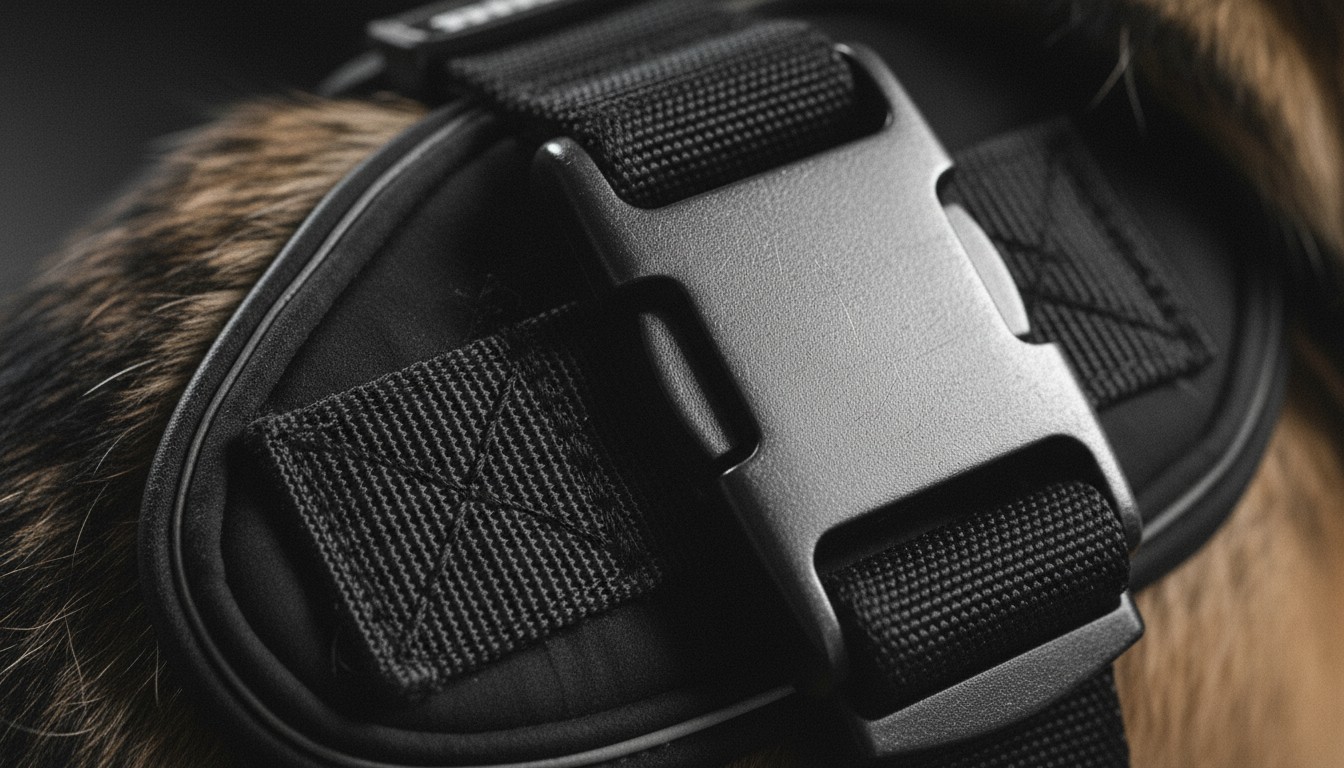
Engineering-grade restraints typically utilize seatbelt-style nylon webbing with a tensile strength exceeding 5,000 lbs (2,267 kg). However, the webbing is rarely the failure point. Instead, look closely at the hardware. Plastic buckles, often found on standard walking harnesses, will shatter instantly under the G-forces of a 35 mph (56 kph) impact. Expert-level safety gear utilizes 'all-metal' hardware, specifically mountaineering-grade carabiners or nesting steel buckles. Furthermore, the stitching (often called 'box-stitching' or 'bar-tack' stitching) must be reinforced to prevent the hardware from ripping through the fabric. When evaluating a product, check if the manufacturer provides 'static load' test results versus 'dynamic' crash results; both are necessary to prove the hardware won't yield.
The Danger of Extension: Excursion and Rotational Force
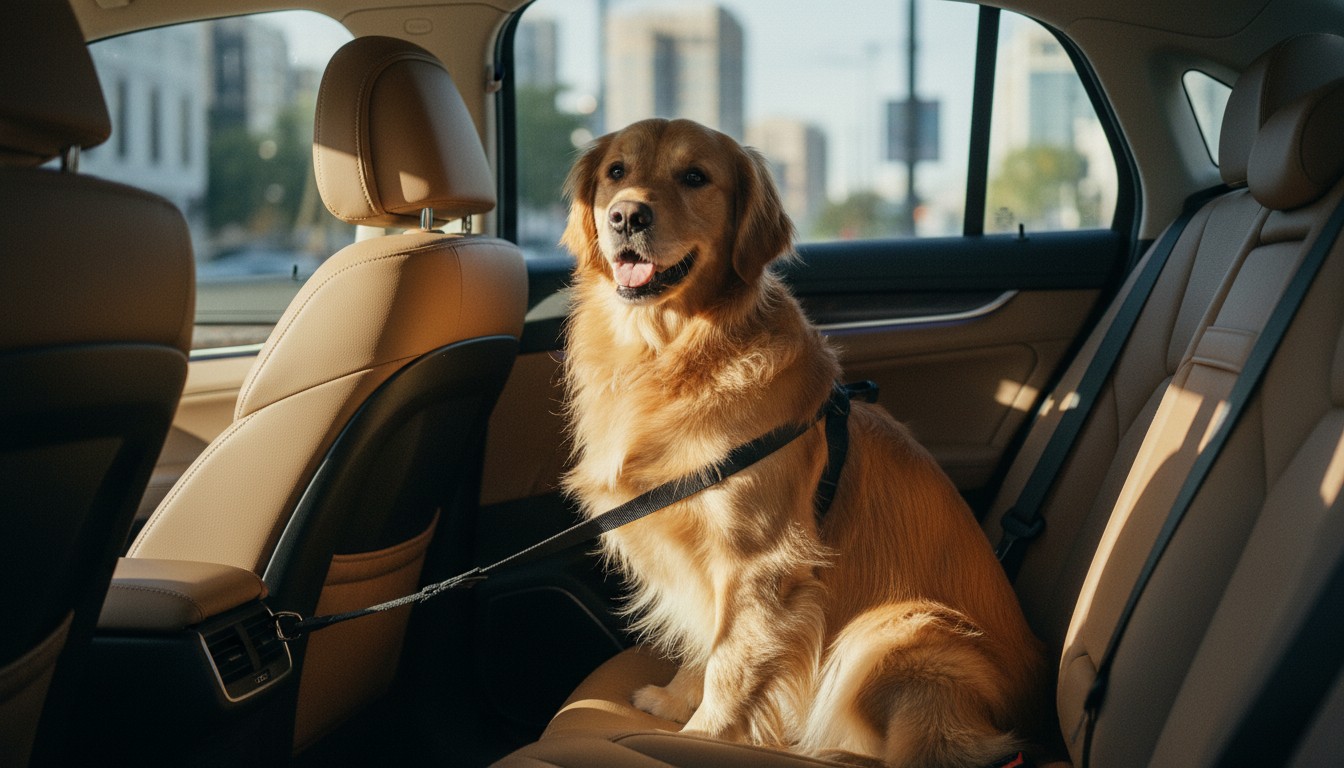
One of the most overlooked aspects of impact physics is 'excursion distance'—how far the dog moves forward after the impact begins. If a tether is too long, the dog may successfully be 'restrained' from flying through the windshield, but they will still experience a secondary collision with the back of the front seat or the dashboard. This is why many experts recommend against 'universal' seatbelt tethers that clip into the buckle.
Long tethers also introduce rotational forces. If a dog is attached by a single point on their back, the impact can cause the dog’s body to whip around that anchor point, leading to spinal trauma or broken ribs as they strike the car door or seat. The safest restraints minimize the length of the attachment to the vehicle's LATCH (Lower Anchors and Tethers for Children) system or use the vehicle's own seatbelt threaded directly through the harness. This keeps the dog flush against the seat back, utilizing the car’s built-in safety features to limit movement and rotation.
Crumple Zones and Energy Absorption in Crates
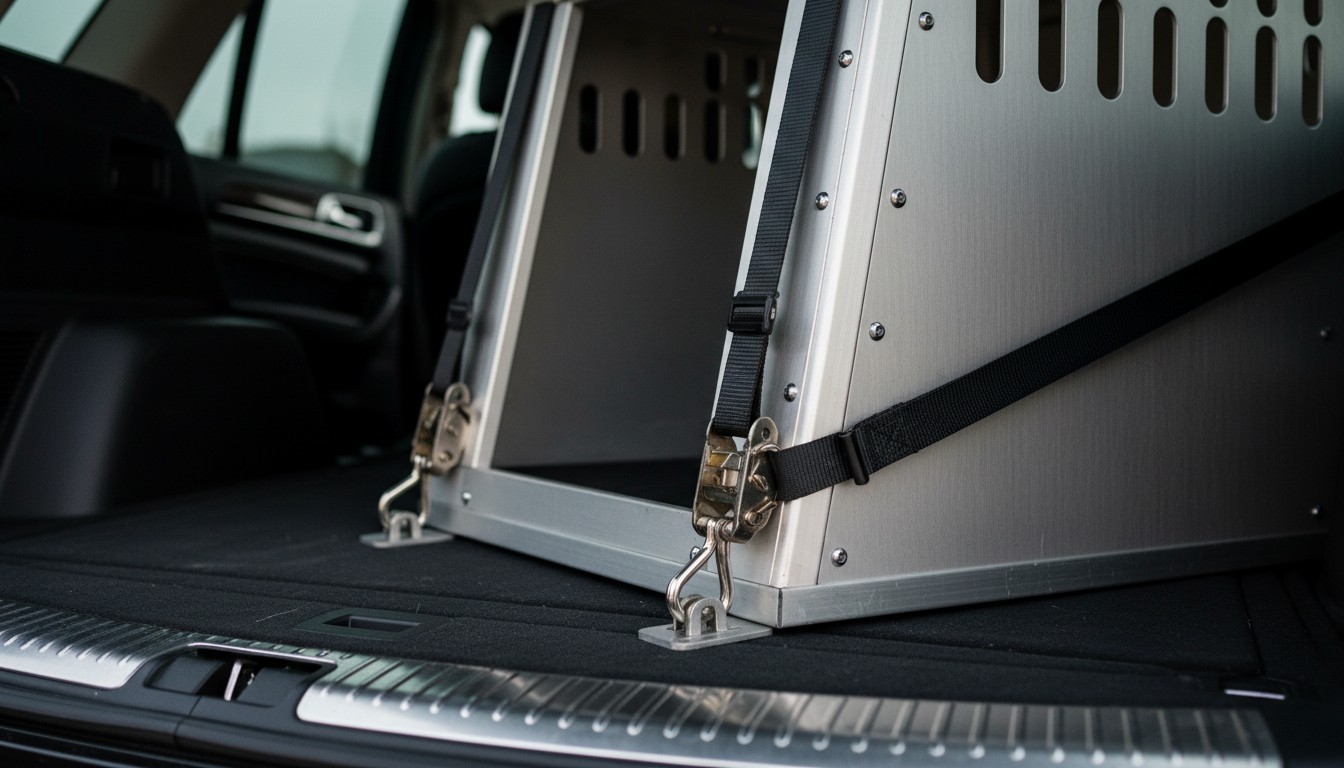
For those who prefer crates over harnesses, the physics shift from 'restraint' to 'containment.' A standard plastic or thin wire crate is likely to collapse or 'pancake' during a high-speed impact, potentially trapping or piercing the dog. Impact-rated crates are engineered to act as a roll cage.
These high-end crates often feature 'crumple zones'—engineered areas designed to deform in a controlled manner to absorb kinetic energy before it reaches the occupant inside. This is the same principle used in the front and rear of modern cars. When evaluating a crate, check for 'double-walled' construction and heavy-duty latches. In an accident, a door popping open is a common failure. High-quality containment systems use slam-latches or multi-point locking bars to ensure the dog remains inside the protected shell even if the vehicle rolls. Remember that a crate is only as safe as its tie-downs; it must be bolted or heavy-duty strapped to the vehicle's cargo floor to prevent the entire unit from becoming a projectile.
Troubleshooting: Common Setup Errors and Adjustments
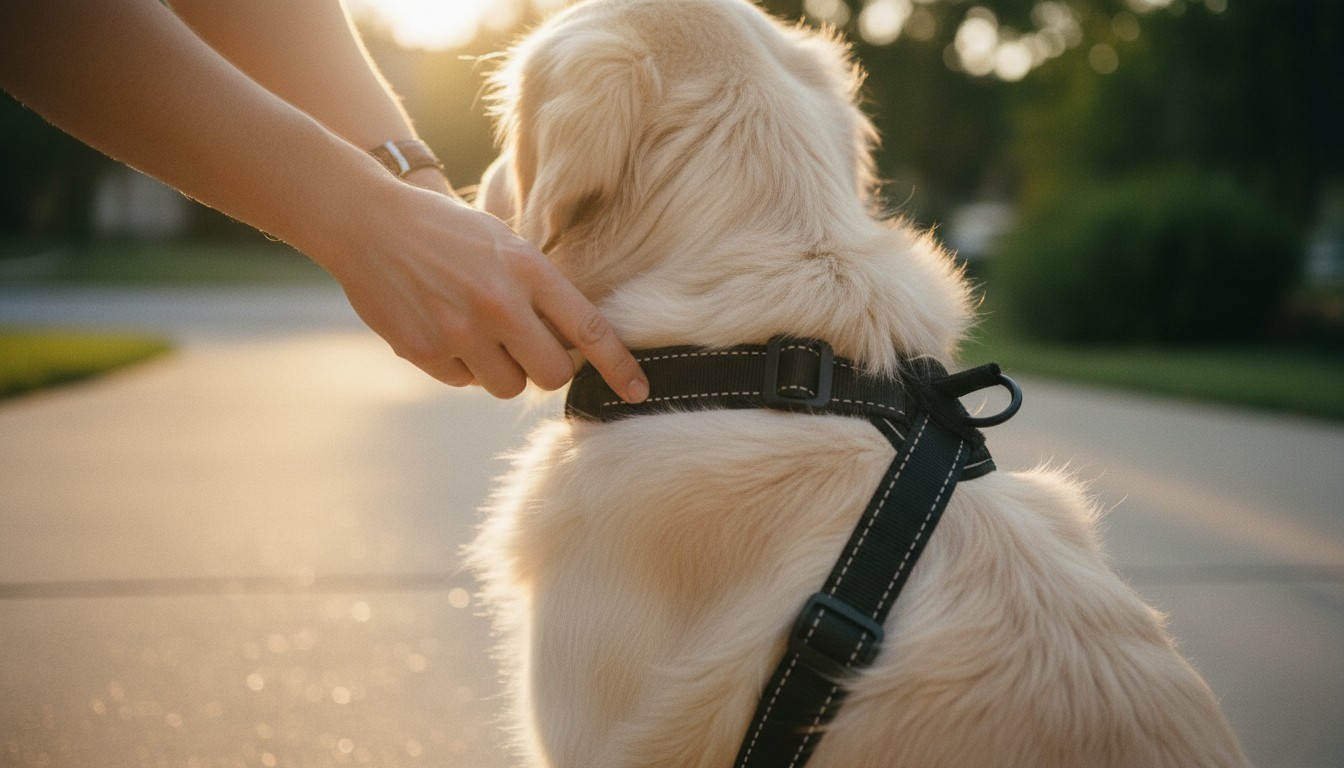
Even the best-engineered gear fails if used incorrectly. A common mistake is a loose-fitting harness. If there is too much 'slack' between the dog's body and the restraint, the dog will accelerate over that small distance before being snapped back by the harness. This creates a 'jerk' force that is much higher than a smooth deceleration. You should be able to fit no more than two fingers between the harness and the dog.
Another frequent error is the 'misaligned anchor.' Many owners attach tethers to headrests. Headrest posts are not always rated for 1,000+ lb loads and can snap or pull out of the seat entirely during an impact. Always use the car’s designated LATCH points or the seatbelt itself. If your dog is restless and tangles themselves in a short tether, consider a 'zip-line' style system that is specifically impact-rated, though these are rare. If you cannot find a secure way to limit your dog's movement while maintaining their comfort, it may be time to consult a professional trainer to desensitize the dog to being confined in a more secure, shorter restraint.
FAQ
What does 'crash-tested' actually mean on a product label?
There is currently no government-mandated standard for pet car restraints in the US. 'Crash-tested' often means the manufacturer performed their own test, but it doesn't guarantee the product passed or was tested at high speeds. Look for independent certification from organizations like the Center for Pet Safety (CPS).
Can I use a standard walking harness for car travel?
No. Standard walking harnesses are designed for low-tension walking and are usually held together by plastic buckles and thin stitching. Under crash conditions, these materials will fail almost instantly, providing zero protection for your pet.
Is it safer to put my dog in the front or back seat?
The back seat is significantly safer. Front-seat airbags deploy with immense force and are designed for adult humans; they can be fatal to a dog, even if the dog is restrained. Always keep your pet in the rear of the vehicle.
Conclusion
Evaluating dog car restraints requires a shift in perspective from aesthetics to engineering. By understanding the physics of kinetic energy, tensile strength, and excursion, you can see past marketing jargon and choose gear that offers real protection. No restraint can guarantee 100% safety in every scenario, but using metal-heavy hardware, short tethers, and impact-rated containment systems significantly tilts the odds in your favor. Always ensure your gear is properly fitted and anchored to the vehicle’s strongest points. If you are unsure about the integrity of your current setup or if your dog reacts aggressively to restraint, consult with a vehicle safety specialist or a certified dog trainer to find a solution that keeps every passenger safe.
References & Sources
This article was researched using the following sources:

