















For years, the gold standard of pet food shopping has been a simple rule: make sure meat is the first ingredient. Marketing departments have leaned into this, splashing 'Real Chicken First' across bags from New York to London. However, this advice often falls victim to a clever labeling loophole known as ingredient splitting. By breaking down lower-quality components into smaller sub-categories, manufacturers can artificially keep meat at the top of the list. Understanding how ingredient splitting works is the only way to ensure you are actually paying for high-quality protein rather than clever wordplay. This guide will teach you how to read past the marketing and see what is truly inside the bag.
The Weight Illusion: Pre-Processing vs. Final Product
To understand ingredient splitting, you first need to understand how pet food labels are structured. According to regulatory bodies like AAFCO in the United States and similar agencies globally, ingredients must be listed in descending order of their weight before processing. This sounds transparent, but it creates a massive advantage for fresh meats. Fresh chicken, beef, or lamb is roughly 70% to 80% water. When that meat is cooked and turned into dry kibble, most of that moisture is lost, significantly reducing its actual nutritional contribution to the final product.
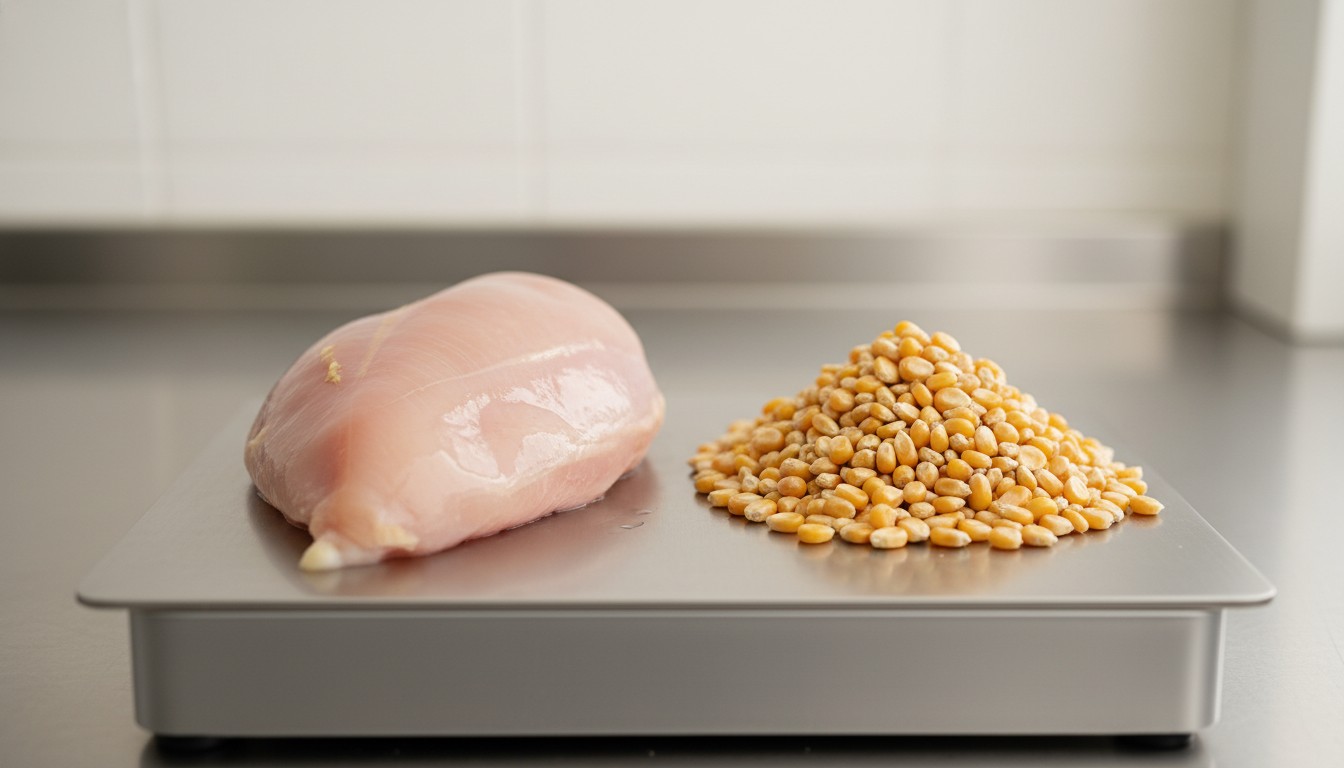
In contrast, grains and legumes like corn, peas, or rice are added to the mix in a dry state. If a manufacturer lists 'Deboned Chicken' as the first ingredient at 5 kilograms (11 lbs) and 'Corn' as the second at 4 kilograms (8.8 lbs), the chicken looks like the primary source of nutrition. However, once the water is removed during the extrusion process, the actual amount of chicken might drop to a mere 1 kilogram (2.2 lbs), meaning the bag is actually predominantly corn. This 'weight of water' is the foundation upon which the meat-first myth is built.
Defining Ingredient Splitting: The Hidden Math
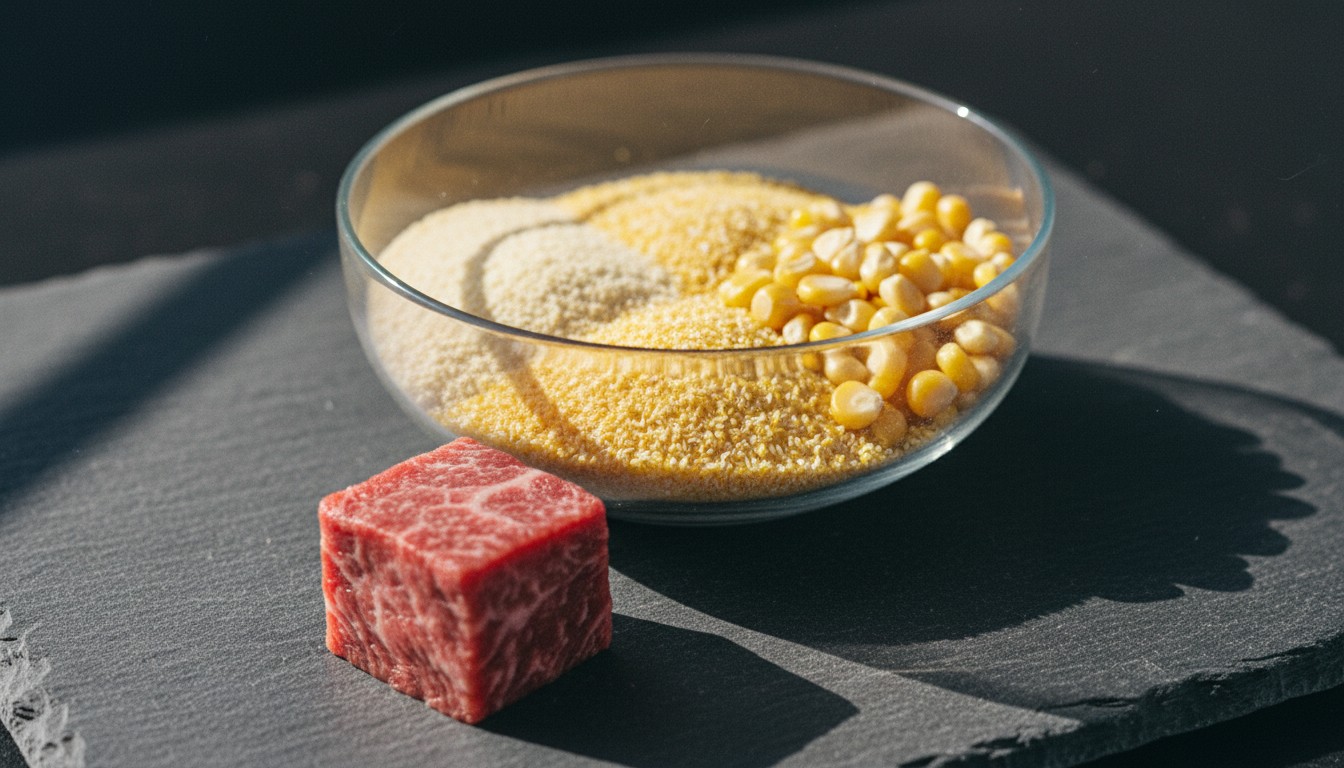
Ingredient splitting is the practice of taking a single, lower-quality ingredient and dividing it into several different names on the label. This ensures that no single portion of that ingredient weighs more than the primary meat source. For example, if a recipe contains 30% corn, listing 'Corn' would put it at the very top of the list, potentially scaring away health-conscious buyers. Instead, a manufacturer might split that corn into 'Corn Gluten Meal,' 'Corn Flour,' and 'Whole Grain Corn.'
By dividing the total corn content into three smaller parts, each individual 'corn' component now weighs less than the chicken. This allows the 'Chicken' to remain in the coveted number-one spot, even though the total sum of the corn products far outweighs the meat. This tactic is common with peas (pea protein, pea flour, pea fiber) and potatoes as well. To the untrained eye, the label looks like it contains a variety of ingredients, but to an expert, it is clear that the formula is heavily reliant on a single filler. Identifying this requires the reader to mentally group these 'splits' back together to see the true recipe composition.
How to Spot the 'Split' in the First Five Ingredients
The first five to ten ingredients on a pet food label typically make up the vast majority of the food's nutritional profile. When scanning a label, look for repeated plant sources appearing in this top section. If you see 'Chicken' followed by 'Pea Protein,' 'Dried Peas,' and 'Pea Starch,' you are witnessing a classic split. The total 'Pea' content is likely the actual primary ingredient. Another common red flag is the presence of multiple rice products, such as 'Brown Rice,' 'White Rice,' and 'Rice Bran.'
Beyond just looking for repeats, pay attention to the quality of the meat source. If the first ingredient is 'Chicken' (water included) but the second, third, and fourth are all grain or legume splits, the protein content of that food is likely coming more from plants than animals. High-quality brands that prioritize animal protein will often list a 'Meat Meal' (like Chicken Meal) as well. Because meat meal has already had the water removed, it is a concentrated protein source that holds its position on the label even after cooking. A label that lists 'Chicken' followed immediately by 'Chicken Meal' is often a sign of a more protein-dense, honest formulation than one that uses multiple grain splits to hide a lack of meat.

Troubleshooting: What to Do When Labels are Vague
Not all label confusion is due to intentional splitting; sometimes, the terminology itself is the problem. If you encounter a label where the ingredients are vague—such as 'Animal Fat' instead of 'Chicken Fat' or 'Poultry Meal' instead of 'Turkey Meal'—this is a sign of 'generic' labeling. This allows manufacturers to change the source based on what is cheapest on the market at that time. If your pet has allergies, these vague terms can be dangerous, as you never truly know what is in the bag from one month to the next.
If you suspect a brand is heavily using ingredient splitting, your best move is to check the 'Guaranteed Analysis' on the back of the bag. Look for the protein percentage and the fiber content. If a food claims to be 'Meat First' but has a very high fiber content and a lower-than-average protein percentage (under 24% for dogs or 30% for cats), it is a strong indicator that the food is primarily plant-based. When in doubt, contact the manufacturer and ask for the 'Typical Analysis' or the 'Ash Content.' Reputable companies will provide this data, while those hiding behind marketing loops may be less forthcoming. If a brand refuses to disclose the actual percentage of meat, it may be time to switch to a more transparent competitor.

FAQ
Is 'Meat Meal' better than fresh meat on a label?
While 'fresh meat' sounds better, meat meal is often more nutritionally dense for dry kibble. Because the water has already been removed from the meal, it provides more actual protein by weight in the finished product than fresh meat, which shrinks significantly during cooking.
Are ingredients like 'Corn Gluten' inherently bad for pets?
Not necessarily. These ingredients provide protein and minerals, but they are often used as cheap substitutes for more expensive animal proteins. The issue isn't the ingredient itself, but the lack of transparency when splitting is used to make a food look meatier than it is.
How can I calculate the total amount of a split ingredient?
While you cannot find the exact percentage without the manufacturer's recipe, you can assume that if 2-3 versions of an ingredient appear in the top five, their combined weight likely surpasses the first ingredient. Look for the 'Guaranteed Analysis' to see if the total protein supports a high-meat claim.
Conclusion
The 'Meat First' claim is a powerful marketing tool, but as we have explored, it is often a carefully constructed illusion. By using ingredient splitting and taking advantage of the pre-processing weight of water, manufacturers can create a label that looks premium while using cost-effective fillers. As a savvy consumer, your best defense is to look at the first ten ingredients as a group, identify repeated plant sources, and prioritize brands that use specific meat meals alongside fresh meat.
Always remember that nutrition is not one-size-fits-all. While high-protein diets are great for many, some pets with specific health conditions may require different ratios. Before making significant changes to your pet's diet, especially if they have underlying health issues or allergies, consult with a qualified veterinarian or a certified pet nutritionist to ensure the new food meets their specific biological needs.
References & Sources
This article was researched using the following sources:

