














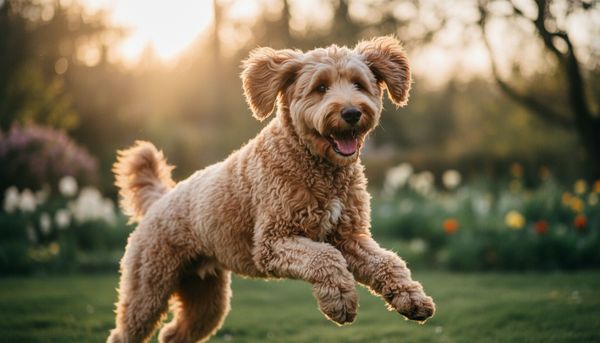
Many dog owners are frustrated to discover their pet is 'pelted' with mats despite daily brushing. The reason is usually 'surface brushing'—only clearing the top layer of hair while the undercoat tangles. Mastering line brushing is the most effective way to maintain a long-haired or double-coated dog. Line brushing involves systematically parting the hair to the skin level, ensuring every strand is tangle-free from root to tip. In this guide, we will break down the professional mechanics of this technique, the tools you need, and how to troubleshoot common grooming challenges to keep your dog’s coat healthy and mat-free.
The Difference Between Surface Brushing and Line Brushing
Most owners use a brush to glide over the top of the coat, which makes the dog look fluffy but leaves the dense hair near the skin untouched. This is known as surface brushing. Over time, friction and moisture cause the hair at the base to knot, leading to a solid layer of matting called 'pelting.' This layer traps heat and moisture against the skin, often causing infections and significant discomfort.
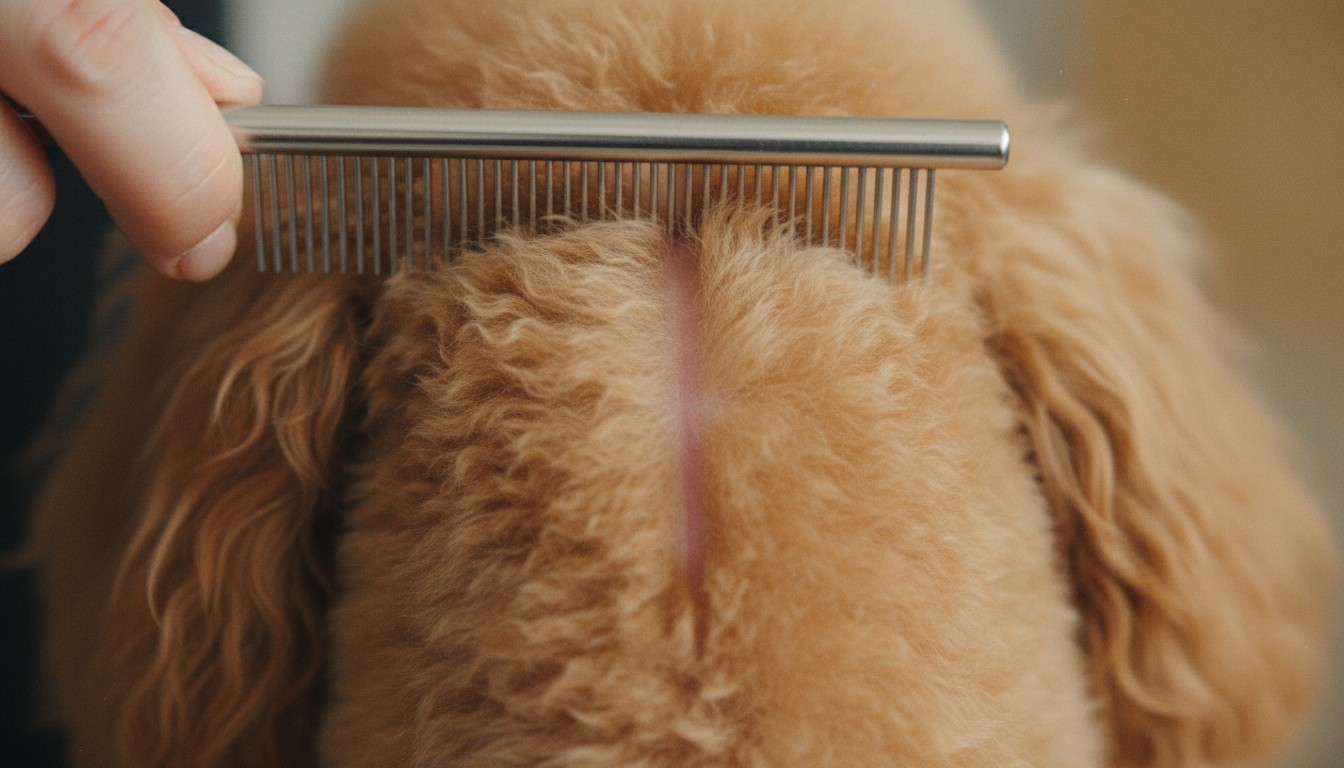
Line brushing is the professional alternative. By working in small, horizontal 'lines,' you expose the skin and brush the hair from the root outward. This ensures that the undercoat—the primary source of mats—is fully ventilated and cleared of loose fur. For breeds like Poodles, Doodles, and Goldendoodles, this technique is not just an option; it is a necessity for preventing the dreaded 'shave-down' at the groomer's. By seeing the skin with every stroke, you guarantee that no hidden knots are left behind to grow into painful mats.
Essential Tools for the Line Brushing Method
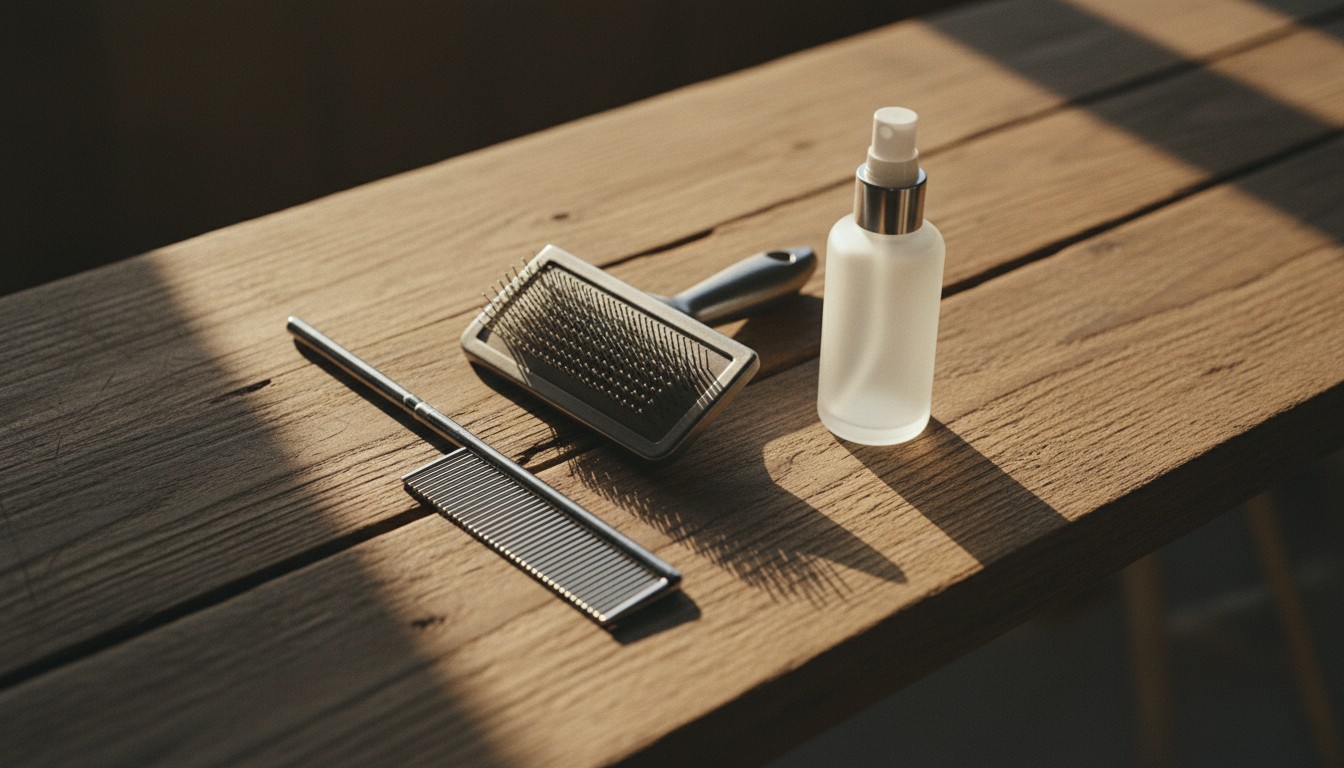
To perform line brushing correctly, you need the right kit. The foundation is a high-quality slicker brush with long, flexible pins. Avoid brushes with plastic 'balls' on the tips for long hair, as they cannot penetrate deep enough. You also need a stainless steel 'Greyhound' comb, which features both fine and coarse teeth. This comb serves as your quality control; if the comb cannot pass through the section you just brushed, a mat is still present.
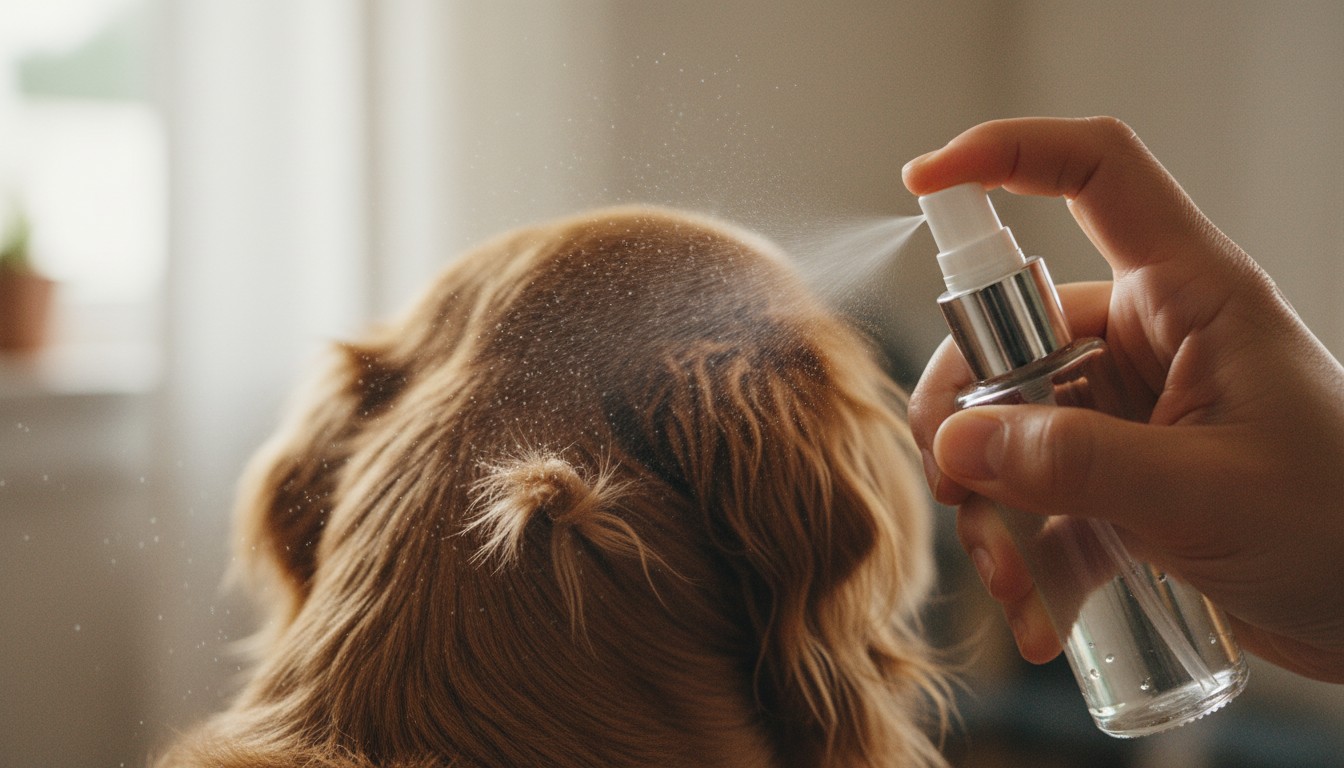
Additionally, a professional-grade detangling spray or conditioning mist is vital. Never brush a dry coat, as this causes static and hair breakage, which leads to faster matting. Lightly misting the section you are working on lubricates the hair shaft, making it easier to separate. For dogs with exceptionally thick coats, a 'line-in' leave-in conditioner can help the brush glide through. Measurements for these tools usually involve 7 to 10-inch (18-25 cm) combs and brushes with 1-inch (2.5 cm) pin lengths for medium to long coats.
A Step-by-Step Guide to the Technique
Start at the bottom of the dog, typically at the hocks of the back legs, and work your way up toward the spine. Use your non-dominant hand to push the hair upward, exposing a horizontal line of skin. This is your starting 'line.' With your dominant hand, take the slicker brush and gently pull a small amount of hair down from the section you are holding up. Brush this small section from the skin toward the ends using short, controlled strokes.
Once that small section feels smooth, take your metal comb and run it through that specific 'line' from skin to tip. If the comb catches, use the slicker brush again. Move horizontally across the leg or body until the entire 'row' is finished. Then, drop down another half-inch (1.3 cm) of hair from your top hand and repeat the process. This systematic approach ensures that 100% of the coat is reached. It may take 30 to 60 minutes for a full-body session, but it is much faster than dealing with a fully matted dog later.
Troubleshooting Mats and Sensitive Areas
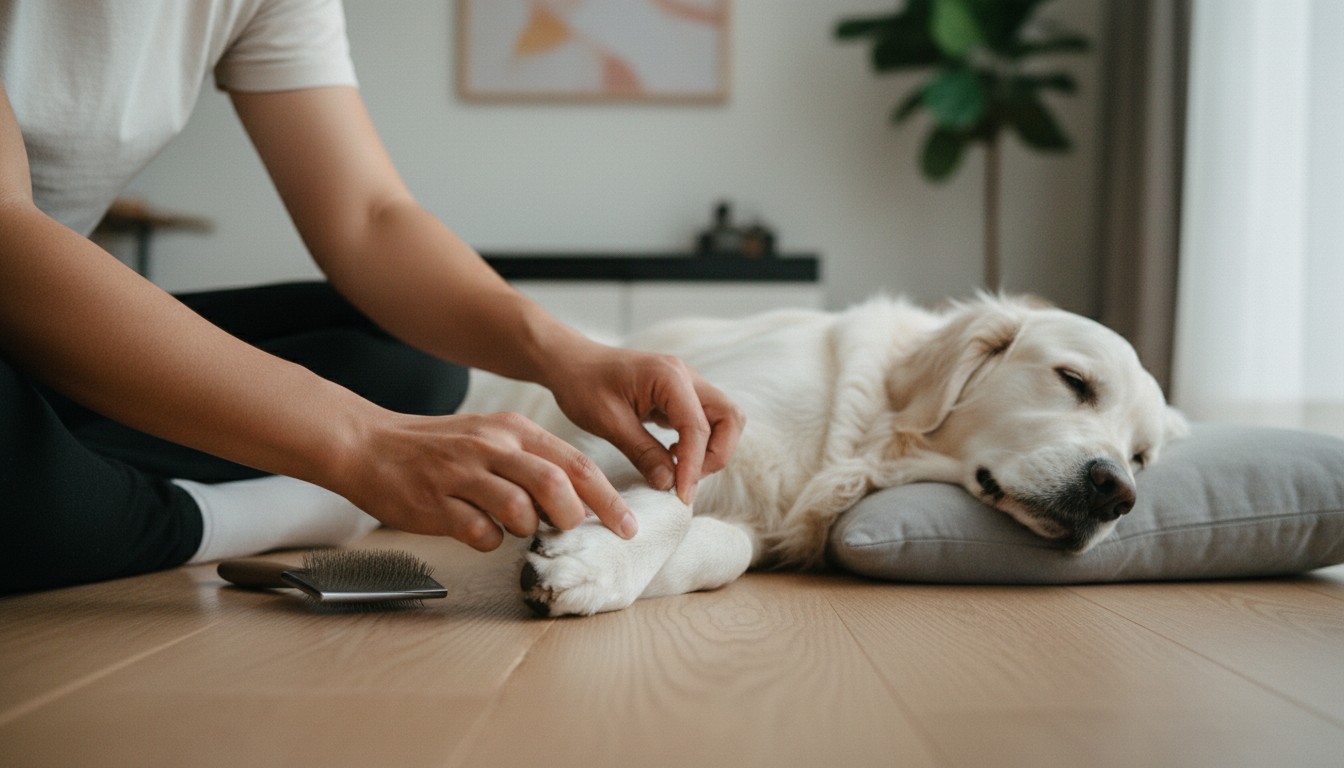
If you encounter a mat during your line brushing session, do not pull or yank. This causes pain and will make your dog fear grooming. Instead, apply more detangling spray directly to the knot. Use your fingers to 'tease' the mat apart as much as possible. Then, use the corner of your slicker brush to gently pick at the edges of the mat rather than trying to brush through the middle of it. If the mat is tight against the skin (closer than 1/4 inch or 0.6 cm), it is safer to stop and seek professional help.
Sensitive areas like the 'armpits,' behind the ears, and the sanitary area require extra care. The skin here is paper-thin and can easily be nicked by brush pins. For these spots, use smaller 'lines' and a lighter touch. If your dog becomes restless, it is often a sign of 'brush burn'—irritation caused by too much pressure or repeated strokes on the same patch of skin. Check the skin frequently; it should remain a healthy pink or white, not bright red or inflamed.
When to Consult a Professional Groomer
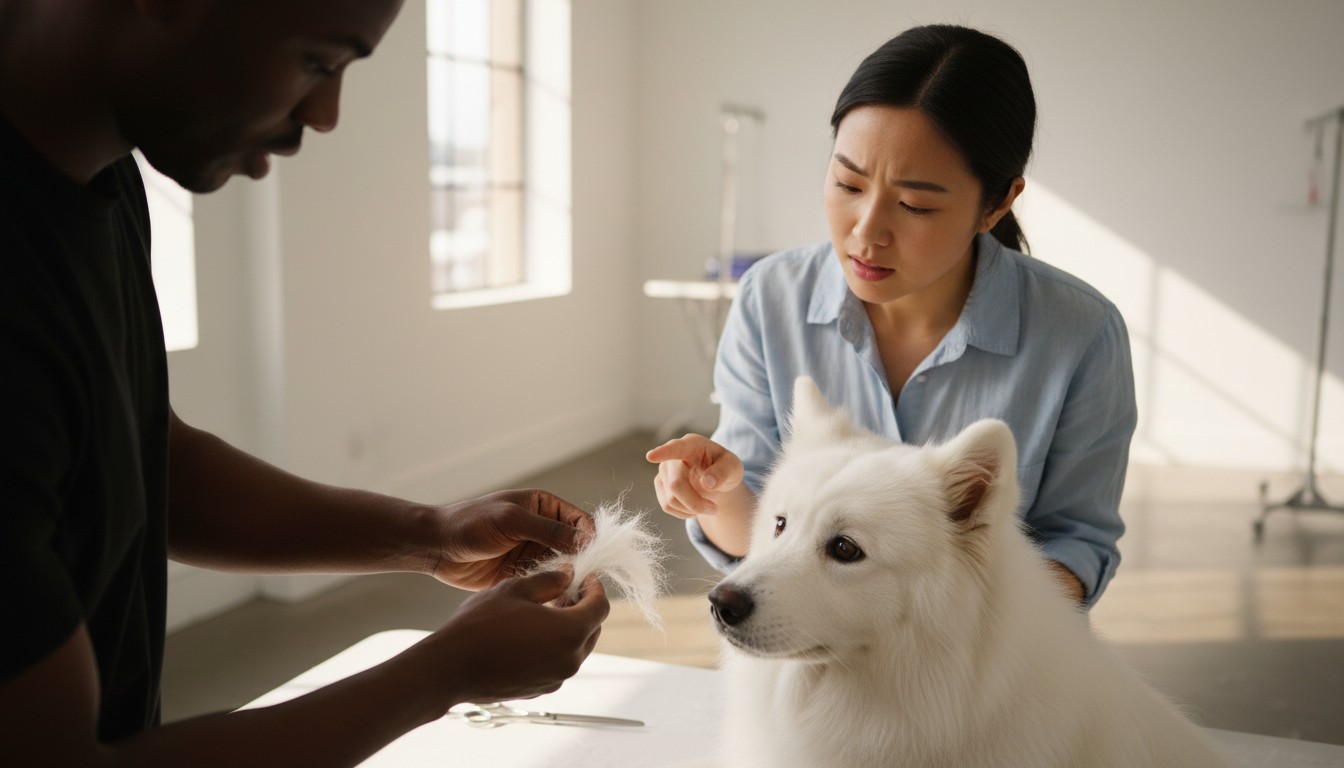
Line brushing is a preventative measure, not always a cure for severe matting. If you cannot see the skin because the hair is a solid, felt-like mass, the dog is 'pelted.' In this state, the skin is often pulled tight and is highly sensitive. Attempting to brush out a pelted coat is painful for the dog and can lead to skin tearing or hematomas. In these cases, a professional groomer must perform a 'humanity over vanity' shave-down. This safely removes the mats with clippers to allow the skin to breathe and the coat to restart.
Safety is paramount. If your dog shows signs of aggression, extreme fear, or if you notice sores, parasites, or hotspots under the mats, consult a veterinarian or a certified professional groomer immediately. Professional groomers have specialized equipment, such as high-velocity dryers and cooling clipper blades, to handle severe cases safely. Once the coat is short, you can begin the line brushing habit as the hair grows back to prevent the cycle from repeating.
FAQ
How often should I perform line brushing?
For long-haired or curly breeds, line brushing should be done 2-3 times per week. High-friction areas like the collar line and armpits may need daily attention to prevent knots from forming.
Can I line brush my dog while their coat is wet?
No, you should never brush a wet dog without first applying a detangler or conditioner. Water can cause existing tangles to 'set' and tighten, making them nearly impossible to remove without cutting.
My dog hates being brushed; what should I do?
Keep sessions short (5-10 minutes) and use high-value treats to create a positive association. Focus on one small area per day rather than trying to do the whole body at once until they become accustomed to the feeling.
Conclusion
Mastering the line brushing technique is the single most important skill for an owner of a high-maintenance coat. While surface brushing might save time in the short term, it leads to painful matting and expensive grooming appointments in the long run. By systematically working from the skin out, using the right tools, and staying consistent, you can maintain a beautiful, long coat while ensuring your dog remains comfortable and healthy. If you ever feel overwhelmed by the state of your dog's coat, remember that it is always better to seek professional help than to risk hurting your pet. Start small, stay patient, and enjoy the bonding time that a proper grooming routine provides.
References & Sources
This article was researched using the following sources:


